
Most skills worth having are uncomfortable at first.
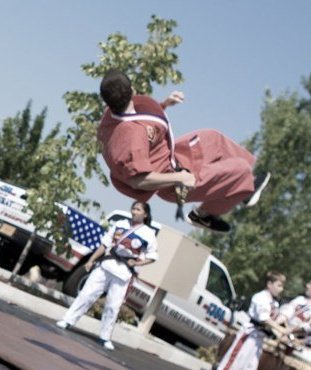
I was a kid obsessed with tricking — an aesthetic blend of martial arts, gymnastics, and breakdancing. In pursuit of getting better at tricking, a backflip was essential. My trampoline became the training ground, and eventually I developed something that, resembled one — it was a bit more over the shoulder than straight back but it was a start. After a while and a lot of trial and error I got a pretty good looking backflip on the trampoline.
After building up the courage, the next step was solid ground.
It did not go well at first. My landings were bad — on all fours — it looked more like a poorly executed back hand spring. After my class ended my parents were waiting to pick me up. I showed them my progress, then asked if I could stay for a bit longer to keep working on it. They said yes, which tells you something about how convincing I was or how patient they were. Either way I stayed an extra two hours working with the sole goal of landing on my feet.
What followed was a long morning of bad backflips. By the end of the day, I had landed a few of them on my feet, so it was a great success in my book.
The technique was not textbook. A proper back tuck is about jumping up, tucking, and rotating with your shoulders as the axis. My version involved jumping backward while looking up, throwing my shoulders back, getting minimal height, and rotating around my hips — which works, technically, but is not great. I was young and I was just happy to have landed a few on my feet.
The next day, it felt like every muscle in my body was sore, and that lasted for about a week.
What That Day Actually Taught Me
Almost two decades later, the backflip is still in my muscle memory. So are the lessons from learning it.
You have to believe it’s possible before you can do it. The first barrier wasn’t physical — it was deciding that this was something my body could actually do. That sounds simple, but it’s real. You cannot commit to a back rotation if part of your brain is still negotiating an exit. Whatever you’re trying to learn, the mental piece comes first. Doubt bleeds into execution.
When you have an intense burning desire for something, lean into it. I had this desire to learn a backflip. When you stumble upon something new, a skill, a topic, that ignites that same kind of burning passion within you – lean into it. Fuel that fire as long as you can because desires like that don’t last. I could have called it quits after those initial clumsy attempts. I would have eventually learned the backflip, but not with the same speed and intensity. That day, fueled by pure desire, I landed a backflip.
You have to put in bad reps to get to good ones. There’s a version of “work smarter, not harder” that is actually useful, and a version that is just an excuse not to do the uncomfortable early work. The bad backflips weren’t wasted — they gave me the body awareness to start adjusting. You often need to do the hard work before you know what the smart work looks like.
Feedback accelerates everything. I didn’t have a coach. I figured it out through trial and error, which worked but was slower and harder on my body than it needed to be. When someone who’s already done what you’re trying to do gives you real feedback, it compresses the timeline significantly. That’s worth seeking out, and in later years I did find a group of like-minded individuals that helped me on my tricking journey.
Iterations matter more than hours. Naval Ravikant has a line: “It’s not 10,000 hours, it’s 10,000 iterations.” That’s what a two-hour backflip session actually is — not two hours of doing the same thing, but dozens of small experiments and small adjustments. Try something, feel what happened, adjust, go again. The feedback loop is the work.
The Bottom Line
The backflip itself wasn’t the point. What stuck with me was the process: identify something you want, accept that the early attempts will be rough, stay in the reps long enough to get real feedback, and keep adjusting until you get it right.
That applies to most things worth learning.


Leave a Reply