
Tag: health

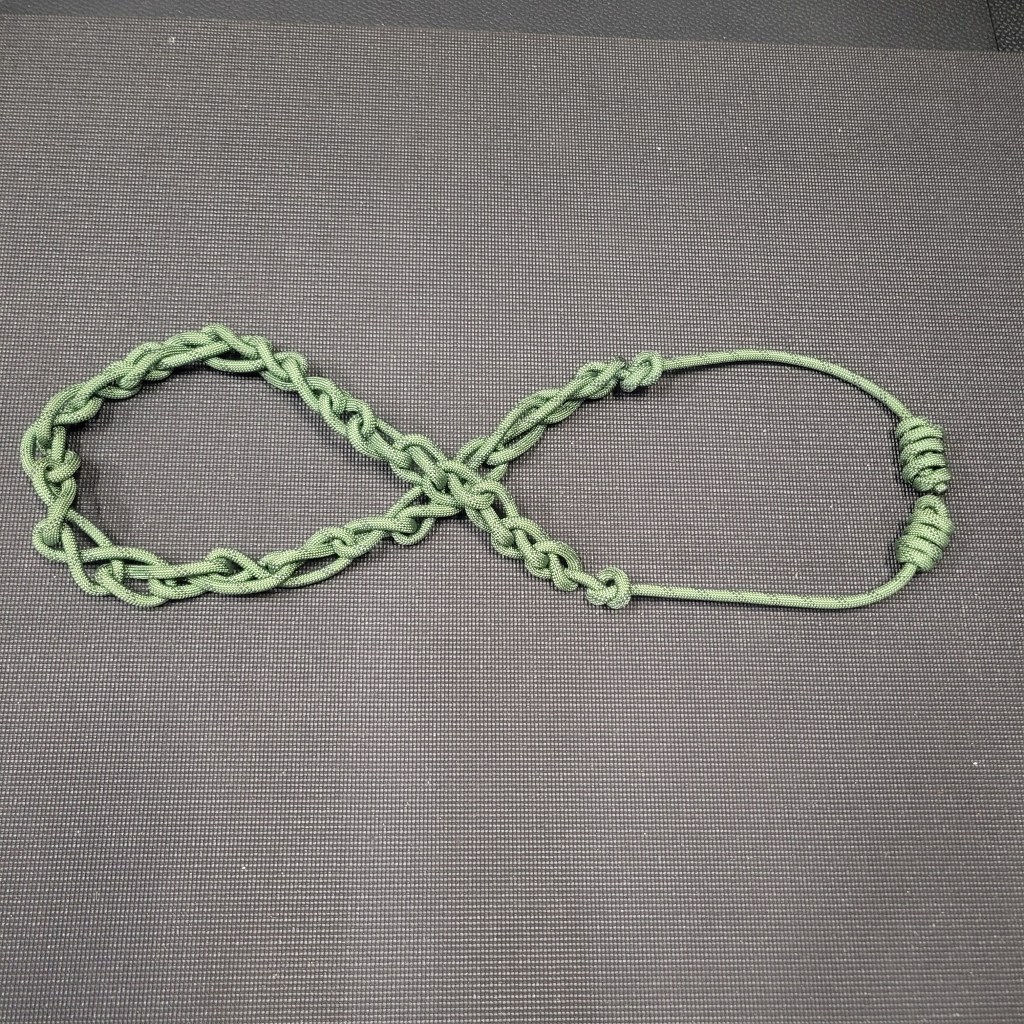
  • Why You Should Build a DIY Flow Rope

    Why You Should Build a DIY Flow Rope

    If you spend any time on fitness social media, you’ve probably seen people swinging heavy ropes around in fluid, hypnotic patterns. Rope flowing has exploded in popularity, often accompanied by massive promises about unlocking “coordination,” “rotational power,” and “total-body unity.”

    I recently put together a video walking through how to build a cheap DIY version of a heavy, braided flow rope. But before you watch it, I want to talk about why you should bother making one — and cut through a bit of the fitness marketing noise while we’re at it.

    📺 Watch the full build video below:

    https://www.youtube.com/embed/s0wJu7tkI_0?si=kIMfW131YtNlYT51

    Is the Hype Real?

    Let’s be real for a second. Flow ropes have a massive amount of hype behind them right now, and if we’re being objective, some of the promised benefits might be a bit blown out of proportion. Swinging a rope isn’t going to magically replace a well-rounded strength or conditioning routine, nor is it a cure-all for every movement flaw.

    But just because something is hyped doesn’t mean it’s useless. Overall, I think flow ropes are an incredibly good thing for most people.

    Here’s why: at the very least, it gets people moving. It’s a low-effort, low-impact exercise that almost anyone can do. It doesn’t beat up your joints, it doesn’t require a grueling warm-up, and it’s a movement practice you can easily carry with you into your 80s and beyond. In a world where it’s easy to stay sedentary, any tool that makes moving your body accessible and sustainable for a lifetime is a massive win.

    The Martial Arts Connection

    As a martial artist, I look at the flow rope through a slightly different lens. While the fitness world pitches it as a brand-new training methodology, the mechanics feel deeply familiar to anyone who has spent time training with traditional weapons.

    To me, the flow rope is most similar to nunchakus. Just like nunchucks, it demands a certain baseline speed and consistent momentum — the moment your timing is off, the physics break down completely. The fluid, repeating loops also strongly resemble the striking patterns used with Eskrima sticks and the bo staff.

    Because it mirrors these movement arts, it forces a level of spatial awareness and rhythm that will carry over even when you aren’t holding the rope. It almost seems like a hidden gateway drug for fitness enthusiasts to cross over into weapons training and martial arts — teaching you how to let an object flow around your body safely before you ever pick up a real training weapon.

    Why This Specific DIY Build?

    When I decided to build an infinity-style braided rope, I did it because of the specific design mechanics. Standard heavy ropes get incredibly thick, making them clumsy to hold. What I like about this braided design is that it adds significant weight and drag to the center of the rope without adding bulk to the handles. You get the high-momentum feedback of a heavy rope, but your hands still have a thin, manageable cord to grip.

    Building a DIY version gives you a cheap entry point to see if you even enjoy this style of movement before dropping premium money on commercial gear. If you have the budget, I always recommend supporting the original innovators like WeckMethod — their engineered quality is going to be top-tier. But if you just want to test the waters, a DIY weekend project is a fantastic first step.

    My Favorite Benefit (Has Nothing to Do with Fitness)

    If you ask me what the absolute best benefit of a flow rope is, it isn’t the weapon-like coordination or the rotational mechanics.

    It’s that it forces you to go outside.

    To swing an 8.5-foot rope around without obliterating a lampshade or scuffing a ceiling, you have to step out into the yard, a park, or a driveway. I’m a firm believer that most of us — myself completely included, as I sit inside typing this on a screen — do not spend nearly enough time outdoors. Anything that gives someone a compelling, fun reason to step out into the fresh air is something I can completely get behind.

    The Verdict

    You don’t need to buy into the idea that a flow rope is a mystical fitness cheat code to enjoy it. It’s a fun, rhythmic, low-stress way to move your body, pick up some martial-arts-adjacent coordination, enjoy the outdoors, and break up the monotony of standard workouts.

    If you want a low-cost, satisfying afternoon project that results in a great piece of outdoor movement gear, check out the full build video above.


    Enjoyed this? Come find me on YouTube.

    I put out videos on movement, DIY gear, martial arts, and whatever else I’m obsessing over. If any of that sounds like your kind of rabbit hole, I’d love to have you along — hit subscribe so you don’t miss the next one.

    Disclaimer: This article and the accompanying video are for educational and entertainment purposes. I am not affiliated with, endorsed by, or connected to WeckMethod or David Weck. Just a fan of fun DIY projects and movement gear.

  • Loneliness is the New Smoking: How to Re-Enter the Physical World

    Loneliness is the New Smoking: How to Re-Enter the Physical World

    In a world where you can connect with nearly any type of person — from any walk of life, any worldview, any corner of the globe — it sounds almost absurd that loneliness and depression are at an all-time high. If you can find hundreds of like-minded people in an online space in minutes, how could you still feel profoundly alone?

    The answer, I think, is this: digital connection is not a sufficient replacement for physical connection. The quantity of connection has never been higher, but the quality is severely lacking — particularly in the things that matter most: body language, tone of voice, and the kind of shared energy that only exists when people are physically present with one another. And yet, the algorithm keeps pulling us deeper in.

    Reclaiming the “Third Place”

    As a former Starbucks employee, I was introduced early on to one of the core philosophies behind the brand: the concept of the “Third Place.” This idea, popularized by sociologist Ray Oldenburg, defines a vital gathering space that is neither your home nor your workplace — the informal anchor of a healthy community. Whether or not a coffee shop is your ideal version of it, the philosophy behind the third place points directly at what so many of us are missing.

    The good news is that third places don’t have to cost much, or anything at all. The question worth asking yourself is: what genuinely interests you? Can that interest become a group activity? And how much time or money are you willing to invest in it?

    Low Cost, Low Effort Ways to Meet People in Real Life

    The lowest-barrier option is simply going outside. Find a local park and walk there regularly. If you already walk plenty (and there’s a good chance you don’t), try the public library. These are what you might call passive social activities — being alone among others — and they’re a surprisingly low-stress way to re-enter the physical world.

    Low Cost, Slightly More Effort

    With a bit more initiative, you could join a local walking or running club, which adds the dimension of a shared purpose. Pickup sports at parks — basketball, pickleball, disc golf — offer similar benefits. Community centers often host hobby-based groups for things like knitting, board games, or gardening that are free or low-cost and surprisingly welcoming to newcomers.

    Higher Cost, Still More Effort

    If you’re willing to invest more, you move into spaces that demand consistency but tend to forge deeper community bonds. Boutique fitness studios — CrossFit, Pilates, Orange Theory — are built around the group experience as much as the workout itself. Skill-based pursuits like martial arts, art classes, or a long-term cooking course create relationships through shared growth. Collaborative groups like theater or improv, or enthusiast clubs around cars, motorcycles, or other specialized interests, develop the kind of tight-knit community that’s hard to find anywhere else.

    None of these options is uniquely special. What makes any of them work is simply showing up consistently — a lesson that applies to almost every area of life worth building.

    The Ultimate Long-Term Cost

    There’s also a deeper cost to a life lived primarily online — beyond the well-documented downsides of algorithmic content and digital tribalism. The ultimate price is your physical and mental health.

    Social isolation and chronic loneliness are linked to higher rates of cardiovascular disease, stroke, dementia, and cognitive decline. The body keeps score in ways we often ignore — and loneliness is no exception. Per a 2023 advisory from the U.S. Surgeon General, loneliness has become a full-blown public health crisis, with a mortality impact comparable to smoking 15 cigarettes a day.

    Some people say sitting is the new smoking. Maybe loneliness is the new sitting.

    Ultimately, the choice is ours. We can let screens redirect our attention toward global digital communities that offer quantity without substance — or we can make the intentional choice to invest in local, tangible spaces that actually nourish us. True wealth, after all, isn’t just financial. Find your third place. Show up regularly. Invest in the human connections that can’t be replicated through a screen.

  • What Learning a Backflip Taught Me About Learning Anything

    What Learning a Backflip Taught Me About Learning Anything

    Most skills worth having are uncomfortable at first.

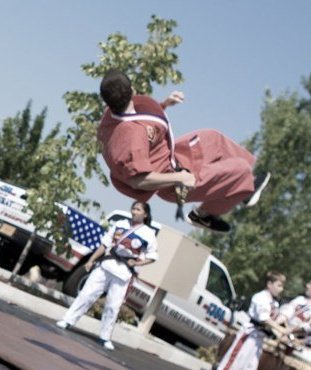
    I was a kid obsessed with tricking — an aesthetic blend of martial arts, gymnastics, and breakdancing. In pursuit of getting better at tricking, a backflip was essential. My trampoline became the training ground, and eventually I developed something that, resembled one — it was a bit more over the shoulder than straight back but it was a start. After a while and a lot of trial and error I got a pretty good looking backflip on the trampoline.

    After building up the courage, the next step was solid ground.

    It did not go well at first. My landings were bad — on all fours — it looked more like a poorly executed back hand spring. After my class ended my parents were waiting to pick me up. I showed them my progress, then asked if I could stay for a bit longer to keep working on it. They said yes, which tells you something about how convincing I was or how patient they were. Either way I stayed an extra two hours working with the sole goal of landing on my feet.

    What followed was a long morning of bad backflips. By the end of the day, I had landed a few of them on my feet, so it was a great success in my book.

    The technique was not textbook. A proper back tuck is about jumping up, tucking, and rotating with your shoulders as the axis. My version involved jumping backward while looking up, throwing my shoulders back, getting minimal height, and rotating around my hips — which works, technically, but is not great. I was young and I was just happy to have landed a few on my feet.

    The next day, it felt like every muscle in my body was sore, and that lasted for about a week.


    What That Day Actually Taught Me

    Almost two decades later, the backflip is still in my muscle memory. So are the lessons from learning it.

    You have to believe it’s possible before you can do it. The first barrier wasn’t physical — it was deciding that this was something my body could actually do. That sounds simple, but it’s real. You cannot commit to a back rotation if part of your brain is still negotiating an exit. Whatever you’re trying to learn, the mental piece comes first. Doubt bleeds into execution.

    When you have an intense burning desire for something, lean into it. I had this desire to learn a backflip. When you stumble upon something new, a skill, a topic, that ignites that same kind of burning passion within you – lean into it. Fuel that fire as long as you can because desires like that don’t last. I could have called it quits after those initial clumsy attempts. I would have eventually learned the backflip, but not with the same speed and intensity. That day, fueled by pure desire, I landed a backflip.

    You have to put in bad reps to get to good ones. There’s a version of “work smarter, not harder” that is actually useful, and a version that is just an excuse not to do the uncomfortable early work. The bad backflips weren’t wasted — they gave me the body awareness to start adjusting. You often need to do the hard work before you know what the smart work looks like.

    Feedback accelerates everything. I didn’t have a coach. I figured it out through trial and error, which worked but was slower and harder on my body than it needed to be. When someone who’s already done what you’re trying to do gives you real feedback, it compresses the timeline significantly. That’s worth seeking out, and in later years I did find a group of like-minded individuals that helped me on my tricking journey.

    Iterations matter more than hours. Naval Ravikant has a line: “It’s not 10,000 hours, it’s 10,000 iterations.” That’s what a two-hour backflip session actually is — not two hours of doing the same thing, but dozens of small experiments and small adjustments. Try something, feel what happened, adjust, go again. The feedback loop is the work.


    The Bottom Line

    The backflip itself wasn’t the point. What stuck with me was the process: identify something you want, accept that the early attempts will be rough, stay in the reps long enough to get real feedback, and keep adjusting until you get it right.

    That applies to most things worth learning.

  • Stop Buying Individual Grippers: The Adjustable GD Iron Grip Upgrade

    Stop Buying Individual Grippers: The Adjustable GD Iron Grip Upgrade

    For years, I followed the “gold standard”: Captains of Crush (COC) grippers. They’re legendary for a reason, but they have a built-in flaw that eventually stalls progress. The jumps between difficulty levels are massive — 55 lbs from the #1 to the #2 — leaving you stuck in no man’s land, either breezing through one or failing the next.

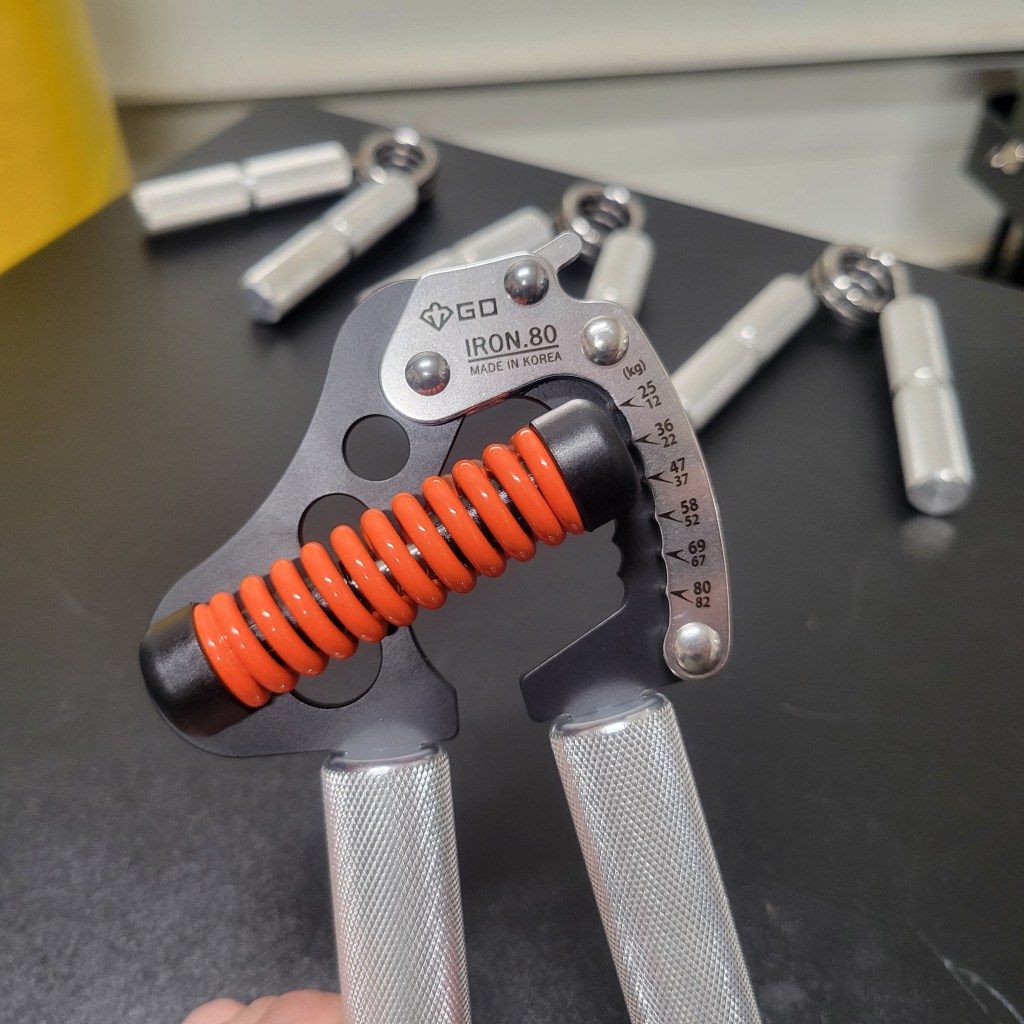
    While watching Jujimufu’s tour of Raspberry Ape’s gym, something clicked. Raspberry Ape made it simple: if you want to get good at grippers and you don’t care about certifying on the COC #3, you need an adjustable gripper. The one he recommended has since been discontinued, so I went down the rabbit hole and found what I believe is the best option on the market right now: the GD Iron Grip.

    Here’s why it matters for eskrima specifically. In most of our training, we’re not using maximal crushing strength — the stick doesn’t require it. What actually gets an eskrimador disarmed isn’t a lack of raw power. It’s fatigue. Your grip endures dozens of strikes, blocks, and transitions across a long session, and when it starts to fade, that’s when the opening appears. An adjustable gripper lets you train that full spectrum: dial it back for high-rep endurance work that mimics a real session, or crank it up to build the raw strength that serves as your ceiling.

    The GD Iron Grip earns its place on the shelf beyond just the concept. The resistance range is wide enough to be useful whether you’re a beginner building a base or an intermediate looking to push past a plateau. The build quality is solid, and the symmetrical design means it feels identical in both hands — no awkward adjustments when you switch.

    Whether you’re an eskrimador, a lifter, or just someone who wants bigger forearms , this tool has a place in your training.

    Check out the full video below for the unboxing, technical specs, and more.

  • Why How You Breathe Matters More Than You Think: Lessons from James Nestor’s Book “Breath”

    Why How You Breathe Matters More Than You Think: Lessons from James Nestor’s Book “Breath”

    Most of us think breathing is just something that happens. You do it 25,000 times a day, so you must be an expert, right?

    By the time you finish reading this short article, you will have taken about 40 to 60 breaths without even realizing it. Like a computer program running in the background, your breathing stays on “autopilot” while you focus on your phone or your coffee.

    We rarely stop to check the quality of those breaths. But it turns out that how you breathe might be just as important as what you eat or how you lift.

    James Nestor is an award-winning science journalist whose book Breath: The New Science of a Lost Art is full of insights — and if you like this article, you should get the book. If you prefer video, his YouTube channel is a great place to start. Here are the big ideas that stood out to me:


    1. The Belly Breath

    Most adults only use a tiny bit of their diaphragm (the muscle under your lungs). When you take shallow breaths, your heart has to work twice as hard. By taking deeper breaths, focusing on expanding into your belly, you let your diaphragm do the heavy lifting, which lowers your blood pressure and gives your heart a break.

    2. We Are “Over-Breathing”

    Just like you can over-eat, you can over-breathe. Taking too many quick, shallow breaths keeps your body in a “stress” mode. The goal is to breathe less but better.

    3. The 5.5 Second Rule

    If you want the “perfect breath,” here is the math:

    • Inhale for 5.5 seconds.
    • Exhale for 5.5 seconds.

    That’s about 5.5 breaths per minute. Nestor points out that this isn’t a new discovery; humans have been doing this for thousands of years through prayer and chanting. Whether it’s the Catholic Rosary, the Buddhist mantra “Om Mani Padme Hum,” or Native American and African spiritual chants, they all seem to land roughly on this 5.5-second rhythm.

    4. Breath Through Your Nose, Not Your Mouth

    Your nose is a filter and a heater; your mouth is just a backup. Breathing through your nose releases a gas called Nitric Oxide that helps your blood carry more oxygen, it also helps you sleep better. Excessive mouth breathing can lead to a lot of poor health outcomes.

    5. Why Our Jaws are Shrinking

    Modern food is too soft. Because we don’t chew “hard” things anymore, our jaws have become smaller over generations. This makes our airways narrower, leading to crooked teeth and snoring. Chewing—and breathing through your nose—helps keep your airway open.

    6. Exhaling is Half the Battle

    Many people focus on getting air in, but the real problem is often getting the “stale” air out. If you don’t exhale fully, you leave old air in your lungs, which makes it harder to get fresh oxygen on the next breath.


    If you want to live longer, don’t just worry about your step count and calories, start paying attention to your breath. Breathe slow, breathe deep, and keep your mouth shut. And if this kind of science-backed habit building resonates with you, Feel-Good Productivity by Ali Abdaal is another book that takes a similarly evidence-based approach to how we perform at our best.

  • Shogun Sports 100lb Sandbag — A Real World Strength Tool

    Shogun Sports 100lb Sandbag — A Real World Strength Tool

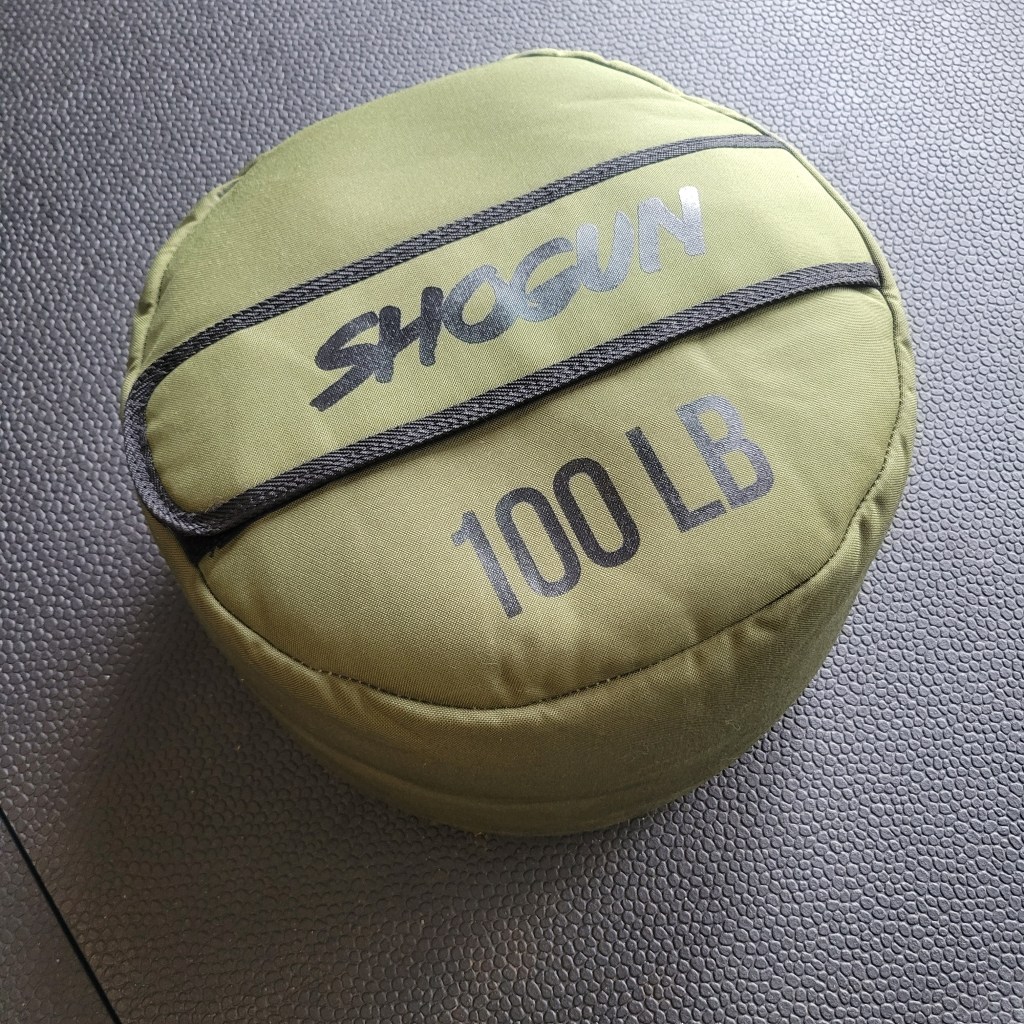
    I’m a big believer in training that translates to the real world. This 100lb Shogun Sports sandbag is a fantastic tool for developing “functional” strength — the kind required to move the awkward, asymmetrical objects that traditional weights often miss. Whether your focus is conditioning or general health, sandbags force you to adapt to a shifting, unstable load in a way few other implements can.

    What I didn’t cover in the video: the shifting, unpredictable weight of a sandbag is remarkably similar to what you experience in martial arts, grappling, and wrestling — where your “opponent” isn’t a fixed, balanced load. If you train in any of those disciplines, this is an especially worthwhile addition to your toolkit. It also doubles as a surprisingly solid low seat for box-style squats, which I didn’t expect but use regularly.

    Filling this bag turned into a mini-project of its own — dealing with damp sand and odd smells — but that’s part of the process of building a home gym. If you’re looking for a durable, veteran-owned gear option that can take a beating, this is a strong recommendation.

    Key Takeaways from the Build:

    • The Build: Top-tier construction featuring high-quality YKK zippers and a reinforced internal liner to prevent leaks.
    • The Fill: Buy your sand in the summer and fill it outside. If not, be prepared to dry it out manually with a fan — and to clean up a lot of dust.
    • The Result: A versatile, rugged tool that has become a staple for my strength and conditioning.

    Check out the full video below for the unboxing, filling tips, and my detailed first impressions.

  • 10 Ideas I Got from Atomic Habits 

    10 Ideas I Got from Atomic Habits 

    The following is a list of 10 ideas that deeply resonated with me while reading Atomic Habits by James Clear. These concepts have fundamentally changed how I look at my environment, my daily routine, and the way I “put points on the scoreboard.”

    If you find these ideas helpful, I highly recommend picking up a copy of the book or exploring James Clear’s other work for a deeper dive. Please note that I don’t have any affiliate links at the moment; I’m just sharing these because they’ve had a genuine impact on my life. If that ever changes, I’ll update this post accordingly.

    Here are my top 10 takeaways:

    1. The Power of Compounding

    Tiny, consistent improvements—getting just 1 percent better every day—compound into massive results over time. Success is not the product of a single, once-in-a-lifetime transformation, but of daily habits. I like to think about putting points on the scoreboard: Reading a chapter in a book instead of scrolling social media, that’s a point; going on a walk instead of having dessert that you don’t need, that’s a point; and so on.

    2. Focus on Systems That Point Towards Your Goals

    “You do not rise to the level of your goals. You fall to the level of your systems.” Goals are great, but they create an “either-or” scenario where you are either successful or you fail. Certain goals can be detrimental, especially if the goal isn’t 100% decided by your actions, like winning a game. Goals are good for setting a direction, but systems are about building processes that make progress in that direction.

    3. Become the Type of Person Who Does the Thing

    The deepest and most effective form of behavior change is changing your identity—what you believe— the idea is not to perform a habit, but to become the type of person who performs that habit (e.g., “The goal is not to read a book, the goal is to become a reader”). Every action is a vote for the type of person you wish to become, and your identity emerges out of your habits.

    4. Lacking Motivation? Change Your Environment

    Motivation is a finite resource and changing your environment could be an easy fix. I used to work at a bar, taproom, and bottleshop for a while and it’s not surprising that I drank more than I should have. Not excessively but significantly more than the 0-2 per week that is recommended. When I left that job it was so much easier to drink less. It doesn’t have to be about avoiding bad habits either, you can prime your environment to help you read, workout, or drink more water. You want to read more, have your book out in the open, on your bed or where you sit when you watch tv. You want to work out more, have a home gym and put things in places you usually hang out around the house, a pair of dumbbells by the TV, a few exercise bands by your desk, and a pull up bar on a doorframe you walk by a few times a day and use these things when you walk by them. You can do the same thing with a few water bottles.

    5. The Four Laws of Behavior Change

    (1) Make it Obvious, (2) Make it Attractive, (3) Make it Easy, and (4) Make it Satisfying. If you’re having trouble with trying to answer the questions, how can I make it obvious, attractive, easy, and satisfying? Think about answers to the inverse: how would I make it invisible, unattractive, difficult, and unsatisfying?

    6. The Path of Least Resistance

    We naturally gravitate toward the option that requires the least amount of effort. Knowing this it is a good idea to design your life so the actions that matter most are also the easiest to do, making the good habit the path of least resistance.

    7. Habit Stacking

    Everyone has habits, if you want to add a new habit it is good to stack them with habits you already have, writing it down clearly and intentionally is good. The formula for this is: “After [CURRENT HABIT], I will [NEW HABIT].”

    8. Remove or Add Steps to Bad Habits

    A good way to eliminate bad habits is to reduce exposure to the cue that causes it. It’s much easier to avoid temptation than resist it. This is the “secret to self-control”: spend less time in tempting situations, often by simply making the cues of bad habits invisible or adding steps to get to the bad habit. An example that I use is when I want to do something and I know I could get distracted by my phone. I have it in another room.

    9. Awareness Through the Habits Scorecard

    The process of behavior change always starts with awareness. A practical tool is the habits Scorecard, at the beginning of a given day write down all your actions throughout the day (you don’t have to do this daily, just every once in a while). At the end of the day ask yourself for each thing you wrote, does this get me closer to the person I want to become? And add a (+) next to it if it does, a (-) if it doesn’t and a (=) if it doesn’t have an impact, then look at all the (-) and ask yourself what can I do to make this activity more difficult to do in the future? Like if after you got up one of the first things you did was check your phone, maybe the answer would be charging my phone outside of my bedroom at night. Also don’t forget to congratulate yourself on the (+) and if you want you could ask yourself the question: what can I do to make this easier to do in the future?

    10. Stack Your Wants with Shoulds

    There’s a new show on Netflix that you really want to watch? Stack that with a productive should, like folding laundry or walking on a treadmill or pedaling a stationary bike (you can easily get these free on facebook marketplace or craigslist). Or you want to scroll Instagram for 5 minutes after doing 25 minutes of work on a project you know you should be working on. This is the pomodoro technique, make sure to set a timer for this one, you could easily scroll for an hour after 25 minutes of work if you’re not careful.