Category: Fitness

Fitness stuff that has or is making me a healthier person.

  • My AI Personal Trainer Hallucinated a PR I Didn’t Have Yet

    My AI Personal Trainer Hallucinated a PR I Didn’t Have Yet

    A few days ago, my AI personal trainer had me bench press 265 pounds for five reps

    My one-rep max was 260 lbs, which I’d never told it. I had never benched 265 lbs.

    I figured the AI thought I was getting stronger and wanted to challenge me, so I slapped on 265 lbs and went for it — I trusted the program, and I assumed it wasn’t hallucinating. First rep was slow but I managed it — a new personal record. The second one got to the bottom and stopped there.

    I failed the rep and asked it why it had me attempting a weight I’d never lifted before. That’s when I told it my actual previous best — 260 lbs — which I’d never entered into the log. Neither of us had the full picture: it didn’t know my real numbers, and I didn’t know it had invented one.

    It turns out the number was a hallucination. The PR was real.

    Why an AI, and Why Not an App

    I have a home gym, and it doesn’t fit a template. A SquatMax MD belt squat, a transformer safety squat bar, a functional trainer, the Kratos flywheel, the Shogun Sport Nord-EX, an open trap bar, BFR cuffs, a Torque Fitness tank, battle ropes, gymnastics rings, an anterior tibialis machine, a Concept2 rower, various kettlebells and clubs, along with the standard adjustable dumbbells and Olympic weights. Along with many other bits and bobs. I have a fitness enthusiast’s playground at my disposal.

    Unfortunately, most workout apps assume you’re going to a commercial gym. I’ve always wanted a free app — free of cost, but also free-form — where I could input the equipment I actually had and it would build workouts around that. I tried a few. None were really what I was looking for. So I decided to see if AI could solve it.

    What I wanted was an intuitive program that changed with me. If I missed a workout, it adjusted the schedule. If I was sore or had slept badly, it adjusted the dose. If I’d done something the day before that wasn’t in the plan, it counted it. And it stayed tailored to my goals.

    The system runs on three things:

    1. Inventory — I told the AI, in natural language, the equipment I had and what I usually use it for.
    2. Goals and schedule — It doesn’t force a calendar. I told it my goals, how many times I planned on working out per week, and let it know that was subject to change — I wanted it to adjust my workouts if it did.
    3. Step-by-step workouts — When I was doing the workout, I asked it to work through it with me step by step so I could give feedback and adjust when necessary.

    In the beginning, it was a bit rocky. It recommended that I do shoulder presses with the transformer safety squat bar. It treated my SquatMax MD like a barbell and told me I should put a 45-pound plate on each side. Anybody who knows anything about working out knows those are silly recommendations. It also kept giving me the same leg day, workout after workout — same exercises, same order, just heavier weight each time leg day came back around. So I told it I didn’t want that: not that I minded doing an exercise twice in one training week, but I wanted variety the next time we hit legs, not just the same routine with more weight stacked on. But after a bit of trial and error, I was doing some pretty good workouts.

    I’ll say I was, at one point, a NASM-certified personal trainer, so I know a thing or two about working out. When I saw a recommendation that was not ideal, I made sure to correct it. Also, I’m using a local LLM — I imagine if you’re using a frontier model, it will be better. Either way, it’s an iterative process and you need to be patient.

    What It Gets Right

    On a day when you’re not feeling it, it meets you where you are. One morning I was sluggish — procrastinating since 7 a.m. By 2 p.m. I told it I was having a kind of lazy feeling day. It adjusted the workout — lower weight, less volume — and I ended up feeling a lot better after.

    It absorbs life’s chaos and adjusts. I had legs scheduled, but life sometimes gets in the way of the ideal workout plan. I told it what I did do that day — 90 minutes of eskrima flow sparring. It logged it, turned the leg day into an active recovery day, and adjusted to my life instead of the other way around.

    It’s infinitely adjustable as well. It’ll give you what it thinks you want, but you can change it. Even small things — it would sometimes say to rest for 90 seconds, and other times for 2 minutes and 30 seconds. It’s the same kind of thing as parents describing their kid’s age in months instead of years — technically correct, but now I have to do mental math to compare them. So I told it to always say 1 minute and 30 seconds, and stick to one format.

    You can also change larger things. In the beginning I was having it work through my workout with me step by step in the chat window — it told me what to do for each section, I told it when I was done and if I did something different, and I could ask for clarification on what it meant. Now I have a dashboard for the day’s workout where I can check off each section as I finish it and edit the sets, reps, or weight depending on what I did, and I can still ask for clarification in the chat window if necessary.

    What It Gets Wrong

    It hallucinated me benching 265 lbs for four reps, which is why it recommended I do it for five this week — not knowing that the most I’d benched in this block of training was 225 lbs for five reps. I only caught it because I failed the rep and pushed back, asking why it had me attempting something I’d never lifted before.

    It also recommends things that shouldn’t be done, like the shoulder press with the transformer safety squat bar mentioned earlier. But if you know what movements you want to do with what equipment, you can train the AI to know what to recommend in the future.

    It also recommends things that shouldn’t be done, like the shoulder press with the transformer safety squat bar mentioned earlier. But if you know what movements you want to do with what equipment, you can train the AI to know what to recommend in the future.

    Final Thought

    If you’re new to working out and you blindly follow whatever it tells you to do, you could hurt yourself. If you’re an elite athlete with specialized goals, this probably isn’t going to be for you either.

    But if you’re in the middle — you know what you’re doing and you just want to add a little more structure or variety to your training — this could definitely be a good option for you.

    Also, the most exciting thing for me is that AI is improving at an alarming rate. As I’m writing this, know that the version I’m using did the worst job it will ever do — which was still pretty good. It will only get better in the future as better models become available.

    If you try building something like this yourself, when a recommendation feels off, don’t just go along with it — ask it directly why it’s telling you to do something you’ve never done before. That’s the habit that caught my hallucinated PR before it turned into a bad rep — or a bad injury. Let me know how it goes.


    If you liked this, you might also enjoy:

    Why You Should Build a DIY Flow Rope

    Rope flowing has exploded in popularity, but does it live up to the hype? Here’s why a DIY build might be the best entry point — and why the best benefit has nothing to do with fitness.

    If You Want to Be Good at Something, Do it for an Unreasonable Amount of Time

    Getting good at something has nothing to do with talent. It has everything to do with showing up long enough that staying bad at it becomes unreasonable. Here’s what that actually looks like.
  • Why You Should Build a DIY Flow Rope

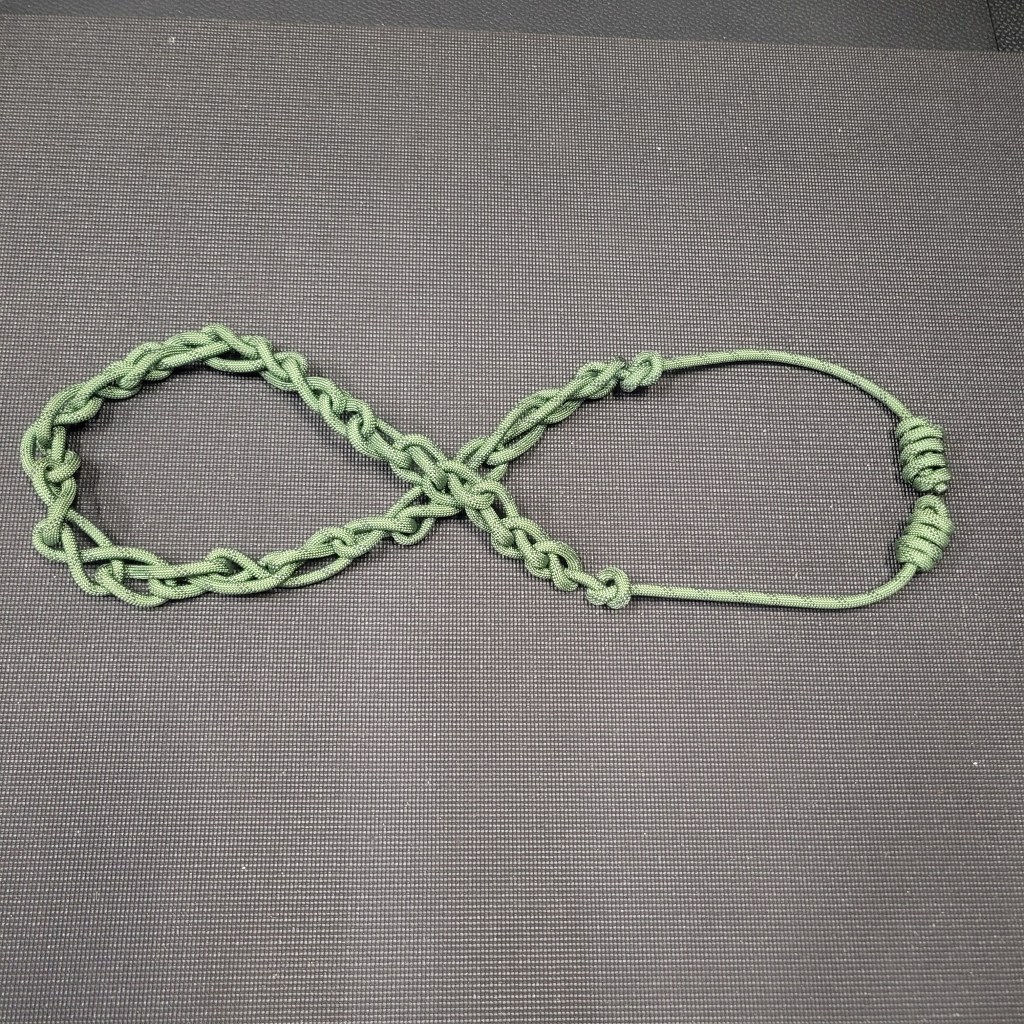
    Why You Should Build a DIY Flow Rope

    If you spend any time on fitness social media, you’ve probably seen people swinging heavy ropes around in fluid, hypnotic patterns. Rope flowing has exploded in popularity, often accompanied by massive promises about unlocking “coordination,” “rotational power,” and “total-body unity.”

    I recently put together a video walking through how to build a cheap DIY version of a heavy, braided flow rope. But before you watch it, I want to talk about why you should bother making one — and cut through a bit of the fitness marketing noise while we’re at it.

    📺 Watch the full build video below:

    https://www.youtube.com/embed/s0wJu7tkI_0?si=kIMfW131YtNlYT51

    Is the Hype Real?

    Let’s be real for a second. Flow ropes have a massive amount of hype behind them right now, and if we’re being objective, some of the promised benefits might be a bit blown out of proportion. Swinging a rope isn’t going to magically replace a well-rounded strength or conditioning routine, nor is it a cure-all for every movement flaw.

    But just because something is hyped doesn’t mean it’s useless. Overall, I think flow ropes are an incredibly good thing for most people.

    Here’s why: at the very least, it gets people moving. It’s a low-effort, low-impact exercise that almost anyone can do. It doesn’t beat up your joints, it doesn’t require a grueling warm-up, and it’s a movement practice you can easily carry with you into your 80s and beyond. In a world where it’s easy to stay sedentary, any tool that makes moving your body accessible and sustainable for a lifetime is a massive win.

    The Martial Arts Connection

    As a martial artist, I look at the flow rope through a slightly different lens. While the fitness world pitches it as a brand-new training methodology, the mechanics feel deeply familiar to anyone who has spent time training with traditional weapons.

    To me, the flow rope is most similar to nunchakus. Just like nunchucks, it demands a certain baseline speed and consistent momentum — the moment your timing is off, the physics break down completely. The fluid, repeating loops also strongly resemble the striking patterns used with Eskrima sticks and the bo staff.

    Because it mirrors these movement arts, it forces a level of spatial awareness and rhythm that will carry over even when you aren’t holding the rope. It almost seems like a hidden gateway drug for fitness enthusiasts to cross over into weapons training and martial arts — teaching you how to let an object flow around your body safely before you ever pick up a real training weapon.

    Why This Specific DIY Build?

    When I decided to build an infinity-style braided rope, I did it because of the specific design mechanics. Standard heavy ropes get incredibly thick, making them clumsy to hold. What I like about this braided design is that it adds significant weight and drag to the center of the rope without adding bulk to the handles. You get the high-momentum feedback of a heavy rope, but your hands still have a thin, manageable cord to grip.

    Building a DIY version gives you a cheap entry point to see if you even enjoy this style of movement before dropping premium money on commercial gear. If you have the budget, I always recommend supporting the original innovators like WeckMethod — their engineered quality is going to be top-tier. But if you just want to test the waters, a DIY weekend project is a fantastic first step.

    My Favorite Benefit (Has Nothing to Do with Fitness)

    If you ask me what the absolute best benefit of a flow rope is, it isn’t the weapon-like coordination or the rotational mechanics.

    It’s that it forces you to go outside.

    To swing an 8.5-foot rope around without obliterating a lampshade or scuffing a ceiling, you have to step out into the yard, a park, or a driveway. I’m a firm believer that most of us — myself completely included, as I sit inside typing this on a screen — do not spend nearly enough time outdoors. Anything that gives someone a compelling, fun reason to step out into the fresh air is something I can completely get behind.

    The Verdict

    You don’t need to buy into the idea that a flow rope is a mystical fitness cheat code to enjoy it. It’s a fun, rhythmic, low-stress way to move your body, pick up some martial-arts-adjacent coordination, enjoy the outdoors, and break up the monotony of standard workouts.

    If you want a low-cost, satisfying afternoon project that results in a great piece of outdoor movement gear, check out the full build video above.


    Enjoyed this? Come find me on YouTube.

    I put out videos on movement, DIY gear, martial arts, and whatever else I’m obsessing over. If any of that sounds like your kind of rabbit hole, I’d love to have you along — hit subscribe so you don’t miss the next one.

    Disclaimer: This article and the accompanying video are for educational and entertainment purposes. I am not affiliated with, endorsed by, or connected to WeckMethod or David Weck. Just a fan of fun DIY projects and movement gear.

  • Stop Buying Individual Grippers: The Adjustable GD Iron Grip Upgrade

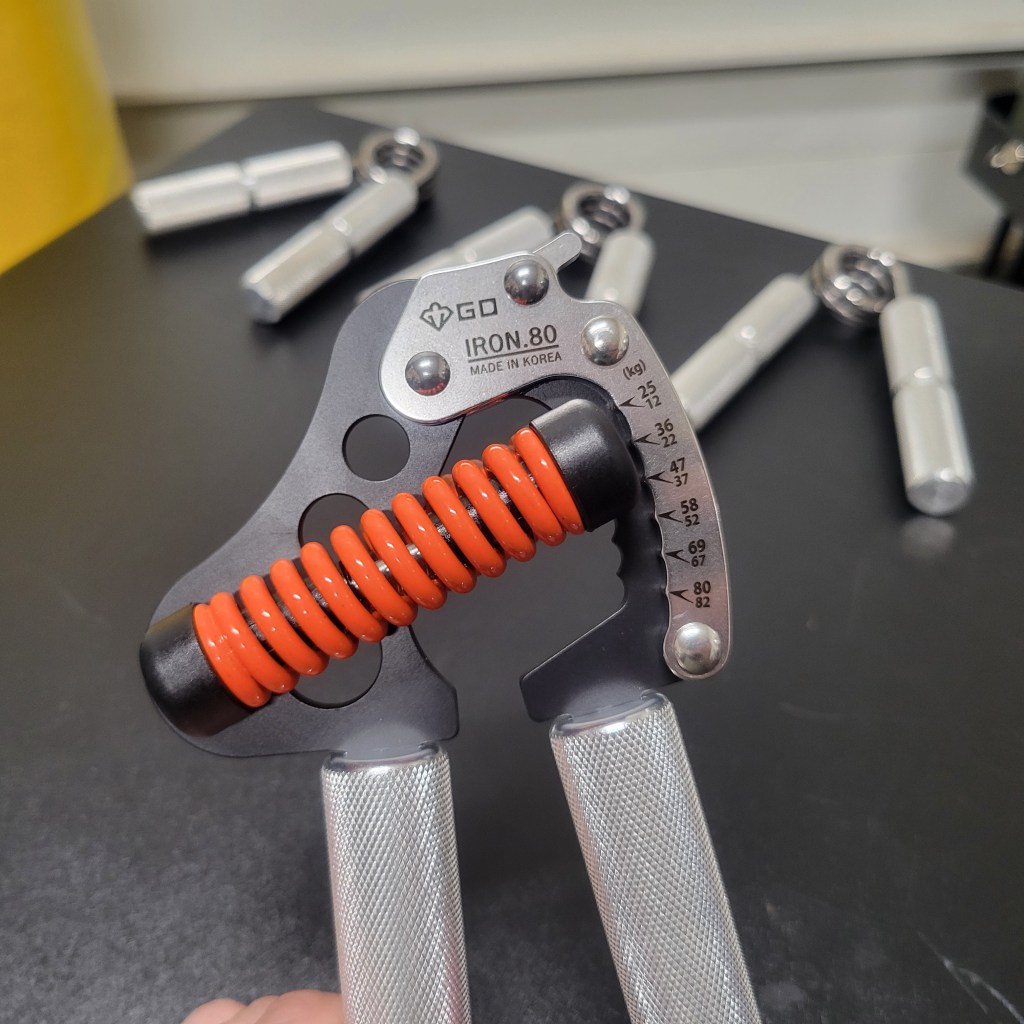
    Stop Buying Individual Grippers: The Adjustable GD Iron Grip Upgrade

    For years, I followed the “gold standard”: Captains of Crush (COC) grippers. They’re legendary for a reason, but they have a built-in flaw that eventually stalls progress. The jumps between difficulty levels are massive — 55 lbs from the #1 to the #2 — leaving you stuck in no man’s land, either breezing through one or failing the next.

    While watching Jujimufu’s tour of Raspberry Ape’s gym, something clicked. Raspberry Ape made it simple: if you want to get good at grippers and you don’t care about certifying on the COC #3, you need an adjustable gripper. The one he recommended has since been discontinued, so I went down the rabbit hole and found what I believe is the best option on the market right now: the GD Iron Grip.

    Here’s why it matters for eskrima specifically. In most of our training, we’re not using maximal crushing strength — the stick doesn’t require it. What actually gets an eskrimador disarmed isn’t a lack of raw power. It’s fatigue. Your grip endures dozens of strikes, blocks, and transitions across a long session, and when it starts to fade, that’s when the opening appears. An adjustable gripper lets you train that full spectrum: dial it back for high-rep endurance work that mimics a real session, or crank it up to build the raw strength that serves as your ceiling.

    The GD Iron Grip earns its place on the shelf beyond just the concept. The resistance range is wide enough to be useful whether you’re a beginner building a base or an intermediate looking to push past a plateau. The build quality is solid, and the symmetrical design means it feels identical in both hands — no awkward adjustments when you switch.

    Whether you’re an eskrimador, a lifter, or just someone who wants bigger forearms , this tool has a place in your training.

    Check out the full video below for the unboxing, technical specs, and more.

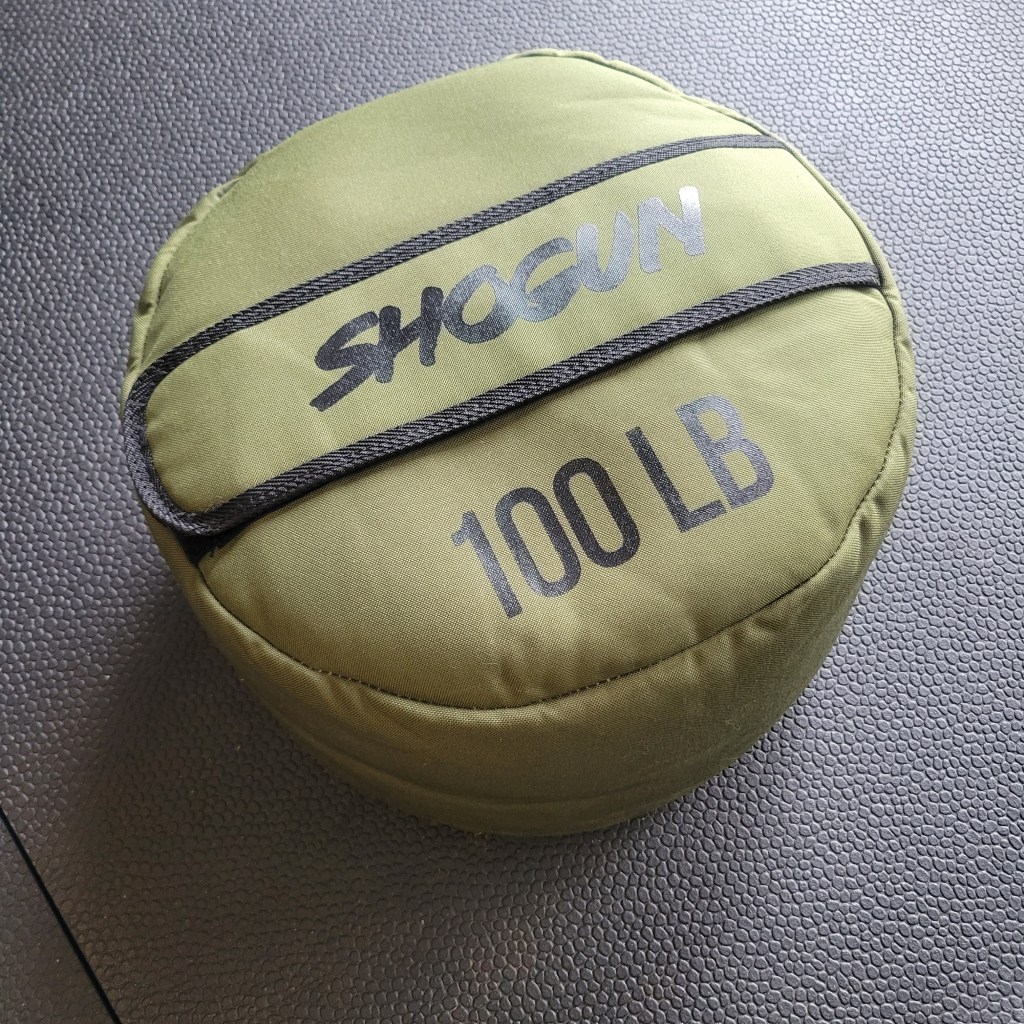
  • Shogun Sports 100lb Sandbag — A Real World Strength Tool

    Shogun Sports 100lb Sandbag — A Real World Strength Tool

    I’m a big believer in training that translates to the real world. This 100lb Shogun Sports sandbag is a fantastic tool for developing “functional” strength — the kind required to move the awkward, asymmetrical objects that traditional weights often miss. Whether your focus is conditioning or general health, sandbags force you to adapt to a shifting, unstable load in a way few other implements can.

    What I didn’t cover in the video: the shifting, unpredictable weight of a sandbag is remarkably similar to what you experience in martial arts, grappling, and wrestling — where your “opponent” isn’t a fixed, balanced load. If you train in any of those disciplines, this is an especially worthwhile addition to your toolkit. It also doubles as a surprisingly solid low seat for box-style squats, which I didn’t expect but use regularly.

    Filling this bag turned into a mini-project of its own — dealing with damp sand and odd smells — but that’s part of the process of building a home gym. If you’re looking for a durable, veteran-owned gear option that can take a beating, this is a strong recommendation.

    Key Takeaways from the Build:

    • The Build: Top-tier construction featuring high-quality YKK zippers and a reinforced internal liner to prevent leaks.
    • The Fill: Buy your sand in the summer and fill it outside. If not, be prepared to dry it out manually with a fan — and to clean up a lot of dust.
    • The Result: A versatile, rugged tool that has become a staple for my strength and conditioning.

    Check out the full video below for the unboxing, filling tips, and my detailed first impressions.