
Tag: lifestyle

  • If You Want to Be Good at Something, Do it for an Unreasonable Amount of Time

    If You Want to Be Good at Something, Do it for an Unreasonable Amount of Time

    Most people who are genuinely good at something don’t look like they’re working that hard.

    The martial artist who casually neutralizes an aggressive attack. The disc golfer who throws 400 feet down a wooded tunnel like it’s nothing. The bartender who runs five tickets at once without breaking a sweat. From the outside, it looks like a gift. From the inside, it’s just a lot of accumulated hours that nobody watched you put in.

    That’s the game. And the entry fee is being willing to be bad at something for long enough that you eventually run out of room to stay bad at it.


    Feed the Hot Coal

    Here’s the thing about passion: it doesn’t wait for you.

    When something new lights you up — a skill, a topic, an idea — that energy is a hot coal. It’s bright, it’s intense, and if you feed it, it can sustain a fire for years. But if you set it down and walk away, it cools. And a cold coal is a lot harder to relight than a hot one is to keep burning.

    This is why when you’re passionate at the beginning of learning anything is actually the most important window. Not because you’re doing it well — you’re not — but because you’re feeding the fire. The passion is there. The curiosity is alive. The worst thing you can do is wait until you feel “ready” to go all in, because by then the coal may have already cooled.

    Embrace the suck while it still excites you. Volume while the fire is burning.


    Do It Badly, at First

    Every skill I’ve ever built started with the same feeling: slow, heavy, and deeply aware of how much I didn’t know.

    In the restaurant, I started as an expeditor on a Friday during the dinner rush. If you’ve never been in a high-volume kitchen mid-service, picture a wall of noise, heat, and tickets — and me just trying not to drown. I wasn’t in any zone. I was just surviving.

    In the homebrew shop, I started as the new guy who was useful primarily because he could move heavy kegs. That was my whole value proposition for a while.

    In martial arts, I was the awkward white belt who telegraphed every move.

    In disc golf, right now, I’m the guy hitting trees on holes I should be navigating cleanly. I record my rounds. I study my form. I throw and it doesn’t look how I want it to look yet.

    The temptation at this stage is to either quit or go looking for a shortcut. A hack, a magic technique, the one drill that will skip the uncomfortable part. There is no such thing. The only move that works is to keep showing up while the coal is hot and let the volume do its job.


    You Will Notice Patterns

    If you stay in the room long enough, the chaos begins to make sense.

    The restaurant kitchen that nearly broke me in week one eventually became readable and eventually easy. I went from Expeditor to prep cook to line cook to server to bartender. Not because someone handed me a promotion — because I kept showing up and paying attention until the whole operation became transparent to me. I became the person they called when someone didn’t show. The Swiss Army knife of the place.

    The homebrew shop followed the same arc. I came in as muscle. Years later, after employees left for better opportunities — I was the person handling purchasing for both kegs and bottles, doing what had previously been two full-time management roles. I saved the owner real money because by that point I had absorbed the supply chains, the supplier relationships, the purchasing rhythms. The work had become systemic in my brain.

    Martial arts did the same thing, just more slowly and more physically. What looks like instinct from the outside is just a brain that has seen the same template — an off-balance hip, a sloppy punch, a telegraphed takedown — enough times that it recognizes the pattern before the conscious mind catches up. I’m not reacting faster. I just know where the movie ends.

    This is the compounding return on volume. You don’t feel it happening. And then one day you realize you’re not fighting the current anymore — you’re reading it.


    The “He’s a Natural” Illusion

    At some point, people start calling you gifted.

    It happened in the restaurant. It happens on the mats. It’ll happen in disc golf eventually — some beginner will watch me throw a clean hyzer around a tree and assume I just have a knack for it. I won’t correct them, but I’ll know what it actually was: a few hundred rounds of hitting that same type of tree and figuring out what I did wrong.

    The “natural” label is almost always just what accumulated competence looks like from the outside when you weren’t there to watch the boring middle part.


    Where I Am Right Now

    I’m at the beginning of something new again — working on getting into data analytics.

    It has that familiar Phase 1 feeling. A lot of information I don’t have yet. A lot of tools I’m still figuring out. The gap between where I am and where I want to be feels wide. But I’ve been here before — in a kitchen, in a keg room, on a mat, on a disc golf course — and I know what the physics of this process actually looks like. The gap closes. It always closes. Not through luck or some sudden breakthrough, but through showing up enough times that staying bad at it becomes unreasonable.

    The coal is hot right now. That’s the whole advantage. So I’m going to feed it.

  • Loneliness is the New Smoking: How to Re-Enter the Physical World

    Loneliness is the New Smoking: How to Re-Enter the Physical World

    In a world where you can connect with nearly any type of person — from any walk of life, any worldview, any corner of the globe — it sounds almost absurd that loneliness and depression are at an all-time high. If you can find hundreds of like-minded people in an online space in minutes, how could you still feel profoundly alone?

    The answer, I think, is this: digital connection is not a sufficient replacement for physical connection. The quantity of connection has never been higher, but the quality is severely lacking — particularly in the things that matter most: body language, tone of voice, and the kind of shared energy that only exists when people are physically present with one another. And yet, the algorithm keeps pulling us deeper in.

    Reclaiming the “Third Place”

    As a former Starbucks employee, I was introduced early on to one of the core philosophies behind the brand: the concept of the “Third Place.” This idea, popularized by sociologist Ray Oldenburg, defines a vital gathering space that is neither your home nor your workplace — the informal anchor of a healthy community. Whether or not a coffee shop is your ideal version of it, the philosophy behind the third place points directly at what so many of us are missing.

    The good news is that third places don’t have to cost much, or anything at all. The question worth asking yourself is: what genuinely interests you? Can that interest become a group activity? And how much time or money are you willing to invest in it?

    Low Cost, Low Effort Ways to Meet People in Real Life

    The lowest-barrier option is simply going outside. Find a local park and walk there regularly. If you already walk plenty (and there’s a good chance you don’t), try the public library. These are what you might call passive social activities — being alone among others — and they’re a surprisingly low-stress way to re-enter the physical world.

    Low Cost, Slightly More Effort

    With a bit more initiative, you could join a local walking or running club, which adds the dimension of a shared purpose. Pickup sports at parks — basketball, pickleball, disc golf — offer similar benefits. Community centers often host hobby-based groups for things like knitting, board games, or gardening that are free or low-cost and surprisingly welcoming to newcomers.

    Higher Cost, Still More Effort

    If you’re willing to invest more, you move into spaces that demand consistency but tend to forge deeper community bonds. Boutique fitness studios — CrossFit, Pilates, Orange Theory — are built around the group experience as much as the workout itself. Skill-based pursuits like martial arts, art classes, or a long-term cooking course create relationships through shared growth. Collaborative groups like theater or improv, or enthusiast clubs around cars, motorcycles, or other specialized interests, develop the kind of tight-knit community that’s hard to find anywhere else.

    None of these options is uniquely special. What makes any of them work is simply showing up consistently — a lesson that applies to almost every area of life worth building.

    The Ultimate Long-Term Cost

    There’s also a deeper cost to a life lived primarily online — beyond the well-documented downsides of algorithmic content and digital tribalism. The ultimate price is your physical and mental health.

    Social isolation and chronic loneliness are linked to higher rates of cardiovascular disease, stroke, dementia, and cognitive decline. The body keeps score in ways we often ignore — and loneliness is no exception. Per a 2023 advisory from the U.S. Surgeon General, loneliness has become a full-blown public health crisis, with a mortality impact comparable to smoking 15 cigarettes a day.

    Some people say sitting is the new smoking. Maybe loneliness is the new sitting.

    Ultimately, the choice is ours. We can let screens redirect our attention toward global digital communities that offer quantity without substance — or we can make the intentional choice to invest in local, tangible spaces that actually nourish us. True wealth, after all, isn’t just financial. Find your third place. Show up regularly. Invest in the human connections that can’t be replicated through a screen.

  • Feel Good Productivity: When Willpower Fades

    Feel Good Productivity: When Willpower Fades

    Most productivity advice is secretly just guilt in a better font. Do more. Wake up earlier. Grind harder. And for a while, it works — until it doesn’t. I’ve had stretches where I was technically “doing everything right” and still felt completely drained, like I was pushing a boulder uphill just to keep up.

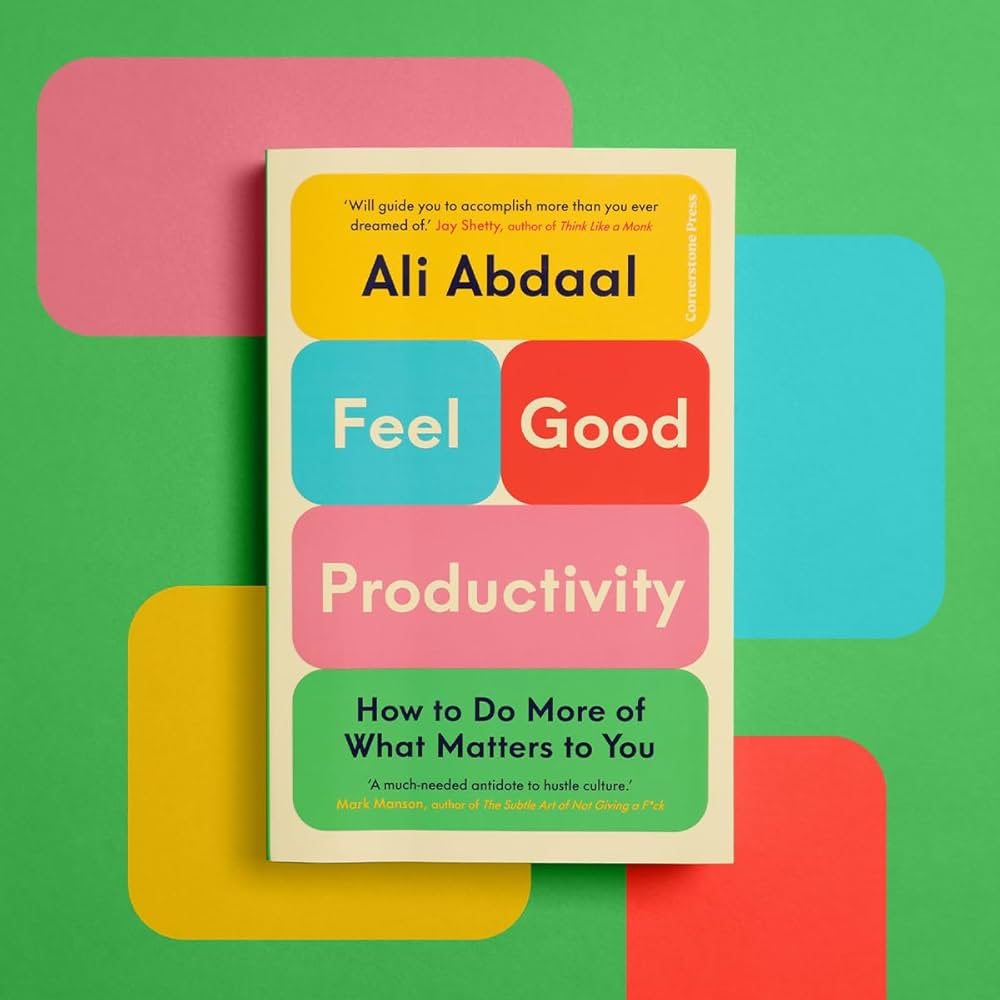
    That’s what made Ali Abdaal‘s Feel-Good Productivity land differently for me. The argument at its core is disarmingly simple: feeling good isn’t the reward for being productive — it’s the engine of it. When you feel better, you naturally achieve more. Not because you’re trying harder, but because the resistance is lower.

    Who is Ali Abdaal?

    Ali is a doctor-turned-creator who built a massive online following while still in medical school. He spent years obsessing over productivity tips and tricks before eventually arriving at a conclusion that cuts against most of the advice in that space: discipline-first thinking is fragile, and mood-first thinking is what actually lasts. If you’re more of a visual learner, his YouTube channel is worth bookmarking — he goes deep into the science behind these ideas and has a way of making dense research feel genuinely watchable. I’ve come back to his videos more than once.

    1. Energise: Turning Work into Play

    The first section of the book is about energy — specifically, how play is one of the most underrated ways to generate it.

    The idea that stuck with me most is deceptively simple: ask yourself, what would this look like if it were fun? Not every task can be made exciting, but most can be made slightly more tolerable with a small shift. One idea I use often is when doing a boring task, have good background music, but nothing with lyrics, he recommends Harry Potter movie scores. Abdaal also talks about confidence not as something you either have or don’t, but as a skill you practise — acting as if you’re confident in a task until the belief catches up with the behaviour. I’ve found this more useful than any pep talk.

    He also pushes back on the idea that success is zero-sum. Treating the people around you as teammates rather than competition doesn’t just feel better — it creates a support network that keeps you going when motivation runs dry.

    2. Unblock: Overcoming Fear and Inertia

    Procrastination, Abdaal argues, is rarely laziness. It’s usually an emotional signal — uncertainty, fear, or just the weight of inertia when you haven’t started yet.

    His answer to vague, overwhelming goals is what he calls NICE goals: Near-term, Input-based, Controllable, and Energising. The distinction matters because abstract goals (“get fit,” “finish the project”) give you nowhere to put your energy. Concrete, near-term inputs do.

    Two other tools I keep coming back to from this section: the Batman Effect, where you adopt an alter ego to distance yourself from anxiety — Beyoncé famously used “Sasha Fierce” for this — and the five-minute rule, where you commit to just five minutes on something you’ve been avoiding. It sounds too simple, but breaking the initial inertia really is most of the battle.

    3. Sustain: Preventing Burnout Through Alignment

    The third section is the one I think gets overlooked most in conversations about this book, and it might be the most important.

    Abdaal’s point here is that burning out isn’t just about doing too much — it’s often about doing too much of the wrong things. The “Hell Yeah or No” rule is essentially a filter: if you’re not genuinely excited about a commitment, the answer is no. Every yes is a no to something else you actually care about. It’s the same insight at the heart of Greg McKeown’s Essentialism — saying no isn’t about being difficult, it’s about protecting what matters.

    He also makes a distinction I found genuinely useful about rest. Not all rest is restorative. The activities that actually recharge you tend to make you feel Competent, Autonomous, Liberated, and Mellow — what he calls the CALM framework. Passively scrolling doesn’t meet that bar. A walk, a creative hobby, or time with people you like usually does.

    The section closes with a simple daily practice he calls Alignment Quests — each morning, pick one small action for health, one for work, and one for relationships that moves you toward the life you want a year from now. It’s a way of keeping daily effort connected to something larger than the to-do list.

    Think Like a Scientist

    The throughline of the whole book is this: there’s no single right way to work, and the people who figure out how to work well treat themselves like an ongoing experiment. Try things. Notice what actually makes you feel better. Adjust.

    That framing has changed how I approach my own habits more than any specific tip in the book. If you’ve ever felt like the traditional “push through it” approach to productivity just isn’t sustainable for you, this book makes a compelling case that you’re not wrong — and offers a better way forward. If you want to go even deeper on working sustainably, Cal Newport’s Slow Productivity makes a powerful companion read.

    If any of this resonates, I’d genuinely recommend picking up a copy of Feel-Good Productivity. And if you want to go deeper on the science behind it, Ali’s YouTube channel is the place to start. It was the reason I picked up the book in the first place.

  • Beyond the Bank Account: Redefining Success Through the 5 Types of Wealth

    Beyond the Bank Account: Redefining Success Through the 5 Types of Wealth

    Most of us are tracking one number — money — while quietly losing ground everywhere else. Time evaporates. Friendships go into maintenance mode. Health gets deprioritized until it forces its way back onto the list. And the money number, even when it goes up, somehow never feels like enough.

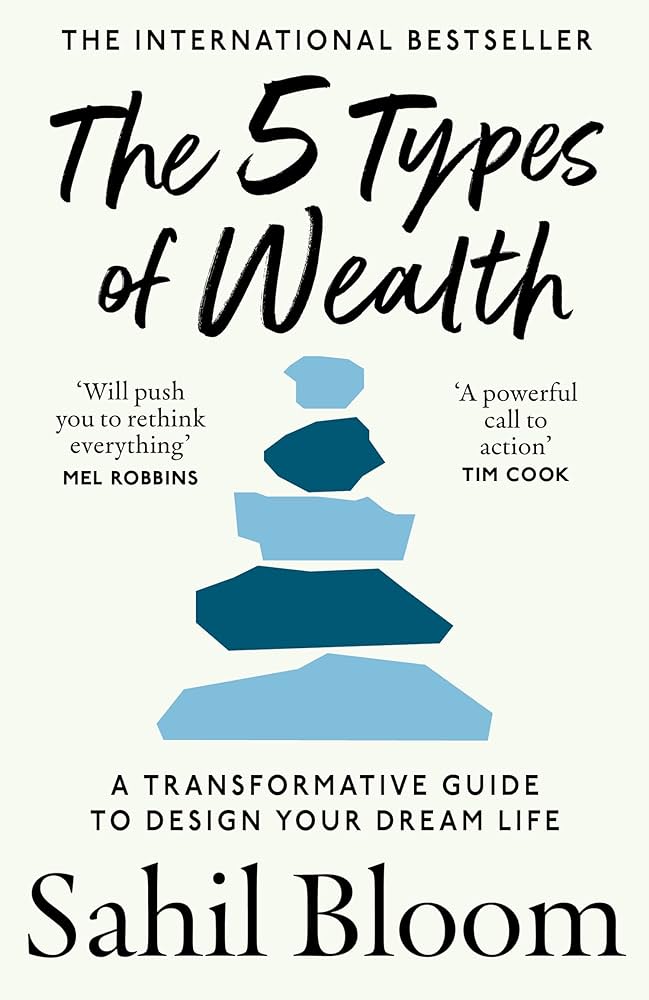
    Sahil Bloom’s book The 5 Types of Wealth puts a name to this problem and offers a more useful framework. The argument is simple: financial wealth is one piece of a much larger picture, and optimizing only for it is a good way to win the wrong game.

    Here’s how he breaks it down.

    Time

    This is the one you can’t get back. Bloom points out something genuinely uncomfortable: by the time most of us are adults, we’ve already spent the majority of the time we’ll ever have with our parents and siblings. It’s a rough piece of math. The goal isn’t to have more time — it’s to have control over how you use it.

    Relationships

    The Harvard Study of Adult Development tracked people for decades and landed on a clear finding: the quality of your relationships is the single biggest predictor of health and happiness as you age. Not income, not status — relationships. Bloom’s useful framing here is the “front-row people” — the ones who show up when it actually matters. Those are the relationships worth protecting.

    Mental Wealth

    This is about staying curious and having a sense of purpose rather than settling into a comfortable but flat routine. High curiosity correlates with better cognitive health, lower anxiety, and higher life satisfaction. It also means having a growth mindset — believing your abilities are something you develop, not something fixed.

    Physical Health

    Bloom’s line here is worth keeping: treat your body like a house you have to live in for another seventy years. Exercise is the most powerful single thing we have to slow physical decline. You don’t need a complicated protocol — consistent movement, decent food most of the time, and enough sleep covers most of it.

    Money

    It’s still in the framework, but it’s in its proper place — as an enabler, not the destination. The useful concept here is defining your “enough” — figuring out what level of financial stability actually lets you live the life you want, instead of just chasing more indefinitely. Lifestyle creep is real, compounding is real, and the gap between the two matters a lot.

    The point isn’t that money doesn’t matter. It’s that a life where you’re winning financially but losing everywhere else isn’t actually a win. I’ve seen it and I suspect you have too.

    The book goes deeper on each of these with practical exercises for figuring out where you actually stand. Worth reading if this framing resonates with you.

  • What Learning a Backflip Taught Me About Learning Anything

    What Learning a Backflip Taught Me About Learning Anything

    Most skills worth having are uncomfortable at first.

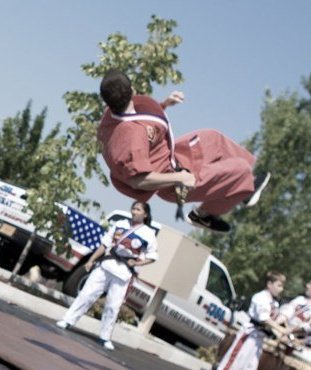
    I was a kid obsessed with tricking — an aesthetic blend of martial arts, gymnastics, and breakdancing. In pursuit of getting better at tricking, a backflip was essential. My trampoline became the training ground, and eventually I developed something that, resembled one — it was a bit more over the shoulder than straight back but it was a start. After a while and a lot of trial and error I got a pretty good looking backflip on the trampoline.

    After building up the courage, the next step was solid ground.

    It did not go well at first. My landings were bad — on all fours — it looked more like a poorly executed back hand spring. After my class ended my parents were waiting to pick me up. I showed them my progress, then asked if I could stay for a bit longer to keep working on it. They said yes, which tells you something about how convincing I was or how patient they were. Either way I stayed an extra two hours working with the sole goal of landing on my feet.

    What followed was a long morning of bad backflips. By the end of the day, I had landed a few of them on my feet, so it was a great success in my book.

    The technique was not textbook. A proper back tuck is about jumping up, tucking, and rotating with your shoulders as the axis. My version involved jumping backward while looking up, throwing my shoulders back, getting minimal height, and rotating around my hips — which works, technically, but is not great. I was young and I was just happy to have landed a few on my feet.

    The next day, it felt like every muscle in my body was sore, and that lasted for about a week.


    What That Day Actually Taught Me

    Almost two decades later, the backflip is still in my muscle memory. So are the lessons from learning it.

    You have to believe it’s possible before you can do it. The first barrier wasn’t physical — it was deciding that this was something my body could actually do. That sounds simple, but it’s real. You cannot commit to a back rotation if part of your brain is still negotiating an exit. Whatever you’re trying to learn, the mental piece comes first. Doubt bleeds into execution.

    When you have an intense burning desire for something, lean into it. I had this desire to learn a backflip. When you stumble upon something new, a skill, a topic, that ignites that same kind of burning passion within you – lean into it. Fuel that fire as long as you can because desires like that don’t last. I could have called it quits after those initial clumsy attempts. I would have eventually learned the backflip, but not with the same speed and intensity. That day, fueled by pure desire, I landed a backflip.

    You have to put in bad reps to get to good ones. There’s a version of “work smarter, not harder” that is actually useful, and a version that is just an excuse not to do the uncomfortable early work. The bad backflips weren’t wasted — they gave me the body awareness to start adjusting. You often need to do the hard work before you know what the smart work looks like.

    Feedback accelerates everything. I didn’t have a coach. I figured it out through trial and error, which worked but was slower and harder on my body than it needed to be. When someone who’s already done what you’re trying to do gives you real feedback, it compresses the timeline significantly. That’s worth seeking out, and in later years I did find a group of like-minded individuals that helped me on my tricking journey.

    Iterations matter more than hours. Naval Ravikant has a line: “It’s not 10,000 hours, it’s 10,000 iterations.” That’s what a two-hour backflip session actually is — not two hours of doing the same thing, but dozens of small experiments and small adjustments. Try something, feel what happened, adjust, go again. The feedback loop is the work.


    The Bottom Line

    The backflip itself wasn’t the point. What stuck with me was the process: identify something you want, accept that the early attempts will be rough, stay in the reps long enough to get real feedback, and keep adjusting until you get it right.

    That applies to most things worth learning.

  • The Marketplace Hunter: Why I Stopped Buying Everything New

    The Marketplace Hunter: Why I Stopped Buying Everything New

    We live in a “one-click” world. Want something? Go to a website, hit a button, and it shows up at your door two days later. It’s convenient. It’s also the most expensive way to live.

    I’ve learned that with a little patience and a bit of hunting — on Facebook Marketplace, at garage sales, in the classified ads — you can save thousands of dollars and often end up with better stuff than you could afford new. This isn’t about being cheap. It’s about being smart.


    The $1,000 Mistake That Started It All

    I learned this the hard way.

    I really wanted a Torque Fitness Tank — an elite piece of gym equipment. I paid roughly $1,500 for it brand new. My logic was airtight (I thought): “There’s no way someone would sell this used. It’s too cool. Nobody would ever part with it.”

    Less than six months later, I saw the exact same model on Facebook Marketplace for $500.

    That was a $1,000 lesson in humility. I had assumed that because I valued something, the rest of the world would too. But people move. They lose interest. They need the space. Someone else’s “I need this gone by Saturday” is your golden opportunity.


    The Hunt in Action

    After that wake-up call, I started hunting instead of buying.

    I wanted a functional trainer — the kind of cable machine you see in commercial gyms. My budget was $2,000. Nothing new was in that price range, if I spent a few hundred more dollars I could get something good, but not great. So I waited.

    I didn’t find a deal on day one. But I kept checking. Eventually, a Freemotion Functional Trainer appeared — a commercial-grade unit that belongs in a high-end gym. New price: over $8,500. Asking price: $2,000. It was incredibly heavy and a total pain to move, but I now own a “forever” piece of equipment for less than the price of a budget model.

    The Marketplace also gave me a Cornelius keg for $5 (they sell new for $60+) and a high-end air purifier for $20 (that model retails for over $800). The hunt works for almost anything if you’re willing to look and wait.


    It Scales Up: The Smart Car Buyer

    Here’s where the mindset really proves itself — cars.

    The frugal, financially savvy car buyer doesn’t walk into a dealership and sign up for a five-year loan on a shiny new vehicle. They look for a solid used car, pay cash (or as close to it as possible), and drive off without a monthly payment hanging over them. Some go even further: a car with a reconstructed title — one that was previously declared a total loss but has been repaired — can sell for dramatically less than its market value. Yes, there’s more due diligence required. Yes, you need a good mechanic to inspect it. But for someone who knows what they’re looking at, a reconstructed title car can be one of the best deals on the road.

    The principle is the same whether you’re buying a kettlebell or a car: the market misprices things all the time, and patience is how you take advantage of it.


    Think Like an Investor

    The best way I can describe the Marketplace Hunter mindset is this: think like a good investor.

    When a fundamentally strong company hits a rough patch and its stock drops, inexperienced investors panic and sell. The experienced investor looks at that same drop and sees a sale. The company didn’t get worse — the price just got better. They buy more.

    The Marketplace is the same game. A great piece of equipment doesn’t become worse equipment because someone needs to move it out of their garage. A well-maintained car doesn’t lose its quality because it has some cosmetic damage and a complicated title. The underlying value is still there — the price just dropped. Your job is to recognize the difference between something that got cheaper and something that got worse.

    Most people can’t make that distinction. That’s what creates the opportunity for those who can.


    The Rules of the Hunt

    This isn’t all sunshine and low prices. To hunt well, you need three things:

    1. Inspect before you buy. People sometimes sell things cheap because they’re broken or don’t work quite right. Poke it, plug it in, test it before you hand over any cash. Assume nothing works until you confirm it does.

    2. The handy advantage. If you know how to fix things, or can use YouTube and/or AI to help you know how to fix things, you can unlock deals that are basically steals. A “broken” item is often a five-minute fix for someone who isn’t afraid of getting their hands dirty and a little bit of work. The more capable you are, the cheaper the world gets.

    3. Patience is key. You can’t need it today. If you need something immediately, you will pay full price — that’s the tax on impatience. But if you can wait a week, a month, or longer, the right deal will surface. Every hunter knows: the prey comes to you eventually.


    The Bottom Line

    Buying used isn’t just about saving money — though it does save you a lot of money. It’s a mindset shift. You stop being a passive consumer reacting to whatever’s in your cart and start being an active participant who controls what things cost you.

    The investor buys when others panic. The smart car buyer pays cash for what others overlook. The Marketplace Hunter gets the $8,500 machine for $2,000.

    Next time you’re about to click “Buy it Now,” take a breath. Check the Marketplace first. The best version of what you want might be sitting in a garage five miles away — and the person selling it just wants it gone by the weekend.


    Disclaimer (Please Read): Nothing in this article is financial, legal, or mechanical advice. I am just a person on the internet who bought a large piece of gym equipment and felt good about it. If you get financial, legal, or mechanical advice advice from that kind of person maybe you should reflect on your life choices. If you buy a car with a reconstructed title and it falls apart, a stock and it goes to zero, or a “lightly used” air purifier that turns out to be a humidifier from 2003 — that’s on you. Do your own research, talk to actual professionals, and inspect everything before handing over your hard-earned cash. I am not liable for your decisions. I am, however, rooting for you and wish you the best.

  • The Antidote to Burnout: Finding Meaning in Slow Productivity

    The Antidote to Burnout: Finding Meaning in Slow Productivity

    If you’ve ever ended a packed workday feeling like you somehow got nothing done, you’re not imagining things. The modern workplace keeps raising the bar — more emails, more meetings, more pings — while the actual meaningful work keeps getting squeezed out. Cal Newport’s book Slow Productivity is a direct response to that problem. It lays out a practical philosophy for getting important things done without running yourself into the ground. Here’s a look at the ideas that matter most.

    A quiet workspace representing slow, intentional productivity

    The Problem: Busyness Isn’t the Same as Productivity

    One of the most useful ideas in the book is the concept of “pseudo-productivity” — the habit of using visible busyness as a stand-in for actual results. Because knowledge work is hard to measure, we often default to the things that look like work: answering emails quickly, keeping our calendars full, always being “on.”

    The problem is that all of this activity gets in the way of the deeper, more focused work that actually moves things forward. Newport calls it “jittery busyness” — and argues that escaping it is the first step toward doing work that genuinely matters. It’s the same trap that Ali Abdaal tackles in Feel-Good Productivity — the idea that looking busy and actually producing something meaningful are very different things.

    Principle 1: Do Fewer Things

    The first principle sounds almost too simple: cut down on your commitments until you can actually imagine finishing them. Newport’s argument is that when your plate is overflowing, everything suffers — you’re always context-switching, nothing gets your full attention, and the quality of your work drops. By focusing on a small number of projects that genuinely matter, you paradoxically get more done in the long run.

    One practical tool Newport suggests is this simple system for managing requests:

    ·The Holding Tank: When a new project request comes in, it goes on a list — no commitment yet, just a place to park it.

    ·The Active List: You work on no more than three projects at a time. That’s it.

    ·The Pull System: When one project wraps up, you pull the next one from the holding tank. Not before.

    ·Be Transparent: Let colleagues know roughly where their request sits in the queue and when you realistically expect to get to it.

    This system won’t win you any “most responsive” awards, but it’s the kind of structure that lets you actually do good work instead of just staying busy. It pairs well with the thinking in Greg McKeown’s Essentialism — both books make the case that protecting your attention is one of the most important things you can do.

    Principle 2: Work at a Sustainable Pace

    Newport’s second principle pushes back against the idea that grinding harder is always the answer. He argues that working at full intensity all the time is not natural — and not sustainable. Think of how seasons work in nature: periods of high activity followed by rest. Our best work tends to happen when we build that kind of rhythm into our lives.

    A simple but surprisingly powerful suggestion: double your timeline estimates. If you think a project will take two weeks, budget a month. This isn’t about lowering your standards — it’s about being honest with yourself and creating space for the kind of careful, thoughtful work that leads to results you’re proud of.

    Newport also makes a case for building small breaks into your routine — a Monday with no meetings, or an occasional afternoon away from your desk. These aren’t indulgences. They’re what it takes to keep your brain from getting stuck in a reactive loop where you’re always putting out fires instead of making real progress.

    Principle 3: Care Deeply About Quality

    The third principle is about raising your own bar — not in the sense of working more hours, but in caring genuinely about how good your work is. When you’re truly committed to producing something excellent, busyness starts to feel like what it is: a threat to the thing you care about. Saying no becomes easier. Cutting shallow commitments becomes easier. Quality becomes its own filter.

    Think of a craftsperson who takes pride in their work. They don’t rush a piece just because someone’s asking. They know that the reputation they build through consistently excellent work is worth more than any short-term win they’d get from saying yes to everything. Newport argues the same logic applies in knowledge work. Over time, doing fewer things — but doing them really well — earns you more professional freedom, not less.

    A Different Kind of Success

    Slow Productivity isn’t a book about doing less for its own sake. It’s about stepping off the treadmill long enough to ask: is all this activity actually getting me anywhere? Newport’s answer is that where you end up matters more than how fast you run. By steadily putting in meaningful effort — rather than constantly reacting and scrambling — you can build a body of work you’re proud of, without burning out along the way. That kind of intentionality extends beyond work too — it’s the same reframe behind Sahil Bloom’s 5 Types of Wealth: success means more than one number going up.

    If any of this rings true for how you’ve been feeling about your work, the book is well worth a read. It’s full of concrete strategies and real-world examples that make these ideas easy to start putting into practice.

  • Why How You Breathe Matters More Than You Think: Lessons from James Nestor’s Book “Breath”

    Why How You Breathe Matters More Than You Think: Lessons from James Nestor’s Book “Breath”

    Most of us think breathing is just something that happens. You do it 25,000 times a day, so you must be an expert, right?

    By the time you finish reading this short article, you will have taken about 40 to 60 breaths without even realizing it. Like a computer program running in the background, your breathing stays on “autopilot” while you focus on your phone or your coffee.

    We rarely stop to check the quality of those breaths. But it turns out that how you breathe might be just as important as what you eat or how you lift.

    James Nestor is an award-winning science journalist whose book Breath: The New Science of a Lost Art is full of insights — and if you like this article, you should get the book. If you prefer video, his YouTube channel is a great place to start. Here are the big ideas that stood out to me:


    1. The Belly Breath

    Most adults only use a tiny bit of their diaphragm (the muscle under your lungs). When you take shallow breaths, your heart has to work twice as hard. By taking deeper breaths, focusing on expanding into your belly, you let your diaphragm do the heavy lifting, which lowers your blood pressure and gives your heart a break.

    2. We Are “Over-Breathing”

    Just like you can over-eat, you can over-breathe. Taking too many quick, shallow breaths keeps your body in a “stress” mode. The goal is to breathe less but better.

    3. The 5.5 Second Rule

    If you want the “perfect breath,” here is the math:

    • Inhale for 5.5 seconds.
    • Exhale for 5.5 seconds.

    That’s about 5.5 breaths per minute. Nestor points out that this isn’t a new discovery; humans have been doing this for thousands of years through prayer and chanting. Whether it’s the Catholic Rosary, the Buddhist mantra “Om Mani Padme Hum,” or Native American and African spiritual chants, they all seem to land roughly on this 5.5-second rhythm.

    4. Breath Through Your Nose, Not Your Mouth

    Your nose is a filter and a heater; your mouth is just a backup. Breathing through your nose releases a gas called Nitric Oxide that helps your blood carry more oxygen, it also helps you sleep better. Excessive mouth breathing can lead to a lot of poor health outcomes.

    5. Why Our Jaws are Shrinking

    Modern food is too soft. Because we don’t chew “hard” things anymore, our jaws have become smaller over generations. This makes our airways narrower, leading to crooked teeth and snoring. Chewing—and breathing through your nose—helps keep your airway open.

    6. Exhaling is Half the Battle

    Many people focus on getting air in, but the real problem is often getting the “stale” air out. If you don’t exhale fully, you leave old air in your lungs, which makes it harder to get fresh oxygen on the next breath.


    If you want to live longer, don’t just worry about your step count and calories, start paying attention to your breath. Breathe slow, breathe deep, and keep your mouth shut. And if this kind of science-backed habit building resonates with you, Feel-Good Productivity by Ali Abdaal is another book that takes a similarly evidence-based approach to how we perform at our best.

  • Conventional Wisdom Isn’t Always True

    Conventional Wisdom Isn’t Always True

    We’ve all heard them: those comforting, phrases that roll off the tongue, that we never think to question because we hear them all the time. They’re the bedrock of motivational posters and casual conversation, accepted as universal truths without much thought. But what if this conventional wisdom isn’t always true? What if, upon closer inspection, these widely accepted adages are not just incomplete, but sometimes outright misleading? It’s time to put some of these cherished truisms under the microscope and challenge the notion that what’s popular is always profound.

    “It’s the journey and not the destination”

    This gem encourages us to embrace the process and find joy in the unfolding experience rather than solely focusing on the end goal. While there’s undeniable merit in appreciating the present moment, this often overlooks a crucial element that can overshadow both the path and the end goal: the people with whom you share it.

    Imagine embarking on your dream vacation – an epic road trip across breathtaking landscapes or whatever would be your dream vacation – but doing it alone, or worse, with people you actively dislike. Now, picture a far less glamorous trip, perhaps a weekend camping in the rain, but surrounded by your dearest friends. Which “journey” would you really want to go on?

    “What doesn’t kill you makes you stronger.”

    It’s a sentiment meant to inspire resilience, suggesting that overcoming adversity invariably leads to an improved state of being. While some individuals do emerge from hardship with newfound strength, this adage can be a profoundly inaccurate generalization for many.

    I have a friend, lets call him Justin, who got a neck injury doing grappling drills and was in an immense amount of pain. Justin’s doctor recommended surgery and it went well. Justin not wanting to experience the pain he felt decided to “baby” his neck. Many years later a sneeze injured his neck again and he got another surgery. Justin did not emerge stronger from this experience. The human spirit’s adaptability is undeniable, but hardships don’t always build a shield, sometimes it leads to permanent unrecoverable damage.

    “The early bird catches the worm.”

    It’s about the head start you get from rising before the rest. And yes, sometimes, the first mover gains a significant advantage. But what about the second mouse who gets the cheese? Or the night owl who thrives in the undisturbed quiet of the late hours, producing their best work while the “early birds” are still brewing their first coffee?

    There is also the idea of being right but early. Sears knew that people wanted the convenience of home delivery and not having to go to the store for something, long before Amazon was around. Sears unfortunately didn’t have an internet store or frictionless digital credit, they dealt with physical catalogs and mail-in forms. They had this idea long before the internet. They were right, but early. In the end, being an early bird doesn’t give you the advantage.

    Challenging conventional wisdom isn’t about being contrarian for its own sake. It’s about fostering critical thinking, recognizing the nuances of life, and validating the diverse experiences of individuals. So, the next time a well-worn proverb crosses your path, pause, consider its validity, and ask yourself: is this truly wise, or is it merely a convenient phrase?

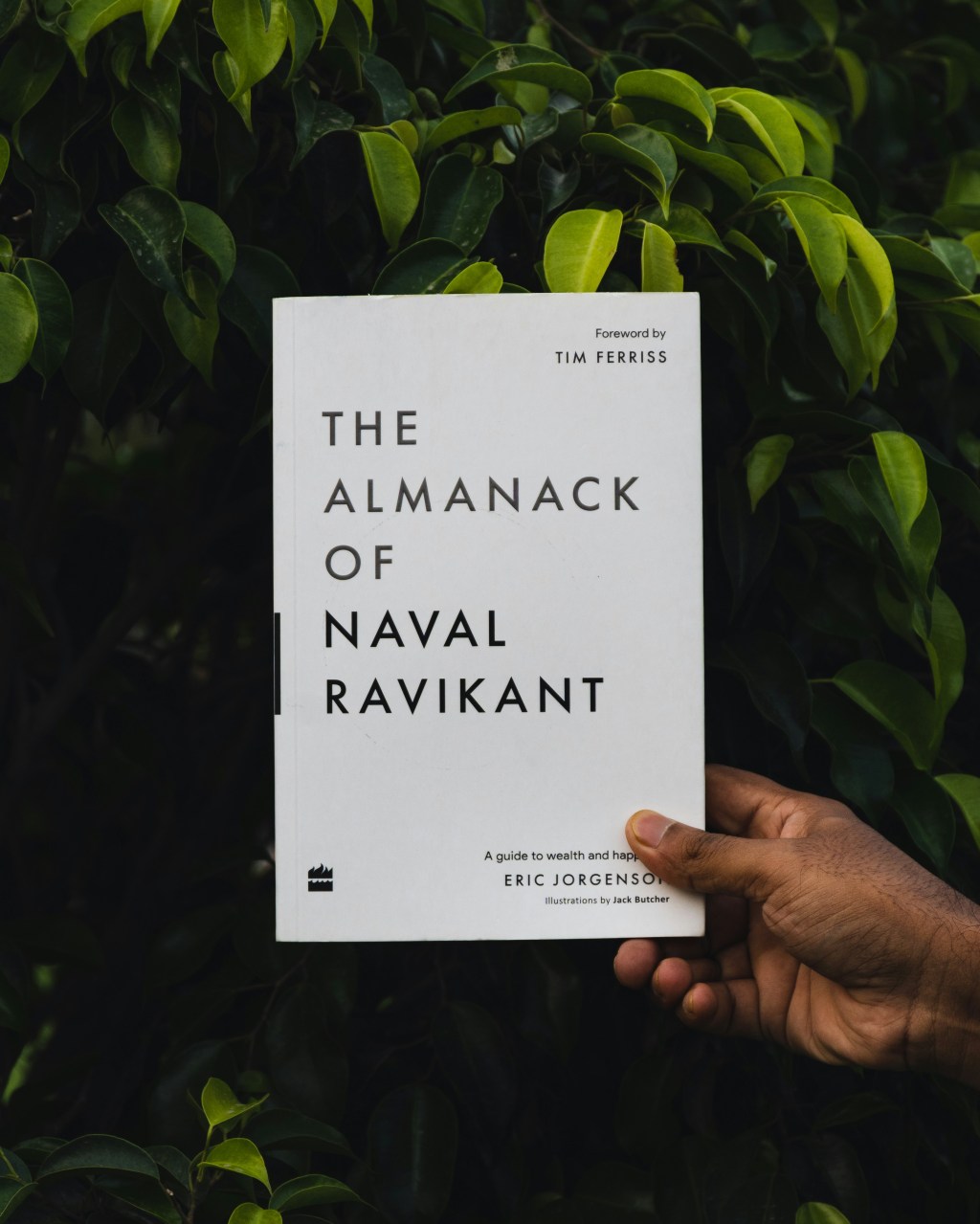
  • My Top Takeaways from The Almanack of Naval Ravikant: A Guide to Wealth and Happiness

    My Top Takeaways from The Almanack of Naval Ravikant: A Guide to Wealth and Happiness

    This book is packed with absolute bangers. Eric Jorgenson curated a collection of wisdom from entrepreneur and philosopher Naval Ravikant. He has a way of stripping away the noise of modern life until only the fundamental truths remain. What you’re about to read is just a tiny fraction of the insights that actually resonated with me—the “greatest hits” that changed how I look at my time, my work, and my head.

    I’ve organized these takeaways into three main pillars, like the actual book is organized: Wealth, Happiness, and Philosophy & Learning. But keep in mind, this is just a highlight reel. If these ideas spark something for you, do yourself a favor and get the full book. It’s stated better, deeper, and more completely there. Consider this the appetizer; the book is the feast.

    Wealth

    • Financial freedom comes from owning equity not renting out your time: If you’re working for someone else they will only pay you the bare minimum required to keep you doing the job and you can only work so much. You must own equity – a piece of a business – to gain wealth. Owning equity will enable you to earn money while you sleep.
    • Cultivate specific knowledge to become irreplaceable: Specific knowledge is knowledge that cannot be trained for. If it’s something that can be taught and trained for, you can be replaced by someone else or automation. You find this knowledge by pursuing your genuine curiosity and passion, it should feel like play to you but look like work to others.
    • Pursue permissionless leverage: Labor and capital are traditional forms of leverage, but in the world we live in today code and media are forms of leverage that have no marginal cost of replication. Unlike hiring more people or raising money, these tools are permissionless. You don’t need anyone’s approval to write a book, record a podcast, or write code that works for you 24/7.

    Happiness

    • Think of Happiness as the default state that emerges when you remove the sense that something is missing: Happiness is a skill that can be learned and a choice only you can make. When you stop your mind from running into the past to regret or the future to plan you achieve the internal silence of being content.
    • Desire is a contract you make with yourself to be unhappy until you get what you want: Choose your desires carefully, ideally limit yourself to one specific desire at a time rather than bucket of fuzzy ideas.
    • Life is a single player game: Society encourages us to play “multi-player” competitive games for status and money. Your interpretations, memories, and feelings are all internal with no external progress or validation. You are only competing against your previous self.

    Philosophy & Learning

    • Read what you love until you love to read: Many people don’t enjoy reading because they were forced to read things that didn’t interest them in school, to fix this you should read things that interest you and follow your curiosity. If you truly do this you’ll end up reading a lot and hopefully love reading eventually.
    • Master the skill of knowing how to learn: In an evolving world where professions can become obsolete overnight the most important skill is knowing how to learn. focus on the basic foundational subjects, arithmetic, logic, science, and philosophy. With a good foundation you can read any book and absorb advanced concepts as needed.
    • No one else can do the work for you: Doctors won’t make you healthy, teachers won’t make you smart, and mentors won’t make you rich. You must take responsibility for your own life. Start by prioritizing your physical health above everything else, “peace of body” makes it much easier to achieve “peace of mind”.