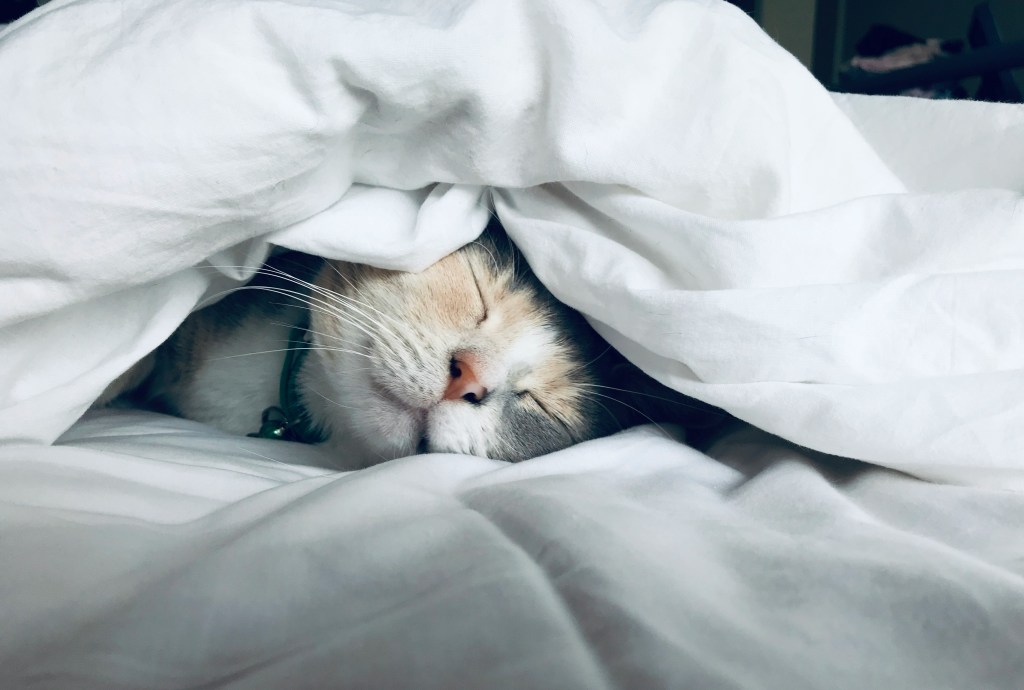
I used to wear sleep deprivation like a badge of honor. Four hours of sleep and a full day of work? Look how much I can push through. Matthew Walker’s Why We Sleep ended that particular delusion pretty quickly. Two-thirds of adults in developed nations don’t get the recommended eight hours a night, and Walker — a neuroscientist who’s spent his career studying sleep — makes a case that landed harder than I expected: sleep isn’t the thing you sacrifice to get more done. It’s the thing that makes everything else possible.
Your Brain Runs on Two Clocks, and Modern Life Breaks Both
There are two forces deciding when you feel tired. Your circadian rhythm is a roughly 24-hour internal clock, mostly set by light. Working against it — or with it — is sleep pressure, driven by a chemical called adenosine that quietly builds up every minute you’re awake.
Across the night your brain cycles through NREM and REM sleep roughly every 90 minutes. NREM dominates the first half of the night and works like a filing system, clearing out clutter and locking facts into long-term memory. REM takes over in the second half, and it’s where creativity and emotional processing actually happen. This is the part that got me: waking up two hours early doesn’t just cost you two hours. Because REM is backloaded toward morning, it can strip away 60-90% of that night’s REM sleep entirely.
Everything about modern life seems designed to fight this system. About 30% of people are genuinely wired as night owls, yet school and work schedules built for early risers penalize them anyway. Caffeine has a half-life of 5-7 hours, so that 3pm coffee is still blocking your adenosine receptors at 10pm, quietly lying to your brain about how tired you actually are. And alcohol — which I’d always assumed helped me sleep — turns out to be a sedative, not a sleep aid. It knocks you out, then fragments the sleep that follows and guts your REM.
The Cost Is Bigger Than Feeling Tired
This is the section of the book that actually scared me a bit. Walker isn’t just talking about grogginess. Short sleep — under six or seven hours, routinely — raises blood pressure and stress hormones, meaningfully increasing the risk of heart attack and stroke. It also messes with the hormones that control hunger: it suppresses leptin (which signals fullness) and raises ghrelin (which drives cravings), which is a genuinely unfair combination if you’re trying to eat well. Walker also links chronic short sleep to significantly weakened immune function and a sharply elevated long-term cancer risk — numbers striking enough that I’d encourage you to read his sourcing directly rather than take my word for it. And on a more immediate note: drowsy driving causes more accidents than drunk and drugged driving combined, which is a stat I did not expect.
The Smart-Home Sleep Lab vs. What I Actually Have
Toward the end of the book, Walker gets a bit futuristic — he talks about smart LED systems that shift color temperature across the day to protect melatonin, and connected thermostats that automatically cool your bedroom to match your body’s natural temperature drop. It’s a genuinely appealing vision. It’s also, for most of us, not something we’re installing this weekend.
Here’s the good news, though: none of the biology Walker describes actually requires the tech. Every mechanism he explains can be triggered with habits that cost nothing.
What I’ve Actually Changed
- A fixed schedule, weekends included. This is the one Walker is most insistent about, and it’s the one I resisted longest. Same bedtime, same wake time, every day.
- A hot shower before bed. Sleep onset needs your core temperature to drop 2-3°F. A warm shower draws blood to your skin, so your core temperature falls fast once you get out — which, counterintuitively, is why a hot shower helps you cool down for sleep.
- Morning sunlight. 30-60 minutes of natural sunlight in the morning does more for your circadian rhythm than any screen filter. I still dim the lights in the evening and don’t doom scroll in bed, but the morning light habit made the bigger difference for me.
- No visible clock. Clock-watching at 2am is its own special kind of anxiety. If I’m still awake after 20 minutes, I get up and do something quiet in dim light rather than lying there getting frustrated.
- Cutting the obvious culprits. No caffeine after midday, no nightcap, no big meal right before bed.
The Actual Takeaway
None of this required a single purchase. What it required was treating sleep as something I was actively managing, rather than whatever was left over after everything else got done. Walker’s real argument isn’t “sleep more” — it’s that sleep is the foundation everything else sits on, and no amount of productivity hacking makes up for pulling that foundation out.
If any of this resonates, Why We Sleep is worth your time — there’s a lot in there I haven’t even touched here, including some genuinely unsettling research on what sleep deprivation does to memory and emotional regulation. Pick up a copy and see for yourself.


Leave a Reply