
Tag: Pillar: Learning Blueprints & Skills

How to actually get good at things — systems, practice, and the process of skill-building.

  • If You Want to Be Good at Something, Do it for an Unreasonable Amount of Time

    If You Want to Be Good at Something, Do it for an Unreasonable Amount of Time

    Most people who are genuinely good at something don’t look like they’re working that hard.

    The martial artist who casually neutralizes an aggressive attack. The disc golfer who throws 400 feet down a wooded tunnel like it’s nothing. The bartender who runs five tickets at once without breaking a sweat. From the outside, it looks like a gift. From the inside, it’s just a lot of accumulated hours that nobody watched you put in.

    That’s the game. And the entry fee is being willing to be bad at something for long enough that you eventually run out of room to stay bad at it.


    Feed the Hot Coal

    Here’s the thing about passion: it doesn’t wait for you.

    When something new lights you up — a skill, a topic, an idea — that energy is a hot coal. It’s bright, it’s intense, and if you feed it, it can sustain a fire for years. But if you set it down and walk away, it cools. And a cold coal is a lot harder to relight than a hot one is to keep burning.

    This is why when you’re passionate at the beginning of learning anything is actually the most important window. Not because you’re doing it well — you’re not — but because you’re feeding the fire. The passion is there. The curiosity is alive. The worst thing you can do is wait until you feel “ready” to go all in, because by then the coal may have already cooled.

    Embrace the suck while it still excites you. Volume while the fire is burning.


    Do It Badly, at First

    Every skill I’ve ever built started with the same feeling: slow, heavy, and deeply aware of how much I didn’t know.

    In the restaurant, I started as an expeditor on a Friday during the dinner rush. If you’ve never been in a high-volume kitchen mid-service, picture a wall of noise, heat, and tickets — and me just trying not to drown. I wasn’t in any zone. I was just surviving.

    In the homebrew shop, I started as the new guy who was useful primarily because he could move heavy kegs. That was my whole value proposition for a while.

    In martial arts, I was the awkward white belt who telegraphed every move.

    In disc golf, right now, I’m the guy hitting trees on holes I should be navigating cleanly. I record my rounds. I study my form. I throw and it doesn’t look how I want it to look yet.

    The temptation at this stage is to either quit or go looking for a shortcut. A hack, a magic technique, the one drill that will skip the uncomfortable part. There is no such thing. The only move that works is to keep showing up while the coal is hot and let the volume do its job.


    You Will Notice Patterns

    If you stay in the room long enough, the chaos begins to make sense.

    The restaurant kitchen that nearly broke me in week one eventually became readable and eventually easy. I went from Expeditor to prep cook to line cook to server to bartender. Not because someone handed me a promotion — because I kept showing up and paying attention until the whole operation became transparent to me. I became the person they called when someone didn’t show. The Swiss Army knife of the place.

    The homebrew shop followed the same arc. I came in as muscle. Years later, after employees left for better opportunities — I was the person handling purchasing for both kegs and bottles, doing what had previously been two full-time management roles. I saved the owner real money because by that point I had absorbed the supply chains, the supplier relationships, the purchasing rhythms. The work had become systemic in my brain.

    Martial arts did the same thing, just more slowly and more physically. What looks like instinct from the outside is just a brain that has seen the same template — an off-balance hip, a sloppy punch, a telegraphed takedown — enough times that it recognizes the pattern before the conscious mind catches up. I’m not reacting faster. I just know where the movie ends.

    This is the compounding return on volume. You don’t feel it happening. And then one day you realize you’re not fighting the current anymore — you’re reading it.


    The “He’s a Natural” Illusion

    At some point, people start calling you gifted.

    It happened in the restaurant. It happens on the mats. It’ll happen in disc golf eventually — some beginner will watch me throw a clean hyzer around a tree and assume I just have a knack for it. I won’t correct them, but I’ll know what it actually was: a few hundred rounds of hitting that same type of tree and figuring out what I did wrong.

    The “natural” label is almost always just what accumulated competence looks like from the outside when you weren’t there to watch the boring middle part.


    Where I Am Right Now

    I’m at the beginning of something new again — working on getting into data analytics.

    It has that familiar Phase 1 feeling. A lot of information I don’t have yet. A lot of tools I’m still figuring out. The gap between where I am and where I want to be feels wide. But I’ve been here before — in a kitchen, in a keg room, on a mat, on a disc golf course — and I know what the physics of this process actually looks like. The gap closes. It always closes. Not through luck or some sudden breakthrough, but through showing up enough times that staying bad at it becomes unreasonable.

    The coal is hot right now. That’s the whole advantage. So I’m going to feed it.
  • What Learning a Backflip Taught Me About Learning Anything

    What Learning a Backflip Taught Me About Learning Anything

    Most skills worth having are uncomfortable at first.

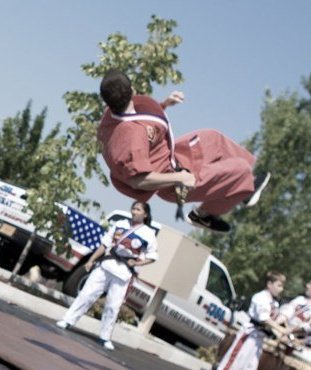
    I was a kid obsessed with tricking — an aesthetic blend of martial arts, gymnastics, and breakdancing. In pursuit of getting better at tricking, a backflip was essential. My trampoline became the training ground, and eventually I developed something that, resembled one — it was a bit more over the shoulder than straight back but it was a start. After a while and a lot of trial and error I got a pretty good looking backflip on the trampoline.

    After building up the courage, the next step was solid ground.

    It did not go well at first. My landings were bad — on all fours — it looked more like a poorly executed back hand spring. After my class ended my parents were waiting to pick me up. I showed them my progress, then asked if I could stay for a bit longer to keep working on it. They said yes, which tells you something about how convincing I was or how patient they were. Either way I stayed an extra two hours working with the sole goal of landing on my feet.

    What followed was a long morning of bad backflips. By the end of the day, I had landed a few of them on my feet, so it was a great success in my book.

    The technique was not textbook. A proper back tuck is about jumping up, tucking, and rotating with your shoulders as the axis. My version involved jumping backward while looking up, throwing my shoulders back, getting minimal height, and rotating around my hips — which works, technically, but is not great. I was young and I was just happy to have landed a few on my feet.

    The next day, it felt like every muscle in my body was sore, and that lasted for about a week.


    What That Day Actually Taught Me

    Almost two decades later, the backflip is still in my muscle memory. So are the lessons from learning it.

    You have to believe it’s possible before you can do it. The first barrier wasn’t physical — it was deciding that this was something my body could actually do. That sounds simple, but it’s real. You cannot commit to a back rotation if part of your brain is still negotiating an exit. Whatever you’re trying to learn, the mental piece comes first. Doubt bleeds into execution.

    When you have an intense burning desire for something, lean into it. I had this desire to learn a backflip. When you stumble upon something new, a skill, a topic, that ignites that same kind of burning passion within you – lean into it. Fuel that fire as long as you can because desires like that don’t last. I could have called it quits after those initial clumsy attempts. I would have eventually learned the backflip, but not with the same speed and intensity. That day, fueled by pure desire, I landed a backflip.

    You have to put in bad reps to get to good ones. There’s a version of “work smarter, not harder” that is actually useful, and a version that is just an excuse not to do the uncomfortable early work. The bad backflips weren’t wasted — they gave me the body awareness to start adjusting. You often need to do the hard work before you know what the smart work looks like.

    Feedback accelerates everything. I didn’t have a coach. I figured it out through trial and error, which worked but was slower and harder on my body than it needed to be. When someone who’s already done what you’re trying to do gives you real feedback, it compresses the timeline significantly. That’s worth seeking out, and in later years I did find a group of like-minded individuals that helped me on my tricking journey.

    Iterations matter more than hours. Naval Ravikant has a line: “It’s not 10,000 hours, it’s 10,000 iterations.” That’s what a two-hour backflip session actually is — not two hours of doing the same thing, but dozens of small experiments and small adjustments. Try something, feel what happened, adjust, go again. The feedback loop is the work.


    The Bottom Line

    The backflip itself wasn’t the point. What stuck with me was the process: identify something you want, accept that the early attempts will be rough, stay in the reps long enough to get real feedback, and keep adjusting until you get it right.

    That applies to most things worth learning.

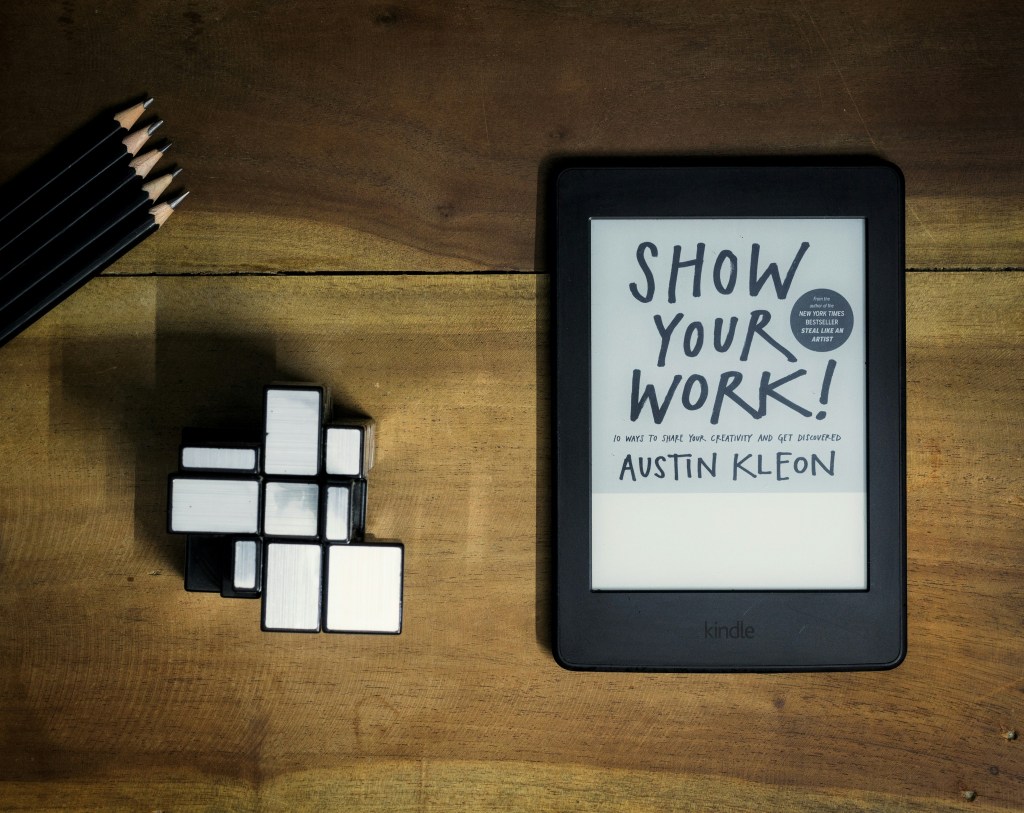
  • The Art of Being Seen: Lessons from Show Your Work!

    The Art of Being Seen: Lessons from Show Your Work!

    In a world where we often feel pressured to be “experts” before we share anything, Austin Kleon’s Show Your Work! offers a liberating alternative. The core message is that creativity isn’t a mysterious talent reserved for a few — it’s a way of operating that requires being open about what you’re learning and doing. Here are the most meaningful takeaways for anyone looking to find their voice and build an audience. This book was also a big reason I made this website.

    Embrace the Amateur Advantage

    One of the most powerful mindset shifts is realizing you don’t have to be a master to contribute. Being an amateur — someone who does things for the love of it — can actually be an advantage. Amateurs are willing to experiment, take risks, and share their mistakes. As Kleon puts it, the real gap isn’t between good and great; it’s between doing nothing and doing something. By learning in public and wearing your amateurism on your sleeve, you invite the right people to find you and grow alongside you.

    Think Process, Not Product

    We’re often so focused on the final result that we hide the most interesting part: the work itself. Kleon encourages us to document our process. Whether you share it or not, recording your progress helps you see your own growth. When you’re ready to share, don’t wait for a masterpiece — share something small every day. Bits of your methods, your influences, even the scraps from the cutting-room floor add up to a substantial body of work over time.

    The Power of “Scenius”

    The myth of the lone genius is just that — a myth. Kleon introduces the concept of “scenius”: an ecology of talent where great ideas emerge from a group of connected minds, not a single visionary. To tap into this, you need to become an open node — someone who listens, notices others, and acts as a connector rather than simply broadcasting your own work. By teaching what you know and sharing your inspirations freely, you build a network that feeds your creativity as much as your own.

    Become a Better Storyteller

    Human beings are wired for stories. Kleon argues that our work doesn’t speak for itself — people want to know where things came from and who made them. You can make your work more compelling by telling the story behind it: where you’ve been, where you are now, and where you’re headed. This doesn’t mean embellishing. Stick to the truth of your journey. Honesty, it turns out, is more than enough.

    Learn to Take a Punch — and Stick Around

    Sharing your work publicly requires vulnerability. But as Kleon notes, compulsively avoiding embarrassment becomes its own kind of defeat. The antidote is volume: put out enough work that no single bad review can define you. More than talent, more than timing, the people who succeed are often simply the ones who stick around long enough. That idea echoes a line from Richard Strozzi-Heckler that has always been particularly meaningful to me: “The path of the Warrior is lifelong, and mastery is often simply staying on the path.”

    The Choice to Be Seen

    Ultimately, showing your work is about reclaiming agency in how you connect with the world. Generosity with your ideas and consistency in your effort create opportunities that secrecy never could.

    There are plenty more gems in this book for anyone who feels stuck or invisible. If these ideas on sharing and creativity resonate with you, I’d highly recommend picking up a copy of Show Your Work!

  • You Don’t Need Talent to Learn a Language — You Need a System

    You Don’t Need Talent to Learn a Language — You Need a System

    Most people who try to learn a new language quit within the first few months. Not because they weren’t smart enough. Not because they lacked some mysterious “language gene.” They quit because nobody gave them a real system — just apps, phrasebooks, and the vague advice to “practice every day.”

    This guide is built on two books that changed the way I think about language learning: Fluent Forever by Gabriel Wyner and Fluent in 3 Months by Benny Lewis. If you’re serious about this, read both. They complement each other well — Wyner gives you the neuroscience-backed methodology, Lewis gives you the confidence to actually use it with real people. For extra credit, look up the Michel Thomas method and listen to his audio courses. Between these three resources, you’ll have everything you need.

    What follows is a plan built from them.


    The Action Plan

    1. Build the Foundation: Pronunciation First

    Before you touch a grammar book, train your ears and mouth. Getting pronunciation right early prevents bad habits from calcifying — and bad pronunciation habits are genuinely hard to break later. Start by listening to your target language daily: songs, podcasts, YouTube videos. Passive exposure at this stage isn’t wasted time; it’s calibrating your brain to the sounds that are coming.

    2. Make Your Own Flashcards

    Do not buy premade flashcards. Make them yourself, using only your target language paired with images — no English translations. Google Image Search is your friend here. The reason this works is that you’re building a direct mental link between the word and the concept it represents, not a detour through your native language.

    Layer this with a Spaced Repetition System (SRS). The idea is simple: you review words at precisely the intervals when you’re about to forget them, which locks them into long-term memory far more efficiently than cramming. The free app Anki does both — flashcard creation and spaced repetition — and it’s worth learning properly.

    3. Focus on High-Leverage Vocabulary

    Don’t try to swallow the dictionary. Start with modal verbs, which give you an outsized ability to communicate with a small amount of material. Focus on:

    • Can (to be able to)
    • Should / Must (obligation)
    • Would like to / Want to (desires)
    • Going to (future intent)

    These few verbs let you construct an enormous range of sentences immediately. From there, move to the most commonly used words in your target language. Search for “[Target Language] frequency dictionary” — these lists exist for most major languages and tell you exactly which words appear most often in everyday speech and writing. Master the top 1,000 and you’ll be able to navigate the vast majority of real conversations.

    4. Practice “Thinking Immersion”

    You don’t need a plane ticket to immerse yourself in a language. The immersion that matters most happens inside your own head.

    The goal is to hijack your inner monologue — the constant stream of thought running through your mind all day — and redirect it into your target language. This sounds difficult, but it starts small. When you see a dog on your walk, you think un perro (or whatever your target language equivalent is). When you’re stuck in traffic, you describe it. When you make coffee, you narrate: I’m making coffee. The coffee is hot. I need milk. These micro-moments add up fast.

    Here’s what this looks like in practice day-to-day:

    • Morning routine: Narrate what you’re doing as you do it. I’m getting dressed. My shirt is blue. I’m going to be late.
    • Commute: Describe what you see out the window. There’s a red car. The road is busy. It’s raining.
    • At work or at home: When you hit a word you don’t know, don’t ignore the gap — find a workaround in your target language or look it up immediately in a dictionary app and move on.
    • Before bed: Run through your day in the language. Even a few sentences. Today I went to the store. I was tired. Tomorrow I have a meeting.

    The gaps in your vocabulary aren’t failures — they’re a to-do list. Every gap you discover is a word you’ll actually remember because you needed it.

    5. Eliminate the Translation Detour

    This is possibly the most important step on the list. Most learners get stuck in a loop: they hear a word, translate it to English, formulate a response in English, then translate it back. By the time they’ve done all that, the conversation has moved on.

    The fix is to stop translating entirely. Build your flashcards with images, not English definitions. Train your inner dialogue as described above. With enough repetition, you stop hearing perro and thinking “that means dog” — you just see the dog. That’s when the language starts to flow.


    Common Ruts — and How to Escape Them

    Even committed learners hit walls. These are the most common ones.

    The “Natural Talent” Myth People quit because they decide they’re not “language people.” Talent is real — some people do pick things up faster early on. But talent only determines your starting position, not your ceiling. Consistent daily work beats natural ability over time, every single time. The fix: Stop measuring yourself against where you think you should be. Measure yourself against where you were last month.

    The Translation Trap Hearing a word → translating to English → forming a thought in English → translating back. This loop makes real-time conversation nearly impossible. The fix: Never use English as the middleman. Associate words directly with what they represent. Build your inner monologue in the target language.

    The Mountain Mindset Looking at the full scope of learning a language — grammar, vocabulary, listening, speaking, reading, writing — can make it feel impossibly large. So people delay, or go looking for shortcuts, rather than starting. The fix: You don’t need fluency to be useful. Research suggests roughly 20 hours of focused practice is enough to get the fundamentals in place — not fluency, but the foundation. Enough to handle maybe 80% of everyday conversations. You won’t catch every word. You won’t be mistaken for a native. But you’ll be able to order food, ask for directions, hold a basic conversation, and make yourself understood. That’s a real, achievable milestone — and it’s much closer than most people think. The real problem isn’t that learning a language takes years. It’s that most people spend years not starting.

    The Intimidation Barrier The fear of saying something wrong in front of a native speaker can be completely paralyzing. The fix: Reframe mistakes. Every error is a data point, not a verdict. Most native speakers are genuinely delighted when someone is making a real effort to learn their language — they’re not judging your conjugations, they’re rooting for you. Nobody reaches a high level at anything without making hundreds of mistakes along the way.


    The Bottom Line

    Treat language learning as something you do every day for the love of it — not a box to check or a goal to sprint toward. Put in the reps, follow the system, and the progress takes care of itself.

    Pick up Fluent Forever and Fluent in 3 Months. Build your Anki deck. Start narrating your morning. The only thing standing between you and a new language is the decision to begin.

  • 10 Ideas I Got from Atomic Habits 

    10 Ideas I Got from Atomic Habits 

    The following is a list of 10 ideas that deeply resonated with me while reading Atomic Habits by James Clear. These concepts have fundamentally changed how I look at my environment, my daily routine, and the way I “put points on the scoreboard.”

    If you find these ideas helpful, I highly recommend picking up a copy of the book or exploring James Clear’s other work for a deeper dive. Please note that I don’t have any affiliate links at the moment; I’m just sharing these because they’ve had a genuine impact on my life. If that ever changes, I’ll update this post accordingly.

    Here are my top 10 takeaways:

    1. The Power of Compounding

    Tiny, consistent improvements—getting just 1 percent better every day—compound into massive results over time. Success is not the product of a single, once-in-a-lifetime transformation, but of daily habits. I like to think about putting points on the scoreboard: Reading a chapter in a book instead of scrolling social media, that’s a point; going on a walk instead of having dessert that you don’t need, that’s a point; and so on.

    2. Focus on Systems That Point Towards Your Goals

    “You do not rise to the level of your goals. You fall to the level of your systems.” Goals are great, but they create an “either-or” scenario where you are either successful or you fail. Certain goals can be detrimental, especially if the goal isn’t 100% decided by your actions, like winning a game. Goals are good for setting a direction, but systems are about building processes that make progress in that direction.

    3. Become the Type of Person Who Does the Thing

    The deepest and most effective form of behavior change is changing your identity—what you believe— the idea is not to perform a habit, but to become the type of person who performs that habit (e.g., “The goal is not to read a book, the goal is to become a reader”). Every action is a vote for the type of person you wish to become, and your identity emerges out of your habits.

    4. Lacking Motivation? Change Your Environment

    Motivation is a finite resource and changing your environment could be an easy fix. I used to work at a bar, taproom, and bottleshop for a while and it’s not surprising that I drank more than I should have. Not excessively but significantly more than the 0-2 per week that is recommended. When I left that job it was so much easier to drink less. It doesn’t have to be about avoiding bad habits either, you can prime your environment to help you read, workout, or drink more water. You want to read more, have your book out in the open, on your bed or where you sit when you watch tv. You want to work out more, have a home gym and put things in places you usually hang out around the house, a pair of dumbbells by the TV, a few exercise bands by your desk, and a pull up bar on a doorframe you walk by a few times a day and use these things when you walk by them. You can do the same thing with a few water bottles.

    5. The Four Laws of Behavior Change

    (1) Make it Obvious, (2) Make it Attractive, (3) Make it Easy, and (4) Make it Satisfying. If you’re having trouble with trying to answer the questions, how can I make it obvious, attractive, easy, and satisfying? Think about answers to the inverse: how would I make it invisible, unattractive, difficult, and unsatisfying?

    6. The Path of Least Resistance

    We naturally gravitate toward the option that requires the least amount of effort. Knowing this it is a good idea to design your life so the actions that matter most are also the easiest to do, making the good habit the path of least resistance.

    7. Habit Stacking

    Everyone has habits, if you want to add a new habit it is good to stack them with habits you already have, writing it down clearly and intentionally is good. The formula for this is: “After [CURRENT HABIT], I will [NEW HABIT].”

    8. Remove or Add Steps to Bad Habits

    A good way to eliminate bad habits is to reduce exposure to the cue that causes it. It’s much easier to avoid temptation than resist it. This is the “secret to self-control”: spend less time in tempting situations, often by simply making the cues of bad habits invisible or adding steps to get to the bad habit. An example that I use is when I want to do something and I know I could get distracted by my phone. I have it in another room.

    9. Awareness Through the Habits Scorecard

    The process of behavior change always starts with awareness. A practical tool is the habits Scorecard, at the beginning of a given day write down all your actions throughout the day (you don’t have to do this daily, just every once in a while). At the end of the day ask yourself for each thing you wrote, does this get me closer to the person I want to become? And add a (+) next to it if it does, a (-) if it doesn’t and a (=) if it doesn’t have an impact, then look at all the (-) and ask yourself what can I do to make this activity more difficult to do in the future? Like if after you got up one of the first things you did was check your phone, maybe the answer would be charging my phone outside of my bedroom at night. Also don’t forget to congratulate yourself on the (+) and if you want you could ask yourself the question: what can I do to make this easier to do in the future?

    10. Stack Your Wants with Shoulds

    There’s a new show on Netflix that you really want to watch? Stack that with a productive should, like folding laundry or walking on a treadmill or pedaling a stationary bike (you can easily get these free on facebook marketplace or craigslist). Or you want to scroll Instagram for 5 minutes after doing 25 minutes of work on a project you know you should be working on. This is the pomodoro technique, make sure to set a timer for this one, you could easily scroll for an hour after 25 minutes of work if you’re not careful.