Tag: Books

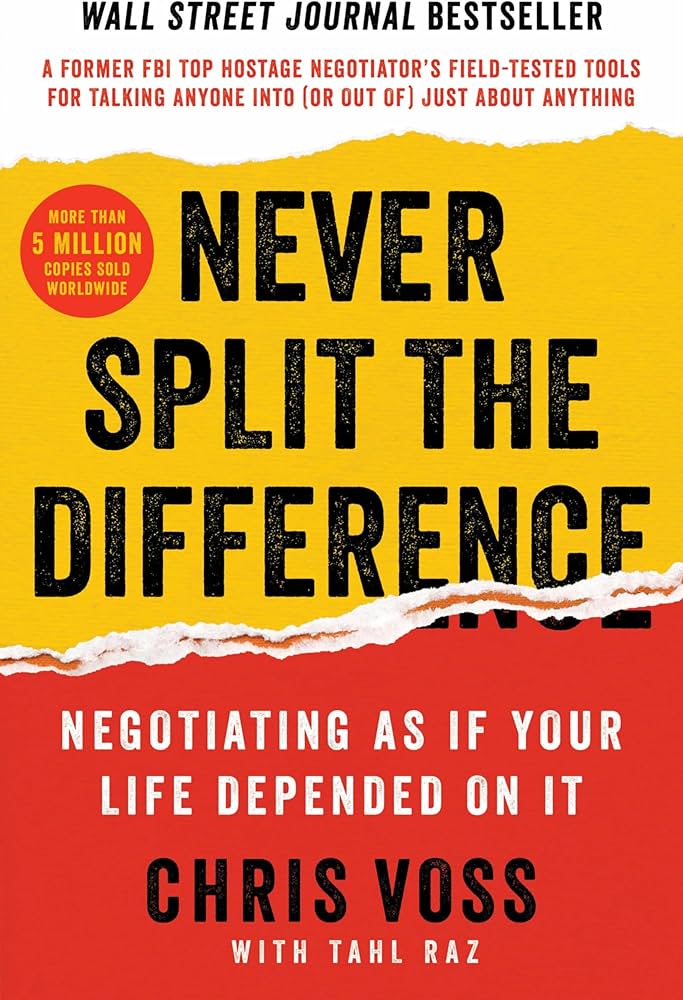
  • Never Split the Difference: It’s Not About Negotiation , It’s About Communication

    Never Split the Difference: It’s Not About Negotiation , It’s About Communication

    Most people hear “negotiation book” and picture a slick guy in a suit haggling over a car price. That’s not this. Chris Voss spent over two decades as the FBI’s lead international kidnapping negotiator — the person they called when someone’s life was literally on the line. Never Split the Difference is what he learned from that, distilled into something you can actually use at work, at home, and in every conversation where something matters to you.

    But here’s the thing: the more I read it, the more I realised this isn’t really a book about getting what you want. It’s a book about becoming someone people actually feel heard by. And that turns out to be the most effective negotiating strategy there is.

    The FBI Doesn’t Do “Win-Win”

    For years, the gold standard in negotiation was a Harvard framework built on rational problem-solving — separate emotion from the problem, find mutual interests, reach a logical agreement. It’s tidy, sensible, and according to Voss, almost completely wrong.

    When FBI negotiators surveyed their own experience, not one of them could recall a situation where calm, rational problem-solving was the right tool. Every single one had dealt with emotionally volatile, high-pressure, deeply irrational situations. Real negotiation — the kind that actually happens between real people — isn’t a logic puzzle. It’s an emotional one.

    That’s the foundation the whole book is built on, and once you accept it, everything else follows naturally.

    Listening Is the Job

    The first and most important tool Voss teaches is something most of us think we already do: listen. We don’t. Not really. What we mostly do is wait for our turn to talk, mentally rehearsing our next point while the other person is still speaking.

    Voss calls the alternative tactical empathy — genuinely understanding the feelings and perspective of the other person, and then showing them you understand. Not agreeing with them. Not giving in to them. Just demonstrating that you’ve actually heard what they said. He’s clear that empathy is not sympathy. It’s not about being soft. It’s about being accurate — about understanding the situation as the other person experiences it, so you can actually influence it. It’s about getting the other person to say, “That’s right.” so they know you’re both on the same page.

    Psychotherapy research backs this up: when people feel genuinely listened to, they become less defensive, more open, and more willing to consider other points of view. Voss didn’t invent this dynamic — he just figured out how to use it deliberately.

    The Tools That Actually Work

    The book is full of practical techniques, and a few of them have genuinely stuck with me.

    Mirroring is the simplest and probably the most immediately useful. You repeat the last few words of what someone just said back to them. That’s it. It sounds almost too simple to work, but it triggers a natural human instinct to elaborate — people feel heard, they keep talking, and you keep learning. In one study, waiters who mirrored their customers’ orders back to them received 70% more in tips than those who responded with enthusiastic affirmations like “great choice!” Something to think about.

    Labelling goes one step further. You name what you think the other person is feeling — “It seems like you’re frustrated with how this has gone” — and let it land. Voss describes this as a shortcut to intimacy. What’s fascinating is the neuroscience behind it: putting a name to an emotion moves brain activity away from the fear-generating amygdala and toward the rational prefrontal cortex. You’re literally calming someone down by acknowledging what they feel, not by telling them not to feel it.

    Calibrated questions are open-ended questions — usually starting with “how” or “what” — designed to give the other person the feeling of control while actually guiding the conversation. “How am I supposed to do that?” is Voss’s favourite example. It’s not aggressive. It’s not a demand. But it puts the problem squarely in the other person’s lap and invites them to solve it with you. “How” and “what” do the work. “Why,” Voss warns, almost always sounds like an accusation, in any language.

    The “No” Reframe

    One of the most counterintuitive ideas in the book is Voss’s argument that “No” is often more valuable than “Yes.” We’ve been conditioned to treat “No” as failure — the door closing, the deal dying. But Voss argues the opposite: “No” gives people a sense of safety and control. It’s a pause, not an ending. It often means “I’m not ready yet” or “I need more information” or “something about this doesn’t feel right.”

    Pushing hard for “Yes” makes people defensive. Inviting “No” makes them feel secure enough to actually engage. The negotiation, he says, doesn’t begin until someone says “No.”

    And the goal isn’t “Yes” anyway — it’s “That’s right.” That’s the phrase Voss says signals a genuine breakthrough: the moment your counterpart feels so understood that they stop defending their position and start working with you. “You’re right” is what people say to get you to stop talking. “That’s right” is what they say when they actually mean it.

    Never Split the Difference (Seriously, Don’t)

    The title comes from Voss’s argument against compromise as a default strategy. Splitting the difference sounds fair, but it’s not — it’s lazy. He uses a brilliant image: a woman wants her husband to wear black shoes, he wants to wear brown. They compromise. He wears one of each. Nobody wins. The compromise produced the worst possible outcome.

    Real deals, he argues, come from creativity — from understanding what someone actually needs underneath what they’re asking for, and finding a solution that gets you both there. That only happens if you’ve done the work of listening well enough to know what’s really going on.

    This Is Really a Book About How to Talk to People

    I want to come back to this, because I think it’s easy to pick up Never Split the Difference looking for tactics and miss the bigger point entirely.

    What Voss is really teaching is a way of being present with another person. The mirroring, the labelling, the calibrated questions — they only work if you’re genuinely paying attention. You can’t fake tactical empathy any more than you can fake listening. People feel it when you’re not really there.

    The skills in this book will make you a better negotiator, yes. But they’ll also make you a better colleague, a better partner, and — honestly — a more interesting person to talk to. Because most people move through conversations focused almost entirely on what they want to say next. Learning to actually hear someone is rarer than it should be, and people notice.

    Get the Book

    I’ve pulled out the ideas that landed hardest for me, but there’s a lot more in Never Split the Difference that I haven’t touched — the Ackerman bargaining system, Black Swans (the negotiating kind, not the Nassim Taleb kind), how to read liars, and the full framework for preparing for any high-stakes conversation. Voss also tells genuinely gripping stories from his FBI career that make all of this feel real rather than theoretical.

    If any of what I’ve covered here resonated with you, the book is absolutely worth your time. It’s one of those rare reads where you finish it and immediately start seeing your conversations differently — not as things that happen to you, but as things you can actually shape. Pick up a copy of Never Split the Difference and see for yourself.
  • Feel Good Productivity: When Willpower Fades

    Feel Good Productivity: When Willpower Fades

    Most productivity advice is secretly just guilt in a better font. Do more. Wake up earlier. Grind harder. And for a while, it works — until it doesn’t. I’ve had stretches where I was technically “doing everything right” and still felt completely drained, like I was pushing a boulder uphill just to keep up.

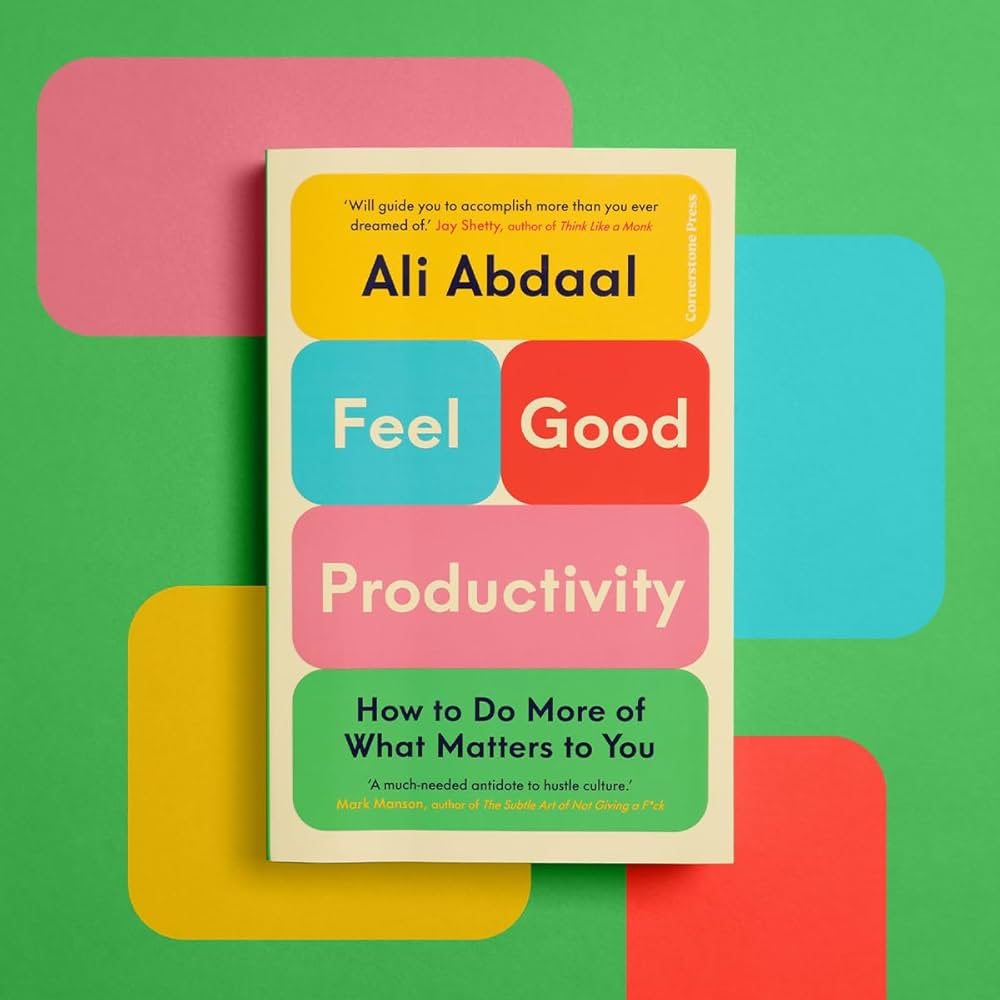
    That’s what made Ali Abdaal‘s Feel-Good Productivity land differently for me. The argument at its core is disarmingly simple: feeling good isn’t the reward for being productive — it’s the engine of it. When you feel better, you naturally achieve more. Not because you’re trying harder, but because the resistance is lower.

    Who is Ali Abdaal?

    Ali is a doctor-turned-creator who built a massive online following while still in medical school. He spent years obsessing over productivity tips and tricks before eventually arriving at a conclusion that cuts against most of the advice in that space: discipline-first thinking is fragile, and mood-first thinking is what actually lasts. If you’re more of a visual learner, his YouTube channel is worth bookmarking — he goes deep into the science behind these ideas and has a way of making dense research feel genuinely watchable. I’ve come back to his videos more than once.

    1. Energise: Turning Work into Play

    The first section of the book is about energy — specifically, how play is one of the most underrated ways to generate it.

    The idea that stuck with me most is deceptively simple: ask yourself, what would this look like if it were fun? Not every task can be made exciting, but most can be made slightly more tolerable with a small shift. One idea I use often is when doing a boring task, have good background music, but nothing with lyrics, he recommends Harry Potter movie scores. Abdaal also talks about confidence not as something you either have or don’t, but as a skill you practise — acting as if you’re confident in a task until the belief catches up with the behaviour. I’ve found this more useful than any pep talk.

    He also pushes back on the idea that success is zero-sum. Treating the people around you as teammates rather than competition doesn’t just feel better — it creates a support network that keeps you going when motivation runs dry.

    2. Unblock: Overcoming Fear and Inertia

    Procrastination, Abdaal argues, is rarely laziness. It’s usually an emotional signal — uncertainty, fear, or just the weight of inertia when you haven’t started yet.

    His answer to vague, overwhelming goals is what he calls NICE goals: Near-term, Input-based, Controllable, and Energising. The distinction matters because abstract goals (“get fit,” “finish the project”) give you nowhere to put your energy. Concrete, near-term inputs do.

    Two other tools I keep coming back to from this section: the Batman Effect, where you adopt an alter ego to distance yourself from anxiety — Beyoncé famously used “Sasha Fierce” for this — and the five-minute rule, where you commit to just five minutes on something you’ve been avoiding. It sounds too simple, but breaking the initial inertia really is most of the battle.

    3. Sustain: Preventing Burnout Through Alignment

    The third section is the one I think gets overlooked most in conversations about this book, and it might be the most important.

    Abdaal’s point here is that burning out isn’t just about doing too much — it’s often about doing too much of the wrong things. The “Hell Yeah or No” rule is essentially a filter: if you’re not genuinely excited about a commitment, the answer is no. Every yes is a no to something else you actually care about. It’s the same insight at the heart of Greg McKeown’s Essentialism — saying no isn’t about being difficult, it’s about protecting what matters.

    He also makes a distinction I found genuinely useful about rest. Not all rest is restorative. The activities that actually recharge you tend to make you feel Competent, Autonomous, Liberated, and Mellow — what he calls the CALM framework. Passively scrolling doesn’t meet that bar. A walk, a creative hobby, or time with people you like usually does.

    The section closes with a simple daily practice he calls Alignment Quests — each morning, pick one small action for health, one for work, and one for relationships that moves you toward the life you want a year from now. It’s a way of keeping daily effort connected to something larger than the to-do list.

    Think Like a Scientist

    The throughline of the whole book is this: there’s no single right way to work, and the people who figure out how to work well treat themselves like an ongoing experiment. Try things. Notice what actually makes you feel better. Adjust.

    That framing has changed how I approach my own habits more than any specific tip in the book. If you’ve ever felt like the traditional “push through it” approach to productivity just isn’t sustainable for you, this book makes a compelling case that you’re not wrong — and offers a better way forward. If you want to go even deeper on working sustainably, Cal Newport’s Slow Productivity makes a powerful companion read.

    If any of this resonates, I’d genuinely recommend picking up a copy of Feel-Good Productivity. And if you want to go deeper on the science behind it, Ali’s YouTube channel is the place to start. It was the reason I picked up the book in the first place.

  • Beyond the Bank Account: Redefining Success Through the 5 Types of Wealth

    Beyond the Bank Account: Redefining Success Through the 5 Types of Wealth

    Most of us are tracking one number — money — while quietly losing ground everywhere else. Time evaporates. Friendships go into maintenance mode. Health gets deprioritized until it forces its way back onto the list. And the money number, even when it goes up, somehow never feels like enough.

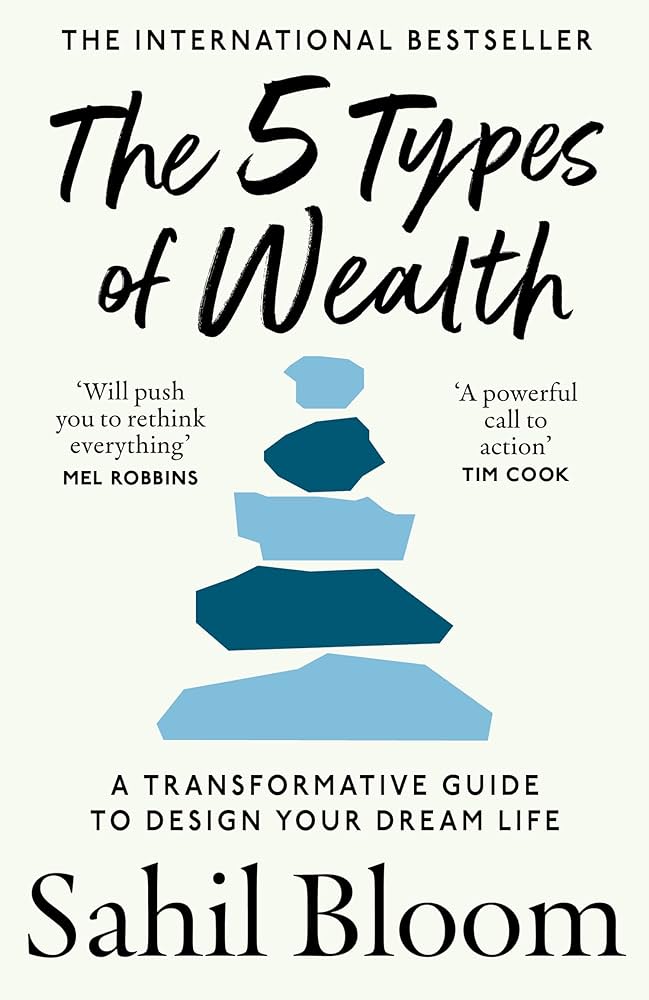
    Sahil Bloom’s book The 5 Types of Wealth puts a name to this problem and offers a more useful framework. The argument is simple: financial wealth is one piece of a much larger picture, and optimizing only for it is a good way to win the wrong game.

    Here’s how he breaks it down.

    Time

    This is the one you can’t get back. Bloom points out something genuinely uncomfortable: by the time most of us are adults, we’ve already spent the majority of the time we’ll ever have with our parents and siblings. It’s a rough piece of math. The goal isn’t to have more time — it’s to have control over how you use it.

    Relationships

    The Harvard Study of Adult Development tracked people for decades and landed on a clear finding: the quality of your relationships is the single biggest predictor of health and happiness as you age. Not income, not status — relationships. Bloom’s useful framing here is the “front-row people” — the ones who show up when it actually matters. Those are the relationships worth protecting.

    Mental Wealth

    This is about staying curious and having a sense of purpose rather than settling into a comfortable but flat routine. High curiosity correlates with better cognitive health, lower anxiety, and higher life satisfaction. It also means having a growth mindset — believing your abilities are something you develop, not something fixed.

    Physical Health

    Bloom’s line here is worth keeping: treat your body like a house you have to live in for another seventy years. Exercise is the most powerful single thing we have to slow physical decline. You don’t need a complicated protocol — consistent movement, decent food most of the time, and enough sleep covers most of it.

    Money

    It’s still in the framework, but it’s in its proper place — as an enabler, not the destination. The useful concept here is defining your “enough” — figuring out what level of financial stability actually lets you live the life you want, instead of just chasing more indefinitely. Lifestyle creep is real, compounding is real, and the gap between the two matters a lot.

    The point isn’t that money doesn’t matter. It’s that a life where you’re winning financially but losing everywhere else isn’t actually a win. I’ve seen it and I suspect you have too.

    The book goes deeper on each of these with practical exercises for figuring out where you actually stand. Worth reading if this framing resonates with you.

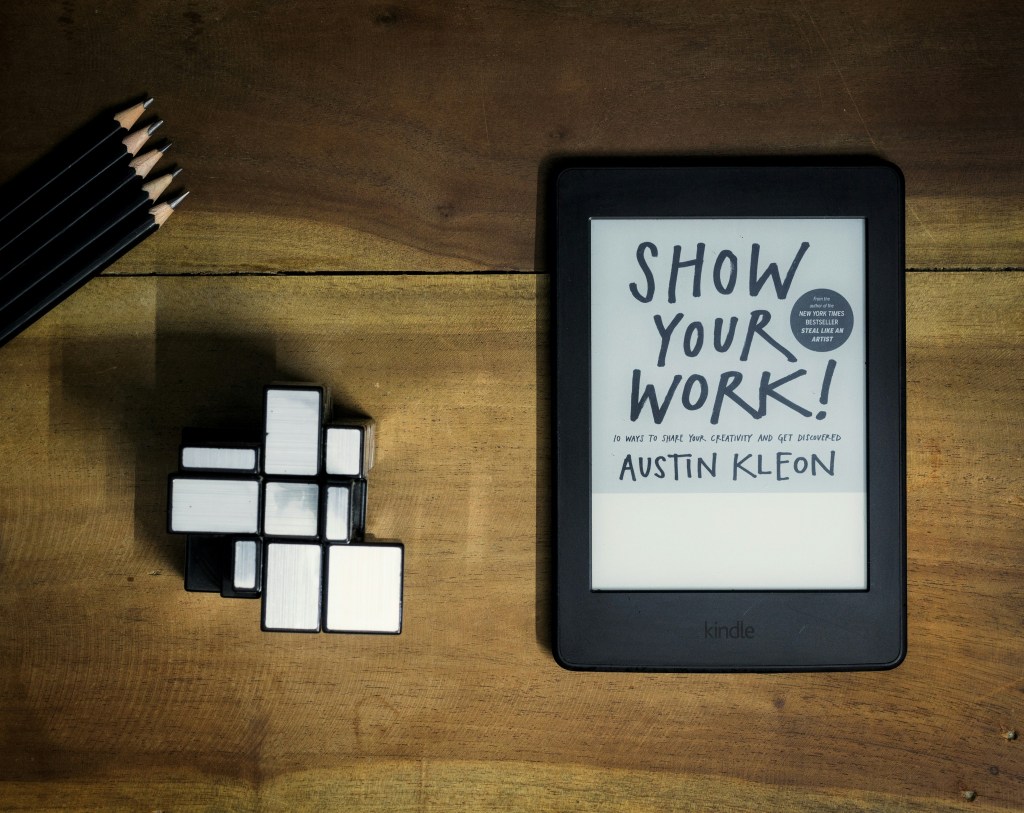
  • The Art of Being Seen: Lessons from Show Your Work!

    The Art of Being Seen: Lessons from Show Your Work!

    In a world where we often feel pressured to be “experts” before we share anything, Austin Kleon’s Show Your Work! offers a liberating alternative. The core message is that creativity isn’t a mysterious talent reserved for a few — it’s a way of operating that requires being open about what you’re learning and doing. Here are the most meaningful takeaways for anyone looking to find their voice and build an audience. This book was also a big reason I made this website.

    Embrace the Amateur Advantage

    One of the most powerful mindset shifts is realizing you don’t have to be a master to contribute. Being an amateur — someone who does things for the love of it — can actually be an advantage. Amateurs are willing to experiment, take risks, and share their mistakes. As Kleon puts it, the real gap isn’t between good and great; it’s between doing nothing and doing something. By learning in public and wearing your amateurism on your sleeve, you invite the right people to find you and grow alongside you.

    Think Process, Not Product

    We’re often so focused on the final result that we hide the most interesting part: the work itself. Kleon encourages us to document our process. Whether you share it or not, recording your progress helps you see your own growth. When you’re ready to share, don’t wait for a masterpiece — share something small every day. Bits of your methods, your influences, even the scraps from the cutting-room floor add up to a substantial body of work over time.

    The Power of “Scenius”

    The myth of the lone genius is just that — a myth. Kleon introduces the concept of “scenius”: an ecology of talent where great ideas emerge from a group of connected minds, not a single visionary. To tap into this, you need to become an open node — someone who listens, notices others, and acts as a connector rather than simply broadcasting your own work. By teaching what you know and sharing your inspirations freely, you build a network that feeds your creativity as much as your own.

    Become a Better Storyteller

    Human beings are wired for stories. Kleon argues that our work doesn’t speak for itself — people want to know where things came from and who made them. You can make your work more compelling by telling the story behind it: where you’ve been, where you are now, and where you’re headed. This doesn’t mean embellishing. Stick to the truth of your journey. Honesty, it turns out, is more than enough.

    Learn to Take a Punch — and Stick Around

    Sharing your work publicly requires vulnerability. But as Kleon notes, compulsively avoiding embarrassment becomes its own kind of defeat. The antidote is volume: put out enough work that no single bad review can define you. More than talent, more than timing, the people who succeed are often simply the ones who stick around long enough. That idea echoes a line from Richard Strozzi-Heckler that has always been particularly meaningful to me: “The path of the Warrior is lifelong, and mastery is often simply staying on the path.”

    The Choice to Be Seen

    Ultimately, showing your work is about reclaiming agency in how you connect with the world. Generosity with your ideas and consistency in your effort create opportunities that secrecy never could.

    There are plenty more gems in this book for anyone who feels stuck or invisible. If these ideas on sharing and creativity resonate with you, I’d highly recommend picking up a copy of Show Your Work!

  • The Antidote to Burnout: Finding Meaning in Slow Productivity

    The Antidote to Burnout: Finding Meaning in Slow Productivity

    If you’ve ever ended a packed workday feeling like you somehow got nothing done, you’re not imagining things. The modern workplace keeps raising the bar — more emails, more meetings, more pings — while the actual meaningful work keeps getting squeezed out. Cal Newport’s book Slow Productivity is a direct response to that problem. It lays out a practical philosophy for getting important things done without running yourself into the ground. Here’s a look at the ideas that matter most.

    A quiet workspace representing slow, intentional productivity

    The Problem: Busyness Isn’t the Same as Productivity

    One of the most useful ideas in the book is the concept of “pseudo-productivity” — the habit of using visible busyness as a stand-in for actual results. Because knowledge work is hard to measure, we often default to the things that look like work: answering emails quickly, keeping our calendars full, always being “on.”

    The problem is that all of this activity gets in the way of the deeper, more focused work that actually moves things forward. Newport calls it “jittery busyness” — and argues that escaping it is the first step toward doing work that genuinely matters. It’s the same trap that Ali Abdaal tackles in Feel-Good Productivity — the idea that looking busy and actually producing something meaningful are very different things.

    Principle 1: Do Fewer Things

    The first principle sounds almost too simple: cut down on your commitments until you can actually imagine finishing them. Newport’s argument is that when your plate is overflowing, everything suffers — you’re always context-switching, nothing gets your full attention, and the quality of your work drops. By focusing on a small number of projects that genuinely matter, you paradoxically get more done in the long run.

    One practical tool Newport suggests is this simple system for managing requests:

    ·The Holding Tank: When a new project request comes in, it goes on a list — no commitment yet, just a place to park it.

    ·The Active List: You work on no more than three projects at a time. That’s it.

    ·The Pull System: When one project wraps up, you pull the next one from the holding tank. Not before.

    ·Be Transparent: Let colleagues know roughly where their request sits in the queue and when you realistically expect to get to it.

    This system won’t win you any “most responsive” awards, but it’s the kind of structure that lets you actually do good work instead of just staying busy. It pairs well with the thinking in Greg McKeown’s Essentialism — both books make the case that protecting your attention is one of the most important things you can do.

    Principle 2: Work at a Sustainable Pace

    Newport’s second principle pushes back against the idea that grinding harder is always the answer. He argues that working at full intensity all the time is not natural — and not sustainable. Think of how seasons work in nature: periods of high activity followed by rest. Our best work tends to happen when we build that kind of rhythm into our lives.

    A simple but surprisingly powerful suggestion: double your timeline estimates. If you think a project will take two weeks, budget a month. This isn’t about lowering your standards — it’s about being honest with yourself and creating space for the kind of careful, thoughtful work that leads to results you’re proud of.

    Newport also makes a case for building small breaks into your routine — a Monday with no meetings, or an occasional afternoon away from your desk. These aren’t indulgences. They’re what it takes to keep your brain from getting stuck in a reactive loop where you’re always putting out fires instead of making real progress.

    Principle 3: Care Deeply About Quality

    The third principle is about raising your own bar — not in the sense of working more hours, but in caring genuinely about how good your work is. When you’re truly committed to producing something excellent, busyness starts to feel like what it is: a threat to the thing you care about. Saying no becomes easier. Cutting shallow commitments becomes easier. Quality becomes its own filter.

    Think of a craftsperson who takes pride in their work. They don’t rush a piece just because someone’s asking. They know that the reputation they build through consistently excellent work is worth more than any short-term win they’d get from saying yes to everything. Newport argues the same logic applies in knowledge work. Over time, doing fewer things — but doing them really well — earns you more professional freedom, not less.

    A Different Kind of Success

    Slow Productivity isn’t a book about doing less for its own sake. It’s about stepping off the treadmill long enough to ask: is all this activity actually getting me anywhere? Newport’s answer is that where you end up matters more than how fast you run. By steadily putting in meaningful effort — rather than constantly reacting and scrambling — you can build a body of work you’re proud of, without burning out along the way. That kind of intentionality extends beyond work too — it’s the same reframe behind Sahil Bloom’s 5 Types of Wealth: success means more than one number going up.

    If any of this rings true for how you’ve been feeling about your work, the book is well worth a read. It’s full of concrete strategies and real-world examples that make these ideas easy to start putting into practice.

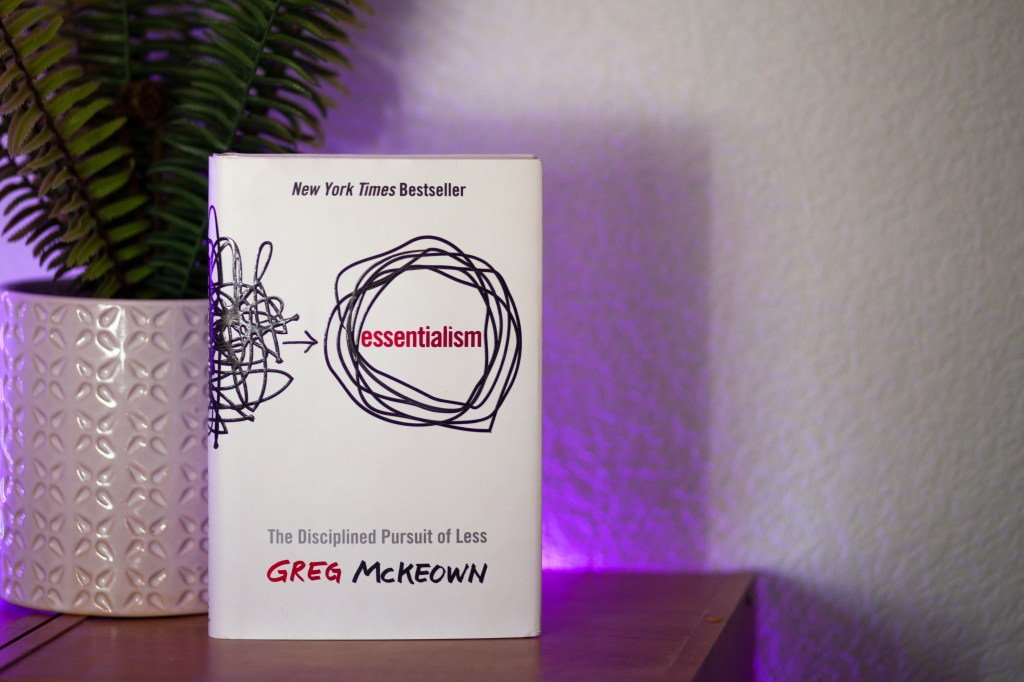
  • The Disciplined Pursuit of Less… But Better

    The Disciplined Pursuit of Less… But Better

    In a world that constantly pulls at our time, energy, and attention, Greg McKeown’s Essentialism offers a simple but powerful idea: do less, but do it better. The book isn’t about cramming more into your day — it’s about doing only the right things so you can give them the time and focus they deserve. Here are the themes that stuck with me most.

    You Always Have a Choice

    One of the biggest wake-up calls in the book is this: choice is something we do, not something that just happens to us. When we stop owning our choices, we slowly hand control of our lives over to other people’s priorities. The bottom line? If you don’t decide what matters most in your life, someone else will do it for you. A simple mindset shift — from “I have to” to “I choose to” — can be the first step toward a life that actually feels like yours.

    Why Success Can Work Against You

    McKeown describes what he calls the “Success Paradox,” and it’s surprisingly easy to relate to. When you do well, people notice. You become the go-to person, and more opportunities start coming your way. Sounds great, right? But here’s the catch — those opportunities are really just more demands on your time. Before long, you’re stretched so thin that you can’t do anything well, including the thing that made you successful in the first place. Cal Newport calls this same trap “jittery busyness” in Slow Productivity — worth reading alongside this one.

    Saying Yes to Less

    Not every opportunity is worth your time. In fact, most aren’t. The book argues that only a small handful of choices will ever truly move the needle in your life. To find those, McKeown suggests a simple gut-check: if an opportunity doesn’t feel like a clear, enthusiastic “yes,” treat it as a “no.” A good rule of thumb he offers — if you wouldn’t rate it 90% or higher, rate it zero and walk away.

    Getting Good at Saying No

    Saying yes to what matters means getting comfortable saying no to what doesn’t. The book compares this to editing a film — a great editor doesn’t just cut bad footage, they cut anything that doesn’t make the story stronger. The same goes for your life. Trimming the non-essentials isn’t about being selfish or harsh; it’s about making room for the people and goals that matter most to you. Ali Abdaal makes a nearly identical point in Feel-Good Productivity — his “Hell Yeah or No” rule is Essentialism in a different frame.

    Take Care of Your Most Important Tool — You

    McKeown makes a strong case that your most valuable asset isn’t your job, your network, or your skills — it’s you. And the most basic way to protect that asset is often the most overlooked: sleep. Getting enough rest isn’t a sign of laziness. It’s what keeps your mind sharp and your creativity alive so you can actually show up at your best.

    A Life That Feels Worth It

    At its heart, Essentialism is about avoiding the trap of being busy but never feeling fulfilled. By getting clear on what truly matters — and cutting out everything that doesn’t — you can stop just going through the motions and start building a life with real meaning and joy in it. If that bigger-picture reframe resonates, Sahil Bloom’s 5 Types of Wealth takes it even further — arguing that financial success is just one of five areas that actually make a life feel full.

    There are plenty more insights packed into this book, and I’d absolutely recommend picking it up if any of this clicked for you.

  • You Don’t Need Talent to Learn a Language — You Need a System

    You Don’t Need Talent to Learn a Language — You Need a System

    Most people who try to learn a new language quit within the first few months. Not because they weren’t smart enough. Not because they lacked some mysterious “language gene.” They quit because nobody gave them a real system — just apps, phrasebooks, and the vague advice to “practice every day.”

    This guide is built on two books that changed the way I think about language learning: Fluent Forever by Gabriel Wyner and Fluent in 3 Months by Benny Lewis. If you’re serious about this, read both. They complement each other well — Wyner gives you the neuroscience-backed methodology, Lewis gives you the confidence to actually use it with real people. For extra credit, look up the Michel Thomas method and listen to his audio courses. Between these three resources, you’ll have everything you need.

    What follows is a plan built from them.


    The Action Plan

    1. Build the Foundation: Pronunciation First

    Before you touch a grammar book, train your ears and mouth. Getting pronunciation right early prevents bad habits from calcifying — and bad pronunciation habits are genuinely hard to break later. Start by listening to your target language daily: songs, podcasts, YouTube videos. Passive exposure at this stage isn’t wasted time; it’s calibrating your brain to the sounds that are coming.

    2. Make Your Own Flashcards

    Do not buy premade flashcards. Make them yourself, using only your target language paired with images — no English translations. Google Image Search is your friend here. The reason this works is that you’re building a direct mental link between the word and the concept it represents, not a detour through your native language.

    Layer this with a Spaced Repetition System (SRS). The idea is simple: you review words at precisely the intervals when you’re about to forget them, which locks them into long-term memory far more efficiently than cramming. The free app Anki does both — flashcard creation and spaced repetition — and it’s worth learning properly.

    3. Focus on High-Leverage Vocabulary

    Don’t try to swallow the dictionary. Start with modal verbs, which give you an outsized ability to communicate with a small amount of material. Focus on:

    • Can (to be able to)
    • Should / Must (obligation)
    • Would like to / Want to (desires)
    • Going to (future intent)

    These few verbs let you construct an enormous range of sentences immediately. From there, move to the most commonly used words in your target language. Search for “[Target Language] frequency dictionary” — these lists exist for most major languages and tell you exactly which words appear most often in everyday speech and writing. Master the top 1,000 and you’ll be able to navigate the vast majority of real conversations.

    4. Practice “Thinking Immersion”

    You don’t need a plane ticket to immerse yourself in a language. The immersion that matters most happens inside your own head.

    The goal is to hijack your inner monologue — the constant stream of thought running through your mind all day — and redirect it into your target language. This sounds difficult, but it starts small. When you see a dog on your walk, you think un perro (or whatever your target language equivalent is). When you’re stuck in traffic, you describe it. When you make coffee, you narrate: I’m making coffee. The coffee is hot. I need milk. These micro-moments add up fast.

    Here’s what this looks like in practice day-to-day:

    • Morning routine: Narrate what you’re doing as you do it. I’m getting dressed. My shirt is blue. I’m going to be late.
    • Commute: Describe what you see out the window. There’s a red car. The road is busy. It’s raining.
    • At work or at home: When you hit a word you don’t know, don’t ignore the gap — find a workaround in your target language or look it up immediately in a dictionary app and move on.
    • Before bed: Run through your day in the language. Even a few sentences. Today I went to the store. I was tired. Tomorrow I have a meeting.

    The gaps in your vocabulary aren’t failures — they’re a to-do list. Every gap you discover is a word you’ll actually remember because you needed it.

    5. Eliminate the Translation Detour

    This is possibly the most important step on the list. Most learners get stuck in a loop: they hear a word, translate it to English, formulate a response in English, then translate it back. By the time they’ve done all that, the conversation has moved on.

    The fix is to stop translating entirely. Build your flashcards with images, not English definitions. Train your inner dialogue as described above. With enough repetition, you stop hearing perro and thinking “that means dog” — you just see the dog. That’s when the language starts to flow.


    Common Ruts — and How to Escape Them

    Even committed learners hit walls. These are the most common ones.

    The “Natural Talent” Myth People quit because they decide they’re not “language people.” Talent is real — some people do pick things up faster early on. But talent only determines your starting position, not your ceiling. Consistent daily work beats natural ability over time, every single time. The fix: Stop measuring yourself against where you think you should be. Measure yourself against where you were last month.

    The Translation Trap Hearing a word → translating to English → forming a thought in English → translating back. This loop makes real-time conversation nearly impossible. The fix: Never use English as the middleman. Associate words directly with what they represent. Build your inner monologue in the target language.

    The Mountain Mindset Looking at the full scope of learning a language — grammar, vocabulary, listening, speaking, reading, writing — can make it feel impossibly large. So people delay, or go looking for shortcuts, rather than starting. The fix: You don’t need fluency to be useful. Research suggests roughly 20 hours of focused practice is enough to get the fundamentals in place — not fluency, but the foundation. Enough to handle maybe 80% of everyday conversations. You won’t catch every word. You won’t be mistaken for a native. But you’ll be able to order food, ask for directions, hold a basic conversation, and make yourself understood. That’s a real, achievable milestone — and it’s much closer than most people think. The real problem isn’t that learning a language takes years. It’s that most people spend years not starting.

    The Intimidation Barrier The fear of saying something wrong in front of a native speaker can be completely paralyzing. The fix: Reframe mistakes. Every error is a data point, not a verdict. Most native speakers are genuinely delighted when someone is making a real effort to learn their language — they’re not judging your conjugations, they’re rooting for you. Nobody reaches a high level at anything without making hundreds of mistakes along the way.


    The Bottom Line

    Treat language learning as something you do every day for the love of it — not a box to check or a goal to sprint toward. Put in the reps, follow the system, and the progress takes care of itself.

    Pick up Fluent Forever and Fluent in 3 Months. Build your Anki deck. Start narrating your morning. The only thing standing between you and a new language is the decision to begin.

  • Why How You Breathe Matters More Than You Think: Lessons from James Nestor’s Book “Breath”

    Why How You Breathe Matters More Than You Think: Lessons from James Nestor’s Book “Breath”

    Most of us think breathing is just something that happens. You do it 25,000 times a day, so you must be an expert, right?

    By the time you finish reading this short article, you will have taken about 40 to 60 breaths without even realizing it. Like a computer program running in the background, your breathing stays on “autopilot” while you focus on your phone or your coffee.

    We rarely stop to check the quality of those breaths. But it turns out that how you breathe might be just as important as what you eat or how you lift.

    James Nestor is an award-winning science journalist whose book Breath: The New Science of a Lost Art is full of insights — and if you like this article, you should get the book. If you prefer video, his YouTube channel is a great place to start. Here are the big ideas that stood out to me:


    1. The Belly Breath

    Most adults only use a tiny bit of their diaphragm (the muscle under your lungs). When you take shallow breaths, your heart has to work twice as hard. By taking deeper breaths, focusing on expanding into your belly, you let your diaphragm do the heavy lifting, which lowers your blood pressure and gives your heart a break.

    2. We Are “Over-Breathing”

    Just like you can over-eat, you can over-breathe. Taking too many quick, shallow breaths keeps your body in a “stress” mode. The goal is to breathe less but better.

    3. The 5.5 Second Rule

    If you want the “perfect breath,” here is the math:

    • Inhale for 5.5 seconds.
    • Exhale for 5.5 seconds.

    That’s about 5.5 breaths per minute. Nestor points out that this isn’t a new discovery; humans have been doing this for thousands of years through prayer and chanting. Whether it’s the Catholic Rosary, the Buddhist mantra “Om Mani Padme Hum,” or Native American and African spiritual chants, they all seem to land roughly on this 5.5-second rhythm.

    4. Breath Through Your Nose, Not Your Mouth

    Your nose is a filter and a heater; your mouth is just a backup. Breathing through your nose releases a gas called Nitric Oxide that helps your blood carry more oxygen, it also helps you sleep better. Excessive mouth breathing can lead to a lot of poor health outcomes.

    5. Why Our Jaws are Shrinking

    Modern food is too soft. Because we don’t chew “hard” things anymore, our jaws have become smaller over generations. This makes our airways narrower, leading to crooked teeth and snoring. Chewing—and breathing through your nose—helps keep your airway open.

    6. Exhaling is Half the Battle

    Many people focus on getting air in, but the real problem is often getting the “stale” air out. If you don’t exhale fully, you leave old air in your lungs, which makes it harder to get fresh oxygen on the next breath.


    If you want to live longer, don’t just worry about your step count and calories, start paying attention to your breath. Breathe slow, breathe deep, and keep your mouth shut. And if this kind of science-backed habit building resonates with you, Feel-Good Productivity by Ali Abdaal is another book that takes a similarly evidence-based approach to how we perform at our best.

  • My Top Takeaways from The Almanack of Naval Ravikant: A Guide to Wealth and Happiness

    My Top Takeaways from The Almanack of Naval Ravikant: A Guide to Wealth and Happiness

    This book is packed with absolute bangers. Eric Jorgenson curated a collection of wisdom from entrepreneur and philosopher Naval Ravikant. He has a way of stripping away the noise of modern life until only the fundamental truths remain. What you’re about to read is just a tiny fraction of the insights that actually resonated with me—the “greatest hits” that changed how I look at my time, my work, and my head.

    I’ve organized these takeaways into three main pillars, like the actual book is organized: Wealth, Happiness, and Philosophy & Learning. But keep in mind, this is just a highlight reel. If these ideas spark something for you, do yourself a favor and get the full book. It’s stated better, deeper, and more completely there. Consider this the appetizer; the book is the feast.

    Wealth

    • Financial freedom comes from owning equity not renting out your time: If you’re working for someone else they will only pay you the bare minimum required to keep you doing the job and you can only work so much. You must own equity – a piece of a business – to gain wealth. Owning equity will enable you to earn money while you sleep.
    • Cultivate specific knowledge to become irreplaceable: Specific knowledge is knowledge that cannot be trained for. If it’s something that can be taught and trained for, you can be replaced by someone else or automation. You find this knowledge by pursuing your genuine curiosity and passion, it should feel like play to you but look like work to others.
    • Pursue permissionless leverage: Labor and capital are traditional forms of leverage, but in the world we live in today code and media are forms of leverage that have no marginal cost of replication. Unlike hiring more people or raising money, these tools are permissionless. You don’t need anyone’s approval to write a book, record a podcast, or write code that works for you 24/7.

    Happiness

    • Think of Happiness as the default state that emerges when you remove the sense that something is missing: Happiness is a skill that can be learned and a choice only you can make. When you stop your mind from running into the past to regret or the future to plan you achieve the internal silence of being content.
    • Desire is a contract you make with yourself to be unhappy until you get what you want: Choose your desires carefully, ideally limit yourself to one specific desire at a time rather than bucket of fuzzy ideas.
    • Life is a single player game: Society encourages us to play “multi-player” competitive games for status and money. Your interpretations, memories, and feelings are all internal with no external progress or validation. You are only competing against your previous self.

    Philosophy & Learning

    • Read what you love until you love to read: Many people don’t enjoy reading because they were forced to read things that didn’t interest them in school, to fix this you should read things that interest you and follow your curiosity. If you truly do this you’ll end up reading a lot and hopefully love reading eventually.
    • Master the skill of knowing how to learn: In an evolving world where professions can become obsolete overnight the most important skill is knowing how to learn. focus on the basic foundational subjects, arithmetic, logic, science, and philosophy. With a good foundation you can read any book and absorb advanced concepts as needed.
    • No one else can do the work for you: Doctors won’t make you healthy, teachers won’t make you smart, and mentors won’t make you rich. You must take responsibility for your own life. Start by prioritizing your physical health above everything else, “peace of body” makes it much easier to achieve “peace of mind”.
  • 10 Ideas I Got from Atomic Habits 

    10 Ideas I Got from Atomic Habits 

    The following is a list of 10 ideas that deeply resonated with me while reading Atomic Habits by James Clear. These concepts have fundamentally changed how I look at my environment, my daily routine, and the way I “put points on the scoreboard.”

    If you find these ideas helpful, I highly recommend picking up a copy of the book or exploring James Clear’s other work for a deeper dive. Please note that I don’t have any affiliate links at the moment; I’m just sharing these because they’ve had a genuine impact on my life. If that ever changes, I’ll update this post accordingly.

    Here are my top 10 takeaways:

    1. The Power of Compounding

    Tiny, consistent improvements—getting just 1 percent better every day—compound into massive results over time. Success is not the product of a single, once-in-a-lifetime transformation, but of daily habits. I like to think about putting points on the scoreboard: Reading a chapter in a book instead of scrolling social media, that’s a point; going on a walk instead of having dessert that you don’t need, that’s a point; and so on.

    2. Focus on Systems That Point Towards Your Goals

    “You do not rise to the level of your goals. You fall to the level of your systems.” Goals are great, but they create an “either-or” scenario where you are either successful or you fail. Certain goals can be detrimental, especially if the goal isn’t 100% decided by your actions, like winning a game. Goals are good for setting a direction, but systems are about building processes that make progress in that direction.

    3. Become the Type of Person Who Does the Thing

    The deepest and most effective form of behavior change is changing your identity—what you believe— the idea is not to perform a habit, but to become the type of person who performs that habit (e.g., “The goal is not to read a book, the goal is to become a reader”). Every action is a vote for the type of person you wish to become, and your identity emerges out of your habits.

    4. Lacking Motivation? Change Your Environment

    Motivation is a finite resource and changing your environment could be an easy fix. I used to work at a bar, taproom, and bottleshop for a while and it’s not surprising that I drank more than I should have. Not excessively but significantly more than the 0-2 per week that is recommended. When I left that job it was so much easier to drink less. It doesn’t have to be about avoiding bad habits either, you can prime your environment to help you read, workout, or drink more water. You want to read more, have your book out in the open, on your bed or where you sit when you watch tv. You want to work out more, have a home gym and put things in places you usually hang out around the house, a pair of dumbbells by the TV, a few exercise bands by your desk, and a pull up bar on a doorframe you walk by a few times a day and use these things when you walk by them. You can do the same thing with a few water bottles.

    5. The Four Laws of Behavior Change

    (1) Make it Obvious, (2) Make it Attractive, (3) Make it Easy, and (4) Make it Satisfying. If you’re having trouble with trying to answer the questions, how can I make it obvious, attractive, easy, and satisfying? Think about answers to the inverse: how would I make it invisible, unattractive, difficult, and unsatisfying?

    6. The Path of Least Resistance

    We naturally gravitate toward the option that requires the least amount of effort. Knowing this it is a good idea to design your life so the actions that matter most are also the easiest to do, making the good habit the path of least resistance.

    7. Habit Stacking

    Everyone has habits, if you want to add a new habit it is good to stack them with habits you already have, writing it down clearly and intentionally is good. The formula for this is: “After [CURRENT HABIT], I will [NEW HABIT].”

    8. Remove or Add Steps to Bad Habits

    A good way to eliminate bad habits is to reduce exposure to the cue that causes it. It’s much easier to avoid temptation than resist it. This is the “secret to self-control”: spend less time in tempting situations, often by simply making the cues of bad habits invisible or adding steps to get to the bad habit. An example that I use is when I want to do something and I know I could get distracted by my phone. I have it in another room.

    9. Awareness Through the Habits Scorecard

    The process of behavior change always starts with awareness. A practical tool is the habits Scorecard, at the beginning of a given day write down all your actions throughout the day (you don’t have to do this daily, just every once in a while). At the end of the day ask yourself for each thing you wrote, does this get me closer to the person I want to become? And add a (+) next to it if it does, a (-) if it doesn’t and a (=) if it doesn’t have an impact, then look at all the (-) and ask yourself what can I do to make this activity more difficult to do in the future? Like if after you got up one of the first things you did was check your phone, maybe the answer would be charging my phone outside of my bedroom at night. Also don’t forget to congratulate yourself on the (+) and if you want you could ask yourself the question: what can I do to make this easier to do in the future?

    10. Stack Your Wants with Shoulds

    There’s a new show on Netflix that you really want to watch? Stack that with a productive should, like folding laundry or walking on a treadmill or pedaling a stationary bike (you can easily get these free on facebook marketplace or craigslist). Or you want to scroll Instagram for 5 minutes after doing 25 minutes of work on a project you know you should be working on. This is the pomodoro technique, make sure to set a timer for this one, you could easily scroll for an hour after 25 minutes of work if you’re not careful.