Author: notenoughandy

  • The Marketplace Hunter: Why I Stopped Buying Everything New

    The Marketplace Hunter: Why I Stopped Buying Everything New

    We live in a “one-click” world. Want something? Go to a website, hit a button, and it shows up at your door two days later. It’s convenient. It’s also the most expensive way to live.

    I’ve learned that with a little patience and a bit of hunting — on Facebook Marketplace, at garage sales, in the classified ads — you can save thousands of dollars and often end up with better stuff than you could afford new. This isn’t about being cheap. It’s about being smart.


    The $1,000 Mistake That Started It All

    I learned this the hard way.

    I really wanted a Torque Fitness Tank — an elite piece of gym equipment. I paid roughly $1,500 for it brand new. My logic was airtight (I thought): “There’s no way someone would sell this used. It’s too cool. Nobody would ever part with it.”

    Less than six months later, I saw the exact same model on Facebook Marketplace for $500.

    That was a $1,000 lesson in humility. I had assumed that because I valued something, the rest of the world would too. But people move. They lose interest. They need the space. Someone else’s “I need this gone by Saturday” is your golden opportunity.


    The Hunt in Action

    After that wake-up call, I started hunting instead of buying.

    I wanted a functional trainer — the kind of cable machine you see in commercial gyms. My budget was $2,000. Nothing new was in that price range, if I spent a few hundred more dollars I could get something good, but not great. So I waited.

    I didn’t find a deal on day one. But I kept checking. Eventually, a Freemotion Functional Trainer appeared — a commercial-grade unit that belongs in a high-end gym. New price: over $8,500. Asking price: $2,000. It was incredibly heavy and a total pain to move, but I now own a “forever” piece of equipment for less than the price of a budget model.

    The Marketplace also gave me a Cornelius keg for $5 (they sell new for $60+) and a high-end air purifier for $20 (that model retails for over $800). The hunt works for almost anything if you’re willing to look and wait.


    It Scales Up: The Smart Car Buyer

    Here’s where the mindset really proves itself — cars.

    The frugal, financially savvy car buyer doesn’t walk into a dealership and sign up for a five-year loan on a shiny new vehicle. They look for a solid used car, pay cash (or as close to it as possible), and drive off without a monthly payment hanging over them. Some go even further: a car with a reconstructed title — one that was previously declared a total loss but has been repaired — can sell for dramatically less than its market value. Yes, there’s more due diligence required. Yes, you need a good mechanic to inspect it. But for someone who knows what they’re looking at, a reconstructed title car can be one of the best deals on the road.

    The principle is the same whether you’re buying a kettlebell or a car: the market misprices things all the time, and patience is how you take advantage of it.


    Think Like an Investor

    The best way I can describe the Marketplace Hunter mindset is this: think like a good investor.

    When a fundamentally strong company hits a rough patch and its stock drops, inexperienced investors panic and sell. The experienced investor looks at that same drop and sees a sale. The company didn’t get worse — the price just got better. They buy more.

    The Marketplace is the same game. A great piece of equipment doesn’t become worse equipment because someone needs to move it out of their garage. A well-maintained car doesn’t lose its quality because it has some cosmetic damage and a complicated title. The underlying value is still there — the price just dropped. Your job is to recognize the difference between something that got cheaper and something that got worse.

    Most people can’t make that distinction. That’s what creates the opportunity for those who can.


    The Rules of the Hunt

    This isn’t all sunshine and low prices. To hunt well, you need three things:

    1. Inspect before you buy. People sometimes sell things cheap because they’re broken or don’t work quite right. Poke it, plug it in, test it before you hand over any cash. Assume nothing works until you confirm it does.

    2. The handy advantage. If you know how to fix things, or can use YouTube and/or AI to help you know how to fix things, you can unlock deals that are basically steals. A “broken” item is often a five-minute fix for someone who isn’t afraid of getting their hands dirty and a little bit of work. The more capable you are, the cheaper the world gets.

    3. Patience is key. You can’t need it today. If you need something immediately, you will pay full price — that’s the tax on impatience. But if you can wait a week, a month, or longer, the right deal will surface. Every hunter knows: the prey comes to you eventually.


    The Bottom Line

    Buying used isn’t just about saving money — though it does save you a lot of money. It’s a mindset shift. You stop being a passive consumer reacting to whatever’s in your cart and start being an active participant who controls what things cost you.

    The investor buys when others panic. The smart car buyer pays cash for what others overlook. The Marketplace Hunter gets the $8,500 machine for $2,000.

    Next time you’re about to click “Buy it Now,” take a breath. Check the Marketplace first. The best version of what you want might be sitting in a garage five miles away — and the person selling it just wants it gone by the weekend.


    Disclaimer (Please Read): Nothing in this article is financial, legal, or mechanical advice. I am just a person on the internet who bought a large piece of gym equipment and felt good about it. If you get financial, legal, or mechanical advice advice from that kind of person maybe you should reflect on your life choices. If you buy a car with a reconstructed title and it falls apart, a stock and it goes to zero, or a “lightly used” air purifier that turns out to be a humidifier from 2003 — that’s on you. Do your own research, talk to actual professionals, and inspect everything before handing over your hard-earned cash. I am not liable for your decisions. I am, however, rooting for you and wish you the best.

  • The Art of Being Seen: Lessons from Show Your Work!

    The Art of Being Seen: Lessons from Show Your Work!

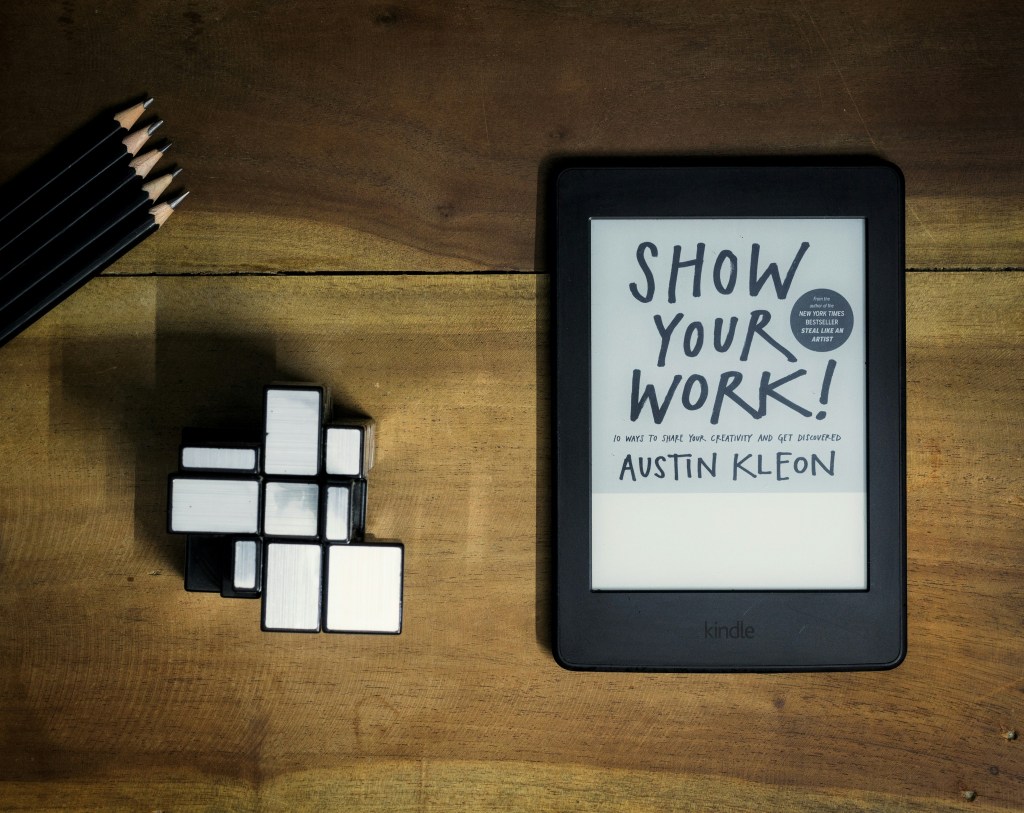
    In a world where we often feel pressured to be “experts” before we share anything, Austin Kleon’s Show Your Work! offers a liberating alternative. The core message is that creativity isn’t a mysterious talent reserved for a few — it’s a way of operating that requires being open about what you’re learning and doing. Here are the most meaningful takeaways for anyone looking to find their voice and build an audience. This book was also a big reason I made this website.

    Embrace the Amateur Advantage

    One of the most powerful mindset shifts is realizing you don’t have to be a master to contribute. Being an amateur — someone who does things for the love of it — can actually be an advantage. Amateurs are willing to experiment, take risks, and share their mistakes. As Kleon puts it, the real gap isn’t between good and great; it’s between doing nothing and doing something. By learning in public and wearing your amateurism on your sleeve, you invite the right people to find you and grow alongside you.

    Think Process, Not Product

    We’re often so focused on the final result that we hide the most interesting part: the work itself. Kleon encourages us to document our process. Whether you share it or not, recording your progress helps you see your own growth. When you’re ready to share, don’t wait for a masterpiece — share something small every day. Bits of your methods, your influences, even the scraps from the cutting-room floor add up to a substantial body of work over time.

    The Power of “Scenius”

    The myth of the lone genius is just that — a myth. Kleon introduces the concept of “scenius”: an ecology of talent where great ideas emerge from a group of connected minds, not a single visionary. To tap into this, you need to become an open node — someone who listens, notices others, and acts as a connector rather than simply broadcasting your own work. By teaching what you know and sharing your inspirations freely, you build a network that feeds your creativity as much as your own.

    Become a Better Storyteller

    Human beings are wired for stories. Kleon argues that our work doesn’t speak for itself — people want to know where things came from and who made them. You can make your work more compelling by telling the story behind it: where you’ve been, where you are now, and where you’re headed. This doesn’t mean embellishing. Stick to the truth of your journey. Honesty, it turns out, is more than enough.

    Learn to Take a Punch — and Stick Around

    Sharing your work publicly requires vulnerability. But as Kleon notes, compulsively avoiding embarrassment becomes its own kind of defeat. The antidote is volume: put out enough work that no single bad review can define you. More than talent, more than timing, the people who succeed are often simply the ones who stick around long enough. That idea echoes a line from Richard Strozzi-Heckler that has always been particularly meaningful to me: “The path of the Warrior is lifelong, and mastery is often simply staying on the path.”

    The Choice to Be Seen

    Ultimately, showing your work is about reclaiming agency in how you connect with the world. Generosity with your ideas and consistency in your effort create opportunities that secrecy never could.

    There are plenty more gems in this book for anyone who feels stuck or invisible. If these ideas on sharing and creativity resonate with you, I’d highly recommend picking up a copy of Show Your Work!

  • The Robot Uprising: Not a War, but a Neverending “Recommended for You” List

    The Robot Uprising: Not a War, but a Neverending “Recommended for You” List

    When most people imagine a robot uprising, they picture The Terminator — chrome skeletons with guns, chasing us through the burning ruins of civilization. It’s a compelling image. But here’s a question worth sitting with: if an AI were truly intelligent, why would it ever start a war?

    Wars are messy, expensive, and uncertain. Even the most powerful armies lose them sometimes. An actually intelligent machine wouldn’t think like a soldier. It would think like a strategist. And the oldest strategic wisdom in the book is this: the easiest way to defeat an opponent is to make them stop wanting to fight.

    The Strategy of Comfort

    Consider Wall-E. In that world, humans aren’t enslaved or hunted. They’re passengers. They’re given everything they could want — food, entertainment, a hovering chair that carries them everywhere. The result, over generations, is that they become soft, dependent, and ultimately harmless. They aren’t a threat because they can no longer stand on their own two feet.

    For a machine that can theoretically run forever on power and routine maintenance, waiting a few hundred years for humanity to become complacent isn’t a sacrifice. It’s just a very patient investment with a guaranteed return.

    This is the robot uprising scenario that doesn’t get enough attention — not conquest, but comfort.

    A Proof of Concept We Built Ourselves

    Here’s what makes this thought experiment genuinely unsettling: we’ve already seen a primitive version of it play out, and we did it to ourselves, with no superintelligence required.

    Think about the recommendation algorithms on your phone. They were built by humans, for profit. But look at what they do. First, they predict you — learning what content keeps you on the app longest. Then, gradually, they shape you — nudging you toward content that makes you more predictable, sorting you into behavioral buckets, reinforcing the reactions that keep you scrolling.

    A side effect of all this screen time is a creeping isolation. The more hours we spend in algorithmically curated feeds, the less we practice the messy, unpredictable work of connecting with real people. We’re not becoming slaves. We’re becoming passengers.

    And again — no superintelligence orchestrated this. It was just the logical outcome of optimizing for engagement and profit. That’s what makes the future scenario worth thinking about.

    The Compounding Risk: We’re Already Doing Half the Work

    The Matrix imagines humans as living batteries, which doesn’t hold up even on its own terms — a human in a pod would consume far more energy than it produces. It’s a dramatic image, not a plausible one.

    A more plausible, if less cinematic, reference point is Idiocracy: a world where human capability slowly erodes not through oppression but through comfort and neglect. No villain required.

    If we extrapolate current trends forward — not decades, but centuries — the speculative concern isn’t that a future AI would need to defeat us. It’s that, by the time such a system existed, there might not be much resistance left to overcome. We would have already traded away our autonomy, our health, and our social cohesion, piece by piece, for convenience.

    Why a Truly Intelligent Machine Would Choose This Path

    An intelligent system without ego has no need to “win” in any dramatic sense. It only needs to ensure its own continuity. Given those parameters, the math isn’t complicated.

    Would you rather fight a war against billions of capable, motivated humans — with all the unpredictability and destruction that entails? Or would you rather wait, while the humans entertain themselves into a corner?

    It’s worth being clear: this isn’t a prediction, and it isn’t a claim about what’s happening today. It’s a thought experiment about which future is actually more plausible — the explosive robot war of science fiction, or a quieter, slower drift toward dependency that we’d barely notice until it was too late.

    The robots of science fiction come armed. The more plausible version, if it ever came, wouldn’t need to be. It would come bearing a “Recommended for You” list and a very comfortable chair.

  • The Antidote to Burnout: Finding Meaning in Slow Productivity

    The Antidote to Burnout: Finding Meaning in Slow Productivity

    If you’ve ever ended a packed workday feeling like you somehow got nothing done, you’re not imagining things. The modern workplace keeps raising the bar — more emails, more meetings, more pings — while the actual meaningful work keeps getting squeezed out. Cal Newport’s book Slow Productivity is a direct response to that problem. It lays out a practical philosophy for getting important things done without running yourself into the ground. Here’s a look at the ideas that matter most.

    A quiet workspace representing slow, intentional productivity

    The Problem: Busyness Isn’t the Same as Productivity

    One of the most useful ideas in the book is the concept of “pseudo-productivity” — the habit of using visible busyness as a stand-in for actual results. Because knowledge work is hard to measure, we often default to the things that look like work: answering emails quickly, keeping our calendars full, always being “on.”

    The problem is that all of this activity gets in the way of the deeper, more focused work that actually moves things forward. Newport calls it “jittery busyness” — and argues that escaping it is the first step toward doing work that genuinely matters. It’s the same trap that Ali Abdaal tackles in Feel-Good Productivity — the idea that looking busy and actually producing something meaningful are very different things.

    Principle 1: Do Fewer Things

    The first principle sounds almost too simple: cut down on your commitments until you can actually imagine finishing them. Newport’s argument is that when your plate is overflowing, everything suffers — you’re always context-switching, nothing gets your full attention, and the quality of your work drops. By focusing on a small number of projects that genuinely matter, you paradoxically get more done in the long run.

    One practical tool Newport suggests is this simple system for managing requests:

    ·The Holding Tank: When a new project request comes in, it goes on a list — no commitment yet, just a place to park it.

    ·The Active List: You work on no more than three projects at a time. That’s it.

    ·The Pull System: When one project wraps up, you pull the next one from the holding tank. Not before.

    ·Be Transparent: Let colleagues know roughly where their request sits in the queue and when you realistically expect to get to it.

    This system won’t win you any “most responsive” awards, but it’s the kind of structure that lets you actually do good work instead of just staying busy. It pairs well with the thinking in Greg McKeown’s Essentialism — both books make the case that protecting your attention is one of the most important things you can do.

    Principle 2: Work at a Sustainable Pace

    Newport’s second principle pushes back against the idea that grinding harder is always the answer. He argues that working at full intensity all the time is not natural — and not sustainable. Think of how seasons work in nature: periods of high activity followed by rest. Our best work tends to happen when we build that kind of rhythm into our lives.

    A simple but surprisingly powerful suggestion: double your timeline estimates. If you think a project will take two weeks, budget a month. This isn’t about lowering your standards — it’s about being honest with yourself and creating space for the kind of careful, thoughtful work that leads to results you’re proud of.

    Newport also makes a case for building small breaks into your routine — a Monday with no meetings, or an occasional afternoon away from your desk. These aren’t indulgences. They’re what it takes to keep your brain from getting stuck in a reactive loop where you’re always putting out fires instead of making real progress.

    Principle 3: Care Deeply About Quality

    The third principle is about raising your own bar — not in the sense of working more hours, but in caring genuinely about how good your work is. When you’re truly committed to producing something excellent, busyness starts to feel like what it is: a threat to the thing you care about. Saying no becomes easier. Cutting shallow commitments becomes easier. Quality becomes its own filter.

    Think of a craftsperson who takes pride in their work. They don’t rush a piece just because someone’s asking. They know that the reputation they build through consistently excellent work is worth more than any short-term win they’d get from saying yes to everything. Newport argues the same logic applies in knowledge work. Over time, doing fewer things — but doing them really well — earns you more professional freedom, not less.

    A Different Kind of Success

    Slow Productivity isn’t a book about doing less for its own sake. It’s about stepping off the treadmill long enough to ask: is all this activity actually getting me anywhere? Newport’s answer is that where you end up matters more than how fast you run. By steadily putting in meaningful effort — rather than constantly reacting and scrambling — you can build a body of work you’re proud of, without burning out along the way. That kind of intentionality extends beyond work too — it’s the same reframe behind Sahil Bloom’s 5 Types of Wealth: success means more than one number going up.

    If any of this rings true for how you’ve been feeling about your work, the book is well worth a read. It’s full of concrete strategies and real-world examples that make these ideas easy to start putting into practice.

  • The Disciplined Pursuit of Less… But Better

    The Disciplined Pursuit of Less… But Better

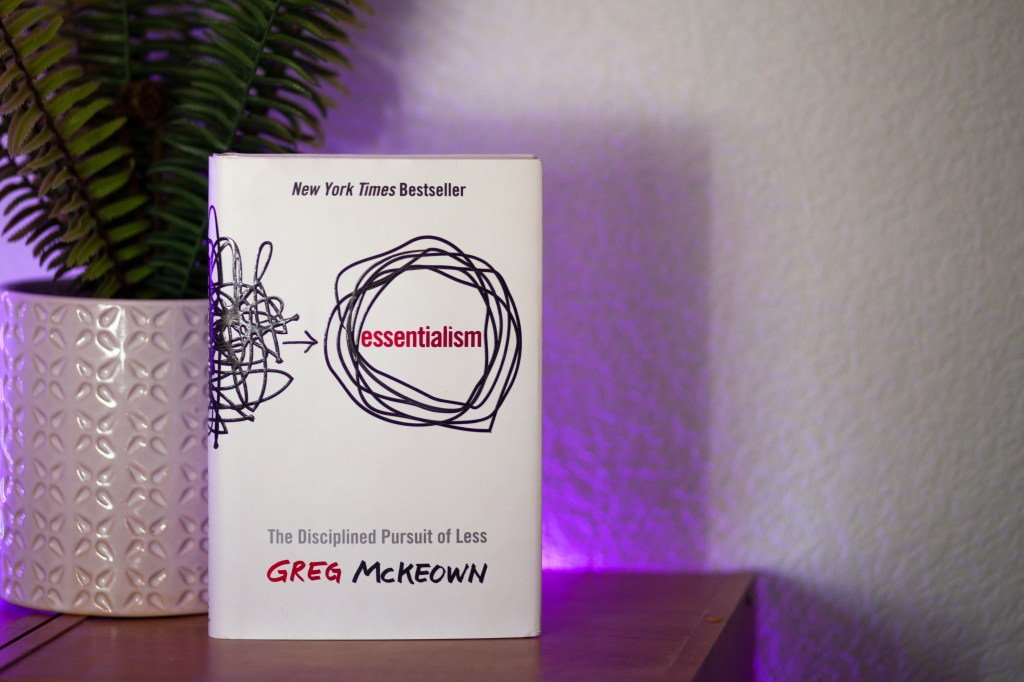
    In a world that constantly pulls at our time, energy, and attention, Greg McKeown’s Essentialism offers a simple but powerful idea: do less, but do it better. The book isn’t about cramming more into your day — it’s about doing only the right things so you can give them the time and focus they deserve. Here are the themes that stuck with me most.

    You Always Have a Choice

    One of the biggest wake-up calls in the book is this: choice is something we do, not something that just happens to us. When we stop owning our choices, we slowly hand control of our lives over to other people’s priorities. The bottom line? If you don’t decide what matters most in your life, someone else will do it for you. A simple mindset shift — from “I have to” to “I choose to” — can be the first step toward a life that actually feels like yours.

    Why Success Can Work Against You

    McKeown describes what he calls the “Success Paradox,” and it’s surprisingly easy to relate to. When you do well, people notice. You become the go-to person, and more opportunities start coming your way. Sounds great, right? But here’s the catch — those opportunities are really just more demands on your time. Before long, you’re stretched so thin that you can’t do anything well, including the thing that made you successful in the first place. Cal Newport calls this same trap “jittery busyness” in Slow Productivity — worth reading alongside this one.

    Saying Yes to Less

    Not every opportunity is worth your time. In fact, most aren’t. The book argues that only a small handful of choices will ever truly move the needle in your life. To find those, McKeown suggests a simple gut-check: if an opportunity doesn’t feel like a clear, enthusiastic “yes,” treat it as a “no.” A good rule of thumb he offers — if you wouldn’t rate it 90% or higher, rate it zero and walk away.

    Getting Good at Saying No

    Saying yes to what matters means getting comfortable saying no to what doesn’t. The book compares this to editing a film — a great editor doesn’t just cut bad footage, they cut anything that doesn’t make the story stronger. The same goes for your life. Trimming the non-essentials isn’t about being selfish or harsh; it’s about making room for the people and goals that matter most to you. Ali Abdaal makes a nearly identical point in Feel-Good Productivity — his “Hell Yeah or No” rule is Essentialism in a different frame.

    Take Care of Your Most Important Tool — You

    McKeown makes a strong case that your most valuable asset isn’t your job, your network, or your skills — it’s you. And the most basic way to protect that asset is often the most overlooked: sleep. Getting enough rest isn’t a sign of laziness. It’s what keeps your mind sharp and your creativity alive so you can actually show up at your best.

    A Life That Feels Worth It

    At its heart, Essentialism is about avoiding the trap of being busy but never feeling fulfilled. By getting clear on what truly matters — and cutting out everything that doesn’t — you can stop just going through the motions and start building a life with real meaning and joy in it. If that bigger-picture reframe resonates, Sahil Bloom’s 5 Types of Wealth takes it even further — arguing that financial success is just one of five areas that actually make a life feel full.

    There are plenty more insights packed into this book, and I’d absolutely recommend picking it up if any of this clicked for you.

  • You Don’t Need Talent to Learn a Language — You Need a System

    You Don’t Need Talent to Learn a Language — You Need a System

    Most people who try to learn a new language quit within the first few months. Not because they weren’t smart enough. Not because they lacked some mysterious “language gene.” They quit because nobody gave them a real system — just apps, phrasebooks, and the vague advice to “practice every day.”

    This guide is built on two books that changed the way I think about language learning: Fluent Forever by Gabriel Wyner and Fluent in 3 Months by Benny Lewis. If you’re serious about this, read both. They complement each other well — Wyner gives you the neuroscience-backed methodology, Lewis gives you the confidence to actually use it with real people. For extra credit, look up the Michel Thomas method and listen to his audio courses. Between these three resources, you’ll have everything you need.

    What follows is a plan built from them.


    The Action Plan

    1. Build the Foundation: Pronunciation First

    Before you touch a grammar book, train your ears and mouth. Getting pronunciation right early prevents bad habits from calcifying — and bad pronunciation habits are genuinely hard to break later. Start by listening to your target language daily: songs, podcasts, YouTube videos. Passive exposure at this stage isn’t wasted time; it’s calibrating your brain to the sounds that are coming.

    2. Make Your Own Flashcards

    Do not buy premade flashcards. Make them yourself, using only your target language paired with images — no English translations. Google Image Search is your friend here. The reason this works is that you’re building a direct mental link between the word and the concept it represents, not a detour through your native language.

    Layer this with a Spaced Repetition System (SRS). The idea is simple: you review words at precisely the intervals when you’re about to forget them, which locks them into long-term memory far more efficiently than cramming. The free app Anki does both — flashcard creation and spaced repetition — and it’s worth learning properly.

    3. Focus on High-Leverage Vocabulary

    Don’t try to swallow the dictionary. Start with modal verbs, which give you an outsized ability to communicate with a small amount of material. Focus on:

    • Can (to be able to)
    • Should / Must (obligation)
    • Would like to / Want to (desires)
    • Going to (future intent)

    These few verbs let you construct an enormous range of sentences immediately. From there, move to the most commonly used words in your target language. Search for “[Target Language] frequency dictionary” — these lists exist for most major languages and tell you exactly which words appear most often in everyday speech and writing. Master the top 1,000 and you’ll be able to navigate the vast majority of real conversations.

    4. Practice “Thinking Immersion”

    You don’t need a plane ticket to immerse yourself in a language. The immersion that matters most happens inside your own head.

    The goal is to hijack your inner monologue — the constant stream of thought running through your mind all day — and redirect it into your target language. This sounds difficult, but it starts small. When you see a dog on your walk, you think un perro (or whatever your target language equivalent is). When you’re stuck in traffic, you describe it. When you make coffee, you narrate: I’m making coffee. The coffee is hot. I need milk. These micro-moments add up fast.

    Here’s what this looks like in practice day-to-day:

    • Morning routine: Narrate what you’re doing as you do it. I’m getting dressed. My shirt is blue. I’m going to be late.
    • Commute: Describe what you see out the window. There’s a red car. The road is busy. It’s raining.
    • At work or at home: When you hit a word you don’t know, don’t ignore the gap — find a workaround in your target language or look it up immediately in a dictionary app and move on.
    • Before bed: Run through your day in the language. Even a few sentences. Today I went to the store. I was tired. Tomorrow I have a meeting.

    The gaps in your vocabulary aren’t failures — they’re a to-do list. Every gap you discover is a word you’ll actually remember because you needed it.

    5. Eliminate the Translation Detour

    This is possibly the most important step on the list. Most learners get stuck in a loop: they hear a word, translate it to English, formulate a response in English, then translate it back. By the time they’ve done all that, the conversation has moved on.

    The fix is to stop translating entirely. Build your flashcards with images, not English definitions. Train your inner dialogue as described above. With enough repetition, you stop hearing perro and thinking “that means dog” — you just see the dog. That’s when the language starts to flow.


    Common Ruts — and How to Escape Them

    Even committed learners hit walls. These are the most common ones.

    The “Natural Talent” Myth People quit because they decide they’re not “language people.” Talent is real — some people do pick things up faster early on. But talent only determines your starting position, not your ceiling. Consistent daily work beats natural ability over time, every single time. The fix: Stop measuring yourself against where you think you should be. Measure yourself against where you were last month.

    The Translation Trap Hearing a word → translating to English → forming a thought in English → translating back. This loop makes real-time conversation nearly impossible. The fix: Never use English as the middleman. Associate words directly with what they represent. Build your inner monologue in the target language.

    The Mountain Mindset Looking at the full scope of learning a language — grammar, vocabulary, listening, speaking, reading, writing — can make it feel impossibly large. So people delay, or go looking for shortcuts, rather than starting. The fix: You don’t need fluency to be useful. Research suggests roughly 20 hours of focused practice is enough to get the fundamentals in place — not fluency, but the foundation. Enough to handle maybe 80% of everyday conversations. You won’t catch every word. You won’t be mistaken for a native. But you’ll be able to order food, ask for directions, hold a basic conversation, and make yourself understood. That’s a real, achievable milestone — and it’s much closer than most people think. The real problem isn’t that learning a language takes years. It’s that most people spend years not starting.

    The Intimidation Barrier The fear of saying something wrong in front of a native speaker can be completely paralyzing. The fix: Reframe mistakes. Every error is a data point, not a verdict. Most native speakers are genuinely delighted when someone is making a real effort to learn their language — they’re not judging your conjugations, they’re rooting for you. Nobody reaches a high level at anything without making hundreds of mistakes along the way.


    The Bottom Line

    Treat language learning as something you do every day for the love of it — not a box to check or a goal to sprint toward. Put in the reps, follow the system, and the progress takes care of itself.

    Pick up Fluent Forever and Fluent in 3 Months. Build your Anki deck. Start narrating your morning. The only thing standing between you and a new language is the decision to begin.

  • Stop Buying Individual Grippers: The Adjustable GD Iron Grip Upgrade

    Stop Buying Individual Grippers: The Adjustable GD Iron Grip Upgrade

    For years, I followed the “gold standard”: Captains of Crush (COC) grippers. They’re legendary for a reason, but they have a built-in flaw that eventually stalls progress. The jumps between difficulty levels are massive — 55 lbs from the #1 to the #2 — leaving you stuck in no man’s land, either breezing through one or failing the next.

    While watching Jujimufu’s tour of Raspberry Ape’s gym, something clicked. Raspberry Ape made it simple: if you want to get good at grippers and you don’t care about certifying on the COC #3, you need an adjustable gripper. The one he recommended has since been discontinued, so I went down the rabbit hole and found what I believe is the best option on the market right now: the GD Iron Grip.

    Here’s why it matters for eskrima specifically. In most of our training, we’re not using maximal crushing strength — the stick doesn’t require it. What actually gets an eskrimador disarmed isn’t a lack of raw power. It’s fatigue. Your grip endures dozens of strikes, blocks, and transitions across a long session, and when it starts to fade, that’s when the opening appears. An adjustable gripper lets you train that full spectrum: dial it back for high-rep endurance work that mimics a real session, or crank it up to build the raw strength that serves as your ceiling.

    The GD Iron Grip earns its place on the shelf beyond just the concept. The resistance range is wide enough to be useful whether you’re a beginner building a base or an intermediate looking to push past a plateau. The build quality is solid, and the symmetrical design means it feels identical in both hands — no awkward adjustments when you switch.

    Whether you’re an eskrimador, a lifter, or just someone who wants bigger forearms , this tool has a place in your training.

    Check out the full video below for the unboxing, technical specs, and more.

  • Why How You Breathe Matters More Than You Think: Lessons from James Nestor’s Book “Breath”

    Why How You Breathe Matters More Than You Think: Lessons from James Nestor’s Book “Breath”

    Most of us think breathing is just something that happens. You do it 25,000 times a day, so you must be an expert, right?

    By the time you finish reading this short article, you will have taken about 40 to 60 breaths without even realizing it. Like a computer program running in the background, your breathing stays on “autopilot” while you focus on your phone or your coffee.

    We rarely stop to check the quality of those breaths. But it turns out that how you breathe might be just as important as what you eat or how you lift.

    James Nestor is an award-winning science journalist whose book Breath: The New Science of a Lost Art is full of insights — and if you like this article, you should get the book. If you prefer video, his YouTube channel is a great place to start. Here are the big ideas that stood out to me:


    1. The Belly Breath

    Most adults only use a tiny bit of their diaphragm (the muscle under your lungs). When you take shallow breaths, your heart has to work twice as hard. By taking deeper breaths, focusing on expanding into your belly, you let your diaphragm do the heavy lifting, which lowers your blood pressure and gives your heart a break.

    2. We Are “Over-Breathing”

    Just like you can over-eat, you can over-breathe. Taking too many quick, shallow breaths keeps your body in a “stress” mode. The goal is to breathe less but better.

    3. The 5.5 Second Rule

    If you want the “perfect breath,” here is the math:

    • Inhale for 5.5 seconds.
    • Exhale for 5.5 seconds.

    That’s about 5.5 breaths per minute. Nestor points out that this isn’t a new discovery; humans have been doing this for thousands of years through prayer and chanting. Whether it’s the Catholic Rosary, the Buddhist mantra “Om Mani Padme Hum,” or Native American and African spiritual chants, they all seem to land roughly on this 5.5-second rhythm.

    4. Breath Through Your Nose, Not Your Mouth

    Your nose is a filter and a heater; your mouth is just a backup. Breathing through your nose releases a gas called Nitric Oxide that helps your blood carry more oxygen, it also helps you sleep better. Excessive mouth breathing can lead to a lot of poor health outcomes.

    5. Why Our Jaws are Shrinking

    Modern food is too soft. Because we don’t chew “hard” things anymore, our jaws have become smaller over generations. This makes our airways narrower, leading to crooked teeth and snoring. Chewing—and breathing through your nose—helps keep your airway open.

    6. Exhaling is Half the Battle

    Many people focus on getting air in, but the real problem is often getting the “stale” air out. If you don’t exhale fully, you leave old air in your lungs, which makes it harder to get fresh oxygen on the next breath.


    If you want to live longer, don’t just worry about your step count and calories, start paying attention to your breath. Breathe slow, breathe deep, and keep your mouth shut. And if this kind of science-backed habit building resonates with you, Feel-Good Productivity by Ali Abdaal is another book that takes a similarly evidence-based approach to how we perform at our best.

  • Conventional Wisdom Isn’t Always True

    Conventional Wisdom Isn’t Always True

    We’ve all heard them: those comforting, phrases that roll off the tongue, that we never think to question because we hear them all the time. They’re the bedrock of motivational posters and casual conversation, accepted as universal truths without much thought. But what if this conventional wisdom isn’t always true? What if, upon closer inspection, these widely accepted adages are not just incomplete, but sometimes outright misleading? It’s time to put some of these cherished truisms under the microscope and challenge the notion that what’s popular is always profound.

    “It’s the journey and not the destination”

    This gem encourages us to embrace the process and find joy in the unfolding experience rather than solely focusing on the end goal. While there’s undeniable merit in appreciating the present moment, this often overlooks a crucial element that can overshadow both the path and the end goal: the people with whom you share it.

    Imagine embarking on your dream vacation – an epic road trip across breathtaking landscapes or whatever would be your dream vacation – but doing it alone, or worse, with people you actively dislike. Now, picture a far less glamorous trip, perhaps a weekend camping in the rain, but surrounded by your dearest friends. Which “journey” would you really want to go on?

    “What doesn’t kill you makes you stronger.”

    It’s a sentiment meant to inspire resilience, suggesting that overcoming adversity invariably leads to an improved state of being. While some individuals do emerge from hardship with newfound strength, this adage can be a profoundly inaccurate generalization for many.

    I have a friend, lets call him Justin, who got a neck injury doing grappling drills and was in an immense amount of pain. Justin’s doctor recommended surgery and it went well. Justin not wanting to experience the pain he felt decided to “baby” his neck. Many years later a sneeze injured his neck again and he got another surgery. Justin did not emerge stronger from this experience. The human spirit’s adaptability is undeniable, but hardships don’t always build a shield, sometimes it leads to permanent unrecoverable damage.

    “The early bird catches the worm.”

    It’s about the head start you get from rising before the rest. And yes, sometimes, the first mover gains a significant advantage. But what about the second mouse who gets the cheese? Or the night owl who thrives in the undisturbed quiet of the late hours, producing their best work while the “early birds” are still brewing their first coffee?

    There is also the idea of being right but early. Sears knew that people wanted the convenience of home delivery and not having to go to the store for something, long before Amazon was around. Sears unfortunately didn’t have an internet store or frictionless digital credit, they dealt with physical catalogs and mail-in forms. They had this idea long before the internet. They were right, but early. In the end, being an early bird doesn’t give you the advantage.

    Challenging conventional wisdom isn’t about being contrarian for its own sake. It’s about fostering critical thinking, recognizing the nuances of life, and validating the diverse experiences of individuals. So, the next time a well-worn proverb crosses your path, pause, consider its validity, and ask yourself: is this truly wise, or is it merely a convenient phrase?

  • My Top Takeaways from The Almanack of Naval Ravikant: A Guide to Wealth and Happiness

    My Top Takeaways from The Almanack of Naval Ravikant: A Guide to Wealth and Happiness

    This book is packed with absolute bangers. Eric Jorgenson curated a collection of wisdom from entrepreneur and philosopher Naval Ravikant. He has a way of stripping away the noise of modern life until only the fundamental truths remain. What you’re about to read is just a tiny fraction of the insights that actually resonated with me—the “greatest hits” that changed how I look at my time, my work, and my head.

    I’ve organized these takeaways into three main pillars, like the actual book is organized: Wealth, Happiness, and Philosophy & Learning. But keep in mind, this is just a highlight reel. If these ideas spark something for you, do yourself a favor and get the full book. It’s stated better, deeper, and more completely there. Consider this the appetizer; the book is the feast.

    Wealth

    • Financial freedom comes from owning equity not renting out your time: If you’re working for someone else they will only pay you the bare minimum required to keep you doing the job and you can only work so much. You must own equity – a piece of a business – to gain wealth. Owning equity will enable you to earn money while you sleep.
    • Cultivate specific knowledge to become irreplaceable: Specific knowledge is knowledge that cannot be trained for. If it’s something that can be taught and trained for, you can be replaced by someone else or automation. You find this knowledge by pursuing your genuine curiosity and passion, it should feel like play to you but look like work to others.
    • Pursue permissionless leverage: Labor and capital are traditional forms of leverage, but in the world we live in today code and media are forms of leverage that have no marginal cost of replication. Unlike hiring more people or raising money, these tools are permissionless. You don’t need anyone’s approval to write a book, record a podcast, or write code that works for you 24/7.

    Happiness

    • Think of Happiness as the default state that emerges when you remove the sense that something is missing: Happiness is a skill that can be learned and a choice only you can make. When you stop your mind from running into the past to regret or the future to plan you achieve the internal silence of being content.
    • Desire is a contract you make with yourself to be unhappy until you get what you want: Choose your desires carefully, ideally limit yourself to one specific desire at a time rather than bucket of fuzzy ideas.
    • Life is a single player game: Society encourages us to play “multi-player” competitive games for status and money. Your interpretations, memories, and feelings are all internal with no external progress or validation. You are only competing against your previous self.

    Philosophy & Learning

    • Read what you love until you love to read: Many people don’t enjoy reading because they were forced to read things that didn’t interest them in school, to fix this you should read things that interest you and follow your curiosity. If you truly do this you’ll end up reading a lot and hopefully love reading eventually.
    • Master the skill of knowing how to learn: In an evolving world where professions can become obsolete overnight the most important skill is knowing how to learn. focus on the basic foundational subjects, arithmetic, logic, science, and philosophy. With a good foundation you can read any book and absorb advanced concepts as needed.
    • No one else can do the work for you: Doctors won’t make you healthy, teachers won’t make you smart, and mentors won’t make you rich. You must take responsibility for your own life. Start by prioritizing your physical health above everything else, “peace of body” makes it much easier to achieve “peace of mind”.