Tag: productivity

  • Feel Good Productivity: When Willpower Fades

    Feel Good Productivity: When Willpower Fades

    Most productivity advice is secretly just guilt in a better font. Do more. Wake up earlier. Grind harder. And for a while, it works — until it doesn’t. I’ve had stretches where I was technically “doing everything right” and still felt completely drained, like I was pushing a boulder uphill just to keep up.

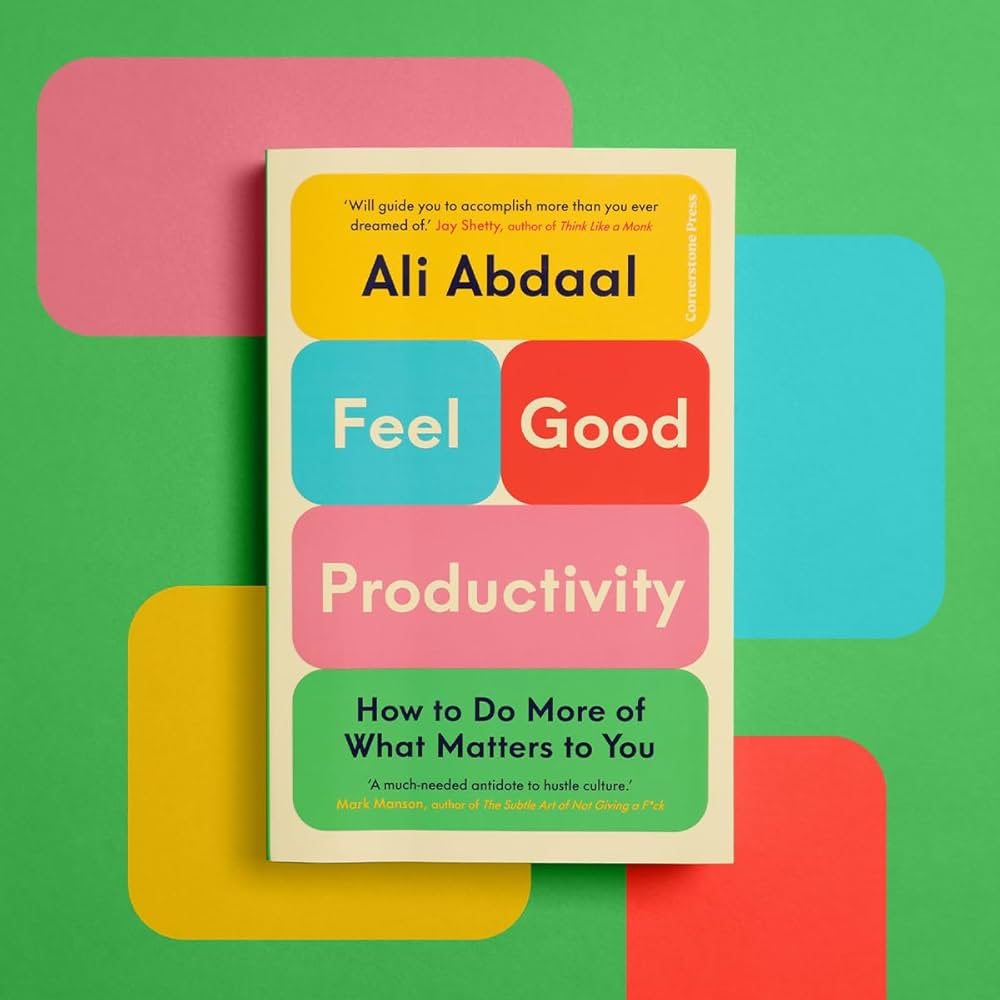
    That’s what made Ali Abdaal‘s Feel-Good Productivity land differently for me. The argument at its core is disarmingly simple: feeling good isn’t the reward for being productive — it’s the engine of it. When you feel better, you naturally achieve more. Not because you’re trying harder, but because the resistance is lower.

    Who is Ali Abdaal?

    Ali is a doctor-turned-creator who built a massive online following while still in medical school. He spent years obsessing over productivity tips and tricks before eventually arriving at a conclusion that cuts against most of the advice in that space: discipline-first thinking is fragile, and mood-first thinking is what actually lasts. If you’re more of a visual learner, his YouTube channel is worth bookmarking — he goes deep into the science behind these ideas and has a way of making dense research feel genuinely watchable. I’ve come back to his videos more than once.

    1. Energise: Turning Work into Play

    The first section of the book is about energy — specifically, how play is one of the most underrated ways to generate it.

    The idea that stuck with me most is deceptively simple: ask yourself, what would this look like if it were fun? Not every task can be made exciting, but most can be made slightly more tolerable with a small shift. One idea I use often is when doing a boring task, have good background music, but nothing with lyrics, he recommends Harry Potter movie scores. Abdaal also talks about confidence not as something you either have or don’t, but as a skill you practise — acting as if you’re confident in a task until the belief catches up with the behaviour. I’ve found this more useful than any pep talk.

    He also pushes back on the idea that success is zero-sum. Treating the people around you as teammates rather than competition doesn’t just feel better — it creates a support network that keeps you going when motivation runs dry.

    2. Unblock: Overcoming Fear and Inertia

    Procrastination, Abdaal argues, is rarely laziness. It’s usually an emotional signal — uncertainty, fear, or just the weight of inertia when you haven’t started yet.

    His answer to vague, overwhelming goals is what he calls NICE goals: Near-term, Input-based, Controllable, and Energising. The distinction matters because abstract goals (“get fit,” “finish the project”) give you nowhere to put your energy. Concrete, near-term inputs do.

    Two other tools I keep coming back to from this section: the Batman Effect, where you adopt an alter ego to distance yourself from anxiety — Beyoncé famously used “Sasha Fierce” for this — and the five-minute rule, where you commit to just five minutes on something you’ve been avoiding. It sounds too simple, but breaking the initial inertia really is most of the battle.

    3. Sustain: Preventing Burnout Through Alignment

    The third section is the one I think gets overlooked most in conversations about this book, and it might be the most important.

    Abdaal’s point here is that burning out isn’t just about doing too much — it’s often about doing too much of the wrong things. The “Hell Yeah or No” rule is essentially a filter: if you’re not genuinely excited about a commitment, the answer is no. Every yes is a no to something else you actually care about. It’s the same insight at the heart of Greg McKeown’s Essentialism — saying no isn’t about being difficult, it’s about protecting what matters.

    He also makes a distinction I found genuinely useful about rest. Not all rest is restorative. The activities that actually recharge you tend to make you feel Competent, Autonomous, Liberated, and Mellow — what he calls the CALM framework. Passively scrolling doesn’t meet that bar. A walk, a creative hobby, or time with people you like usually does.

    The section closes with a simple daily practice he calls Alignment Quests — each morning, pick one small action for health, one for work, and one for relationships that moves you toward the life you want a year from now. It’s a way of keeping daily effort connected to something larger than the to-do list.

    Think Like a Scientist

    The throughline of the whole book is this: there’s no single right way to work, and the people who figure out how to work well treat themselves like an ongoing experiment. Try things. Notice what actually makes you feel better. Adjust.

    That framing has changed how I approach my own habits more than any specific tip in the book. If you’ve ever felt like the traditional “push through it” approach to productivity just isn’t sustainable for you, this book makes a compelling case that you’re not wrong — and offers a better way forward. If you want to go even deeper on working sustainably, Cal Newport’s Slow Productivity makes a powerful companion read.

    If any of this resonates, I’d genuinely recommend picking up a copy of Feel-Good Productivity. And if you want to go deeper on the science behind it, Ali’s YouTube channel is the place to start. It was the reason I picked up the book in the first place.

  • The Antidote to Burnout: Finding Meaning in Slow Productivity

    The Antidote to Burnout: Finding Meaning in Slow Productivity

    If you’ve ever ended a packed workday feeling like you somehow got nothing done, you’re not imagining things. The modern workplace keeps raising the bar — more emails, more meetings, more pings — while the actual meaningful work keeps getting squeezed out. Cal Newport’s book Slow Productivity is a direct response to that problem. It lays out a practical philosophy for getting important things done without running yourself into the ground. Here’s a look at the ideas that matter most.

    A quiet workspace representing slow, intentional productivity

    The Problem: Busyness Isn’t the Same as Productivity

    One of the most useful ideas in the book is the concept of “pseudo-productivity” — the habit of using visible busyness as a stand-in for actual results. Because knowledge work is hard to measure, we often default to the things that look like work: answering emails quickly, keeping our calendars full, always being “on.”

    The problem is that all of this activity gets in the way of the deeper, more focused work that actually moves things forward. Newport calls it “jittery busyness” — and argues that escaping it is the first step toward doing work that genuinely matters. It’s the same trap that Ali Abdaal tackles in Feel-Good Productivity — the idea that looking busy and actually producing something meaningful are very different things.

    Principle 1: Do Fewer Things

    The first principle sounds almost too simple: cut down on your commitments until you can actually imagine finishing them. Newport’s argument is that when your plate is overflowing, everything suffers — you’re always context-switching, nothing gets your full attention, and the quality of your work drops. By focusing on a small number of projects that genuinely matter, you paradoxically get more done in the long run.

    One practical tool Newport suggests is this simple system for managing requests:

    ·The Holding Tank: When a new project request comes in, it goes on a list — no commitment yet, just a place to park it.

    ·The Active List: You work on no more than three projects at a time. That’s it.

    ·The Pull System: When one project wraps up, you pull the next one from the holding tank. Not before.

    ·Be Transparent: Let colleagues know roughly where their request sits in the queue and when you realistically expect to get to it.

    This system won’t win you any “most responsive” awards, but it’s the kind of structure that lets you actually do good work instead of just staying busy. It pairs well with the thinking in Greg McKeown’s Essentialism — both books make the case that protecting your attention is one of the most important things you can do.

    Principle 2: Work at a Sustainable Pace

    Newport’s second principle pushes back against the idea that grinding harder is always the answer. He argues that working at full intensity all the time is not natural — and not sustainable. Think of how seasons work in nature: periods of high activity followed by rest. Our best work tends to happen when we build that kind of rhythm into our lives.

    A simple but surprisingly powerful suggestion: double your timeline estimates. If you think a project will take two weeks, budget a month. This isn’t about lowering your standards — it’s about being honest with yourself and creating space for the kind of careful, thoughtful work that leads to results you’re proud of.

    Newport also makes a case for building small breaks into your routine — a Monday with no meetings, or an occasional afternoon away from your desk. These aren’t indulgences. They’re what it takes to keep your brain from getting stuck in a reactive loop where you’re always putting out fires instead of making real progress.

    Principle 3: Care Deeply About Quality

    The third principle is about raising your own bar — not in the sense of working more hours, but in caring genuinely about how good your work is. When you’re truly committed to producing something excellent, busyness starts to feel like what it is: a threat to the thing you care about. Saying no becomes easier. Cutting shallow commitments becomes easier. Quality becomes its own filter.

    Think of a craftsperson who takes pride in their work. They don’t rush a piece just because someone’s asking. They know that the reputation they build through consistently excellent work is worth more than any short-term win they’d get from saying yes to everything. Newport argues the same logic applies in knowledge work. Over time, doing fewer things — but doing them really well — earns you more professional freedom, not less.

    A Different Kind of Success

    Slow Productivity isn’t a book about doing less for its own sake. It’s about stepping off the treadmill long enough to ask: is all this activity actually getting me anywhere? Newport’s answer is that where you end up matters more than how fast you run. By steadily putting in meaningful effort — rather than constantly reacting and scrambling — you can build a body of work you’re proud of, without burning out along the way. That kind of intentionality extends beyond work too — it’s the same reframe behind Sahil Bloom’s 5 Types of Wealth: success means more than one number going up.

    If any of this rings true for how you’ve been feeling about your work, the book is well worth a read. It’s full of concrete strategies and real-world examples that make these ideas easy to start putting into practice.

  • The Disciplined Pursuit of Less… But Better

    The Disciplined Pursuit of Less… But Better

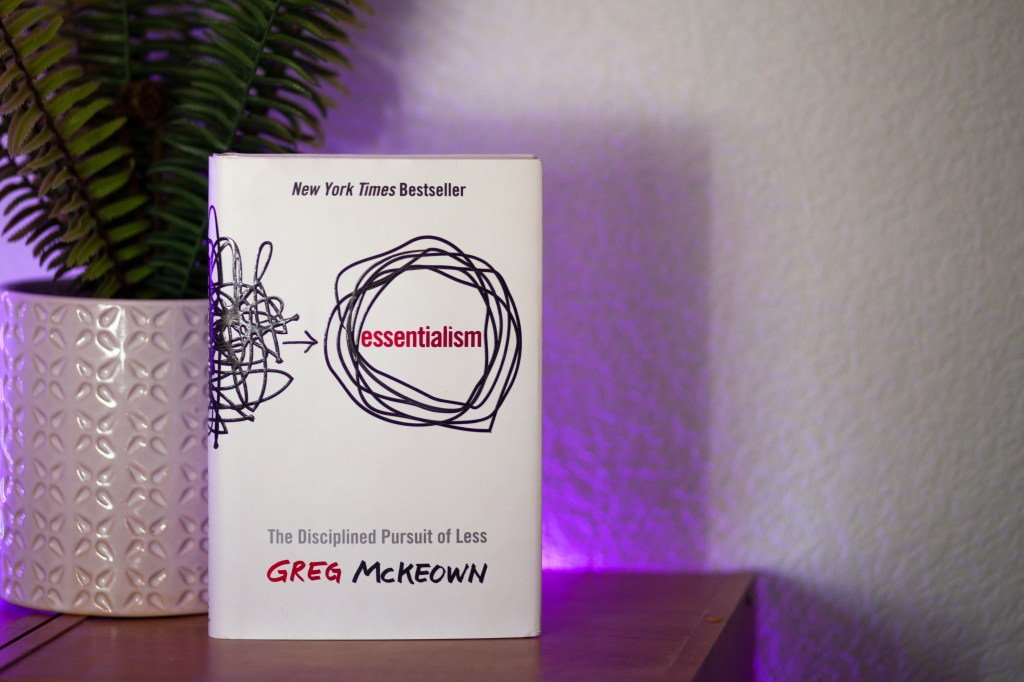
    In a world that constantly pulls at our time, energy, and attention, Greg McKeown’s Essentialism offers a simple but powerful idea: do less, but do it better. The book isn’t about cramming more into your day — it’s about doing only the right things so you can give them the time and focus they deserve. Here are the themes that stuck with me most.

    You Always Have a Choice

    One of the biggest wake-up calls in the book is this: choice is something we do, not something that just happens to us. When we stop owning our choices, we slowly hand control of our lives over to other people’s priorities. The bottom line? If you don’t decide what matters most in your life, someone else will do it for you. A simple mindset shift — from “I have to” to “I choose to” — can be the first step toward a life that actually feels like yours.

    Why Success Can Work Against You

    McKeown describes what he calls the “Success Paradox,” and it’s surprisingly easy to relate to. When you do well, people notice. You become the go-to person, and more opportunities start coming your way. Sounds great, right? But here’s the catch — those opportunities are really just more demands on your time. Before long, you’re stretched so thin that you can’t do anything well, including the thing that made you successful in the first place. Cal Newport calls this same trap “jittery busyness” in Slow Productivity — worth reading alongside this one.

    Saying Yes to Less

    Not every opportunity is worth your time. In fact, most aren’t. The book argues that only a small handful of choices will ever truly move the needle in your life. To find those, McKeown suggests a simple gut-check: if an opportunity doesn’t feel like a clear, enthusiastic “yes,” treat it as a “no.” A good rule of thumb he offers — if you wouldn’t rate it 90% or higher, rate it zero and walk away.

    Getting Good at Saying No

    Saying yes to what matters means getting comfortable saying no to what doesn’t. The book compares this to editing a film — a great editor doesn’t just cut bad footage, they cut anything that doesn’t make the story stronger. The same goes for your life. Trimming the non-essentials isn’t about being selfish or harsh; it’s about making room for the people and goals that matter most to you. Ali Abdaal makes a nearly identical point in Feel-Good Productivity — his “Hell Yeah or No” rule is Essentialism in a different frame.

    Take Care of Your Most Important Tool — You

    McKeown makes a strong case that your most valuable asset isn’t your job, your network, or your skills — it’s you. And the most basic way to protect that asset is often the most overlooked: sleep. Getting enough rest isn’t a sign of laziness. It’s what keeps your mind sharp and your creativity alive so you can actually show up at your best.

    A Life That Feels Worth It

    At its heart, Essentialism is about avoiding the trap of being busy but never feeling fulfilled. By getting clear on what truly matters — and cutting out everything that doesn’t — you can stop just going through the motions and start building a life with real meaning and joy in it. If that bigger-picture reframe resonates, Sahil Bloom’s 5 Types of Wealth takes it even further — arguing that financial success is just one of five areas that actually make a life feel full.

    There are plenty more insights packed into this book, and I’d absolutely recommend picking it up if any of this clicked for you.