

Category: Uncategorized

  • Conventional Wisdom Isn’t Always True

    Conventional Wisdom Isn’t Always True

    We’ve all heard them: those comforting, phrases that roll off the tongue, that we never think to question because we hear them all the time. They’re the bedrock of motivational posters and casual conversation, accepted as universal truths without much thought. But what if this conventional wisdom isn’t always true? What if, upon closer inspection, these widely accepted adages are not just incomplete, but sometimes outright misleading? It’s time to put some of these cherished truisms under the microscope and challenge the notion that what’s popular is always profound.

    “It’s the journey and not the destination”

    This gem encourages us to embrace the process and find joy in the unfolding experience rather than solely focusing on the end goal. While there’s undeniable merit in appreciating the present moment, this often overlooks a crucial element that can overshadow both the path and the end goal: the people with whom you share it.

    Imagine embarking on your dream vacation – an epic road trip across breathtaking landscapes or whatever would be your dream vacation – but doing it alone, or worse, with people you actively dislike. Now, picture a far less glamorous trip, perhaps a weekend camping in the rain, but surrounded by your dearest friends. Which “journey” would you really want to go on?

    “What doesn’t kill you makes you stronger.”

    It’s a sentiment meant to inspire resilience, suggesting that overcoming adversity invariably leads to an improved state of being. While some individuals do emerge from hardship with newfound strength, this adage can be a profoundly inaccurate generalization for many.

    I have a friend, lets call him Justin, who got a neck injury doing grappling drills and was in an immense amount of pain. Justin’s doctor recommended surgery and it went well. Justin not wanting to experience the pain he felt decided to “baby” his neck. Many years later a sneeze injured his neck again and he got another surgery. Justin did not emerge stronger from this experience. The human spirit’s adaptability is undeniable, but hardships don’t always build a shield, somtimes it leads to permanent unrecoverable damage.

    “The early bird catches the worm.”

    It’s about the head start you get from rising before the rest. And yes, sometimes, the first mover gains a significant advantage. But what about the second mouse who gets the cheese? Or the night owl who thrives in the undisturbed quiet of the late hours, producing their best work while the “early birds” are still brewing their first coffee?

    There is also the idea of being right but early. Sears knew that people wanted the convenience of home delivery and not having to go to the store for something, long before Amazon was around. Sears unfortunately didn’t have an internet store or frictionless digital credit, they dealt with phsical catalogs and mail-in forms. They had this idea long before the internet. They were right, but early. In the end, being an early bird doesn’t give you the advantage.

    Challenging conventional wisdom isn’t about being contrarian for its own sake. It’s about fostering critical thinking, recognizing the nuances of life, and validating the diverse experiences of individuals. So, the next time a well-worn proverb crosses your path, pause, consider its validity, and ask yourself: is this truly wise, or is it merely a convenient phrase?
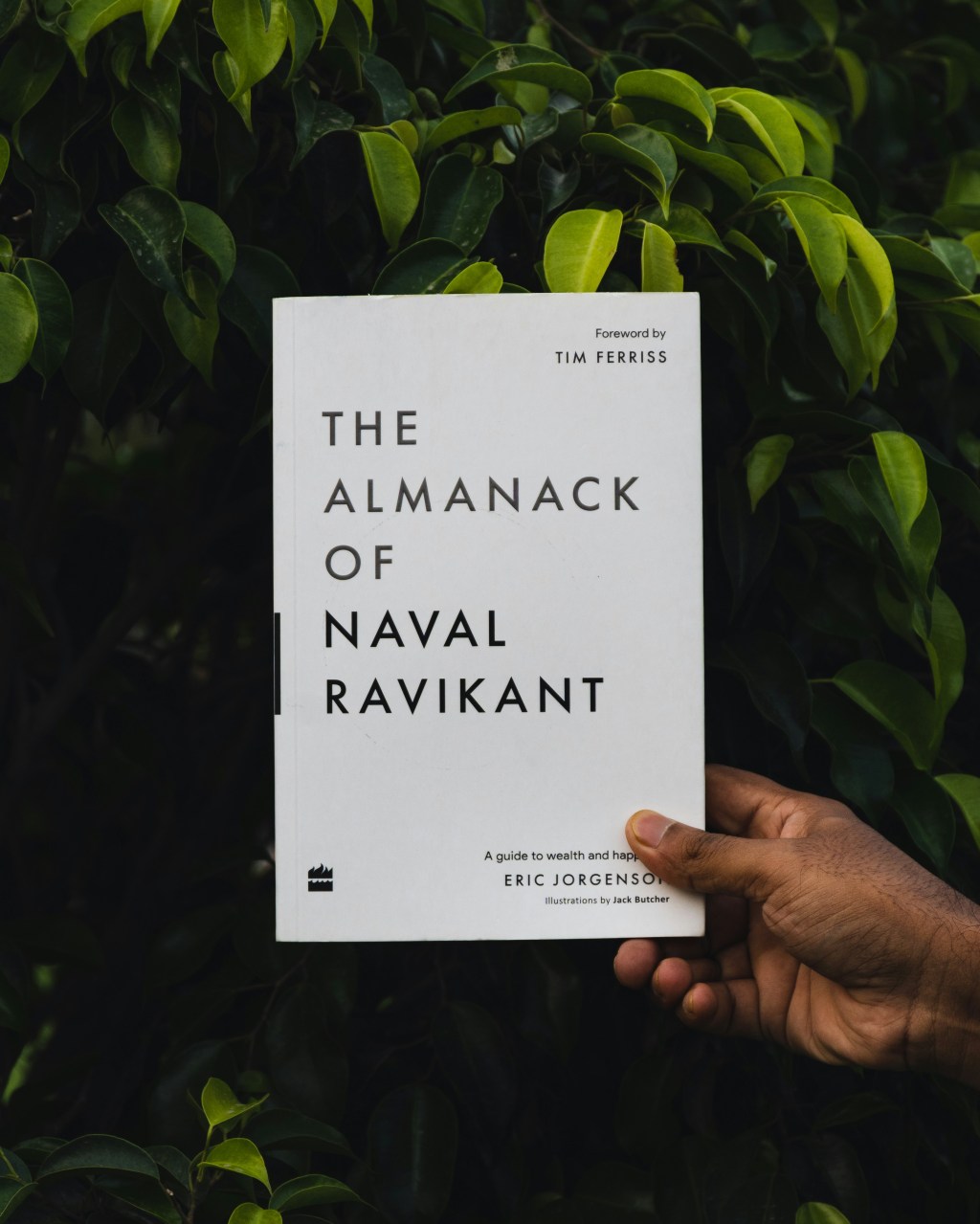

  • My Top Takeaways from The Almanack of Naval Ravikant: A Guide to Wealth and Happiness:

    My Top Takeaways from The Almanack of Naval Ravikant: A Guide to Wealth and Happiness:

    This book is packed with absoute bangers. Eric Jorgenson curated a collection of wisdom from entrepreneur and philosopher Naval Ravikant. He has a way of stripping away the noise of modern life until only the fundamental truths remain. What you’re about to read is just a tiny fraction of the insights that actually resonated with me—the “greatest hits” that changed how I look at my time, my work, and my head.

    I’ve organized these takeaways into three main pillars, like the actual book is organized: Wealth, Happiness, and Philosophy & Learning. But keep in mind, this is just a highlight reel. If these ideas spark something for you, do yourself a favor and get the full book. It’s stated better, deeper, and more completely there. Consider this the appetizer; the book is the feast.

    Wealth

    • Financial freedom comes from owning equity not renting out your time: If you’re working for someone else they will only pay you the bare minimum required to keep you doing the job and you can only work so much. You must own equity – a piece of a business – to gain wealth. Owning equity will enable you to earn money while you sleep.
    • Cultivate specific knowledge to become irreplaceable: Specific knowledge is knowledge that cannot be trained for. If it’s something that can be taught and trained for, you can be replaced by someone else or automation. You find this knowledge by pursuing your genuine curiosity and passion, it should feel like play to you but look like work to others.
    • Pursue permissionless leverage: Labor and capital are traditional forms of leverage, but in the world we live in today code and media are forms of leverage that have no marginal cost of replicaton. Unlike hiring more people or raising money, these tools are permissionless. You don’t need anyone’s approval to write a book, record a podcast, or write code that works for you 24/7.

    Happiness

    • Think of Happiness as the default state that emerges when you remove the sense that something is missing: Happiness is a skill that can be learned and a choice only you can make. When you stop your mind from running into the past to regret or the future to plan you achieve the internal silence of being content.
    • Desire is a contract you make with yourself to be unhappy until you get what you want: Choose your desires carefully, ideally limit yourself to one specific desire at a time rather than bucket of fuzzy ideas.
    • Life is a single player game: Society encourages us to play “multi-player” competitive games for status and money. Your interpretations, memories, and feelings are all internal with no external progress or validation. You are only competing against your previous self.

    Philosophy & Learning

    • Read what you love until you love to read: Many people don’t enjoy reading because they were forced to read things that didn’t interest them in school, to fix this you should read things that interest you and follow your curiosity. If you truly do this you’ll end up reading a lot and hopefully love reading eventually.
    • Master the skill of knowing how to learn: In an evolving world where professions can become obsolete overnight the most important skill is knowing how to learn. focus on the basic foundational subjects, arithmetic, logic, science, and philosophy. With a good foundation you can read any book and absorb advanced concepts as needed.
    • No one else can do the work for you: Doctors won’t make you healthy, teachers won’t make you smart, and mentors won’t make you rich. You must take responsibility for your own life. Start by prioritizing your physical health above everything else, “peace of body” makes it much easier to achieve “peace of mind”.
  • Shogun Sports 100lb Sandbag — A Real World Strength Tool

    Shogun Sports 100lb Sandbag — A Real World Strength Tool

    I’m a big believer in training that translates to the real world. This 100lb Shogun Sports sandbag is a fantastic tool for developing “functional” strength — the kind required to move the awkward, asymmetrical objects that traditional weights often miss. Whether your focus is conditioning or general health, sandbags force you to adapt to a shifting, unstable load in a way few other implements can.

    What I didn’t cover in the video: the shifting, unpredictable weight of a sandbag is remarkably similar to what you experience in martial arts, grappling, and wrestling — where your “opponent” isn’t a fixed, balanced load. If you train in any of those disciplines, this is an especially worthwhile addition to your toolkit. It also doubles as a surprisingly solid low seat for box-style squats, which I didn’t expect but use regularly.

    Filling this bag turned into a mini-project of its own — dealing with damp sand and odd smells — but that’s part of the process of building a home gym. If you’re looking for a durable, veteran-owned gear option that can take a beating, this is a strong recommendation.

    Key Takeaways from the Build:

    • The Build: Top-tier construction featuring high-quality YKK zippers and a reinforced internal liner to prevent leaks.
    • The Fill: Buy your sand in the summer and fill it outside. If not, be prepared to dry it out manually with a fan — and to clean up a lot of dust.
    • The Result: A versatile, rugged tool that has become a staple for my strength and conditioning.

    Check out the full video below for the unboxing, filling tips, and my detailed first impressions.

  • 10 Ideas I Got from Atomic Habits 

    10 Ideas I Got from Atomic Habits 

    The following is a list of 10 ideas that deeply resonated with me while reading Atomic Habits by James Clear. These concepts have fundamentally changed how I look at my environment, my daily routine, and the way I “put points on the scoreboard.”

    If you find these ideas helpful, I highly recommend picking up a copy of the book or exploring James Clear’s other work for a deeper dive. Please note that I don’t have any affiliate links at the moment; I’m just sharing these because they’ve had a genuine impact on my life. If that ever changes, I’ll update this post accordingly.

    Here are my top 10 takeaways:

    1. The Power of Compounding

    Tiny, consistent improvements—getting just 1 percent better every day—compound into massive results over time. Success is not the product of a single, once-in-a-lifetime transformation, but of daily habits. I like to think about putting points on the scoreboard: Reading a chapter in a book instead of scrolling social media, that’s a point; going on a walk instead of having dessert that you don’t need, that’s a point; and so on.

    2. Focus on Systems That Point Towards Your Goals

    “You do not rise to the level of your goals. You fall to the level of your systems.” Goals are great, but they create an “either-or” scenario where you are either successful or you fail. Certain goals can be detrimental, especially if the goal isn’t 100% decided by your actions, like winning a game. Goals are good for setting a direction, but systems are about building processes that make progress in that direction.

    3. Become the Type of Person Who Does the Thing

    The deepest and most effective form of behavior change is changing your identity—what you believe— the idea is not to perform a habit, but to become the type of person who performs that habit (e.g., “The goal is not to read a book, the goal is to become a reader”). Every action is a vote for the type of person you wish to become, and your identity emerges out of your habits.

    4. Lacking Motivation? Change Your Environment

    Motivation is a finite resource and changing your environment could be an easy fix. I used to work at a bar, taproom, and bottleshop for a while and it’s not surprising that I drank more than I should have. Not excessively but significantly more than the 0-2 per week that is recommended. When I left that job it was so much easier to drink less. It doesn’t have to be about avoiding bad habits either, you can prime your environment to help you read, workout, or drink more water. You want to read more, have your book out in the open, on your bed or where you sit when you watch tv. You want to work out more, have a home gym and put things in places you usually hang out around the house, a pair of dumbbells by the TV, a few exercise bands by your desk, and a pull up bar on a doorframe you walk by a few times a day and use these things when you walk by them. You can do the same thing with a few water bottles.

    5. The Four Laws of Behavior Change

    (1) Make it Obvious, (2) Make it Attractive, (3) Make it Easy, and (4) Make it Satisfying. If you’re having trouble with trying to answer the questions, how can I make it obvious, attractive, easy, and satisfying? Think about answers to the inverse: how would I make it invisible, unattractive, difficult, and unsatisfying?

    6. The Path of Least Resistance

    We naturally gravitate toward the option that requires the least amount of effort. Knowing this it is a good idea to design your life so the actions that matter most are also the easiest to do, making the good habit the path of least resistance.

    7. Habit Stacking

    Everyone has habits, if you want to add a new habit it is good to stack them with habits you already have, writing it down clearly and intentionally is good. The formula for this is: “After [CURRENT HABIT], I will [NEW HABIT].”

    8. Remove or Add Steps to Bad Habits

    A good way to eliminate bad habits is to reduce exposure to the cue that causes it. It’s much easier to avoid temptation than resist it. This is the “secret to self-control”: spend less time in tempting situations, often by simply making the cues of bad habits invisible or adding steps to get to the bad habit. An example that I use is when I want to do something and I know I could get distracted by my phone. I have it in another room.

    9. Awareness Through the Habits Scorecard

    The process of behavior change always starts with awareness. A practical tool is the habits Scorecard, at the beginning of a given day write down all your actions throughout the day (you don’t have to do this daily, just every once in a while). At the end of the day ask yourself for each thing you wrote, does this get me closer to the person I want to become? And add a (+) next to it if it does, a (-) if it doesn’t and a (=) if it doesn’t have an impact, then look at all the (-) and ask yourself what can I do to make this activity more difficult to do in the future? Like if after you got up one of the first things you did was check your phone, maybe the answer would be charging my phone outside of my bedroom at night. Also don’t forget to congratulate yourself on the (+) and if you want you could ask yourself the question: what can I do to make this easier to do in the future?

    10. Stack Your Wants with Shoulds

    There’s a new show on Netflix that you really want to watch? Stack that with a productive should, like folding laundry or walking on a treadmill or pedaling a stationary bike (you can easily get these free on facebook marketplace or craigslist). Or you want to scroll Instagram for 5 minutes after doing 25 minutes of work on a project you know you should be working on. This is the pomodoro technique, make sure to set a timer for this one, you could easily scroll for an hour after 25 minutes of work if you’re not careful.